
The Nothing Phone 3a, launched in March 2025, established itself quickly in the competitive mid-range market by merging distinctive hardware design with a meticulously clean software experience provided by Nothing OS 4.0, built atop Android 15. Yet, for a significant segment of the user base—the power users and customization enthusiasts—the appeal of the device extends beyond its factory configuration. Due to the inherent open-source nature of the Android operating system, the Nothing Phone 3a/3a Pro is poised to become a formidable platform for third-party firmware development, allowing users to transcend the limitations of the stock operating system and tailor the experience precisely to their needs.
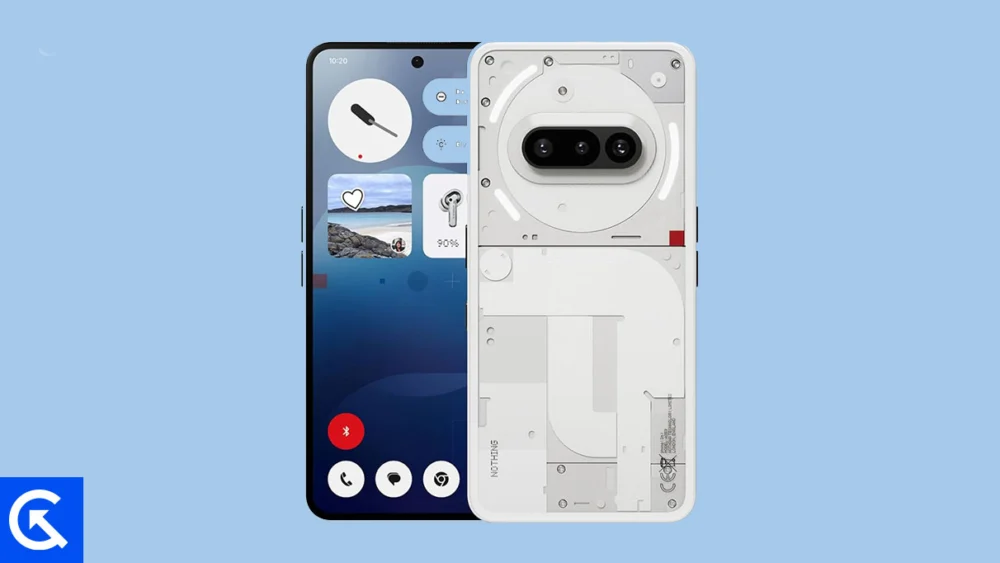
The Nothing Phone 3a itself is a compelling piece of engineering. It features a substantial 6.77-inch AMOLED display, characterized by a smooth 120Hz refresh rate and support for HDR10+, ensuring exceptional media consumption clarity. Its signature transparent back panel, accented by three configurable Glyph LED strips, offers unique visual feedback for notifications and functional camera lighting. Internally, the device relies on the Snapdragon 7s Gen 3 chipset, which provides a robust balance of efficiency and performance suitable for daily tasks and moderate gaming. Photography is handled by a versatile triple-camera array, highlighted by a 50-megapixel primary sensor with Optical Image Stabilization (OIS) and, notably for its class, a dedicated 50-megapixel 2x telephoto lens. Coupled with a 5000mAh battery supporting 50W fast charging, the device offers excellent endurance and swift recovery times.
Despite the refined nature of Nothing OS 4.0, the primary drive toward custom firmware lies in the pursuit of greater optimization, enhanced privacy, and access to features not sanctioned by the original equipment manufacturer (OEM).
The Architecture of Customization: Stock Versus Open Source
When a user acquires a new Android device, it runs on what is termed "Stock ROM" or "Stock Firmware." This is the highly regulated operating system image provided by the manufacturer (in this case, Nothing). While stock ROMs guarantee stability, compatibility with proprietary hardware components, and official security updates, they are also tightly controlled. They often contain bundled OEM applications, pre-defined user interface limits, and sometimes integrated telemetry systems that cannot be easily removed.
The Custom ROM movement thrives because Android is fundamentally an open-source project. Developers are permitted to access, modify, and recompile the core source code released by Google (AOSP). A Custom ROM is essentially a completely rebuilt, community-driven operating system image that replaces the stock firmware entirely. These alternate operating systems are often "debloated," stripped of unnecessary background services and proprietary manufacturer applications that can consume resources. They frequently incorporate custom kernel optimizations designed to enhance battery life or boost peak performance beyond factory settings. Furthermore, they serve as crucial lifelines for devices whose official software support windows have closed, providing access to the latest Android security patches and features years after the OEM has moved on.
The ability to successfully install these third-party operating systems hinges on gaining administrative access to the device’s system partitions, typically achieved through the installation of a custom recovery environment. For the Nothing Phone 3a/3a Pro, the initial prerequisite for accessing this ecosystem is installing TWRP (Team Win Recovery Project), which functions as a non-stock intermediary environment capable of flashing unsigned binaries, including the full Custom ROM images.
Navigating the Custom Firmware Landscape for the Phone 3a/3a Pro
The developer community has rapidly embraced the Nothing Phone 3a/3a Pro, leading to a vibrant selection of stable and feature-rich custom ROMs. Each ROM caters to a specific user profile, balancing performance, feature density, and fidelity to Google’s design principles.
![List of Best Custom ROM for Nothing Phone 3a / 3a Pro [Updated]](https://www.getdroidtips.com/wp-content/uploads/2025/12/Nothing-Phone-3a.jpg)
Lineage OS: The Standard Bearer of Stability
Lineage OS represents the spiritual and functional continuation of CyanogenMod (CM), the foundational custom firmware that defined the early Android modding scene. Lineage OS is renowned for its exceptional stability, comprehensive security commitment, and near-pure AOSP base. It avoids excessive aesthetic customization in favor of core utility enhancements, such as an advanced privacy guard, granular control over status bar elements, and a robust theme engine. For users prioritizing reliability, long-term support, and a clean, secure Android experience free from OEM influence, Lineage OS 23 (based on a future iteration of Android) stands as the gold standard.
Evolution X: The Custom Pixel Experience
Evolution X aims to deliver the authentic Google Pixel smartphone experience, replicating the interface, features, and visual identity of Google’s flagship devices. However, it significantly expands upon the stock Pixel formula by integrating extensive customization settings. Users can manipulate everything from system animation speeds and notification styles to the functionality of the power menu and gesture controls. This ROM is tailored for enthusiasts who appreciate the polished aesthetic and exclusive software utilities of the Pixel line but require an advanced level of personalization that the standard Google firmware does not offer.
CrDroid OS: A Synthesis of Customization
CrDroid OS distinguishes itself by acting as a powerful aggregator of features sourced from several prominent custom ROM projects, including AOSPA (Paranoid Android), Lineage OS, and SlimROM. The result is a highly versatile and feature-dense operating system that maintains a pure Android foundation while incorporating myriad tweaks and toggles. CrDroid OS appeals to users who demand a broad spectrum of customization options across UI, performance, and security, making it a powerful hybrid solution built for flexibility.
Project Infinity X: Performance and Refinement
Project Infinity X is an AOSP-derived custom ROM focused on delivering refined performance and visual elegance with minimal overhead. The project’s ethos centers on streamlining the operating system, ensuring a high level of stability, and optimizing the kernel for superior battery efficiency and speed. This firmware is often the choice for users who seek maximum responsiveness and a minimalistic interface, prioritizing raw system performance over complex feature sets.
Forward Momentum: Previewing Android 16
The development community often precedes official OEM releases by building early prototypes of future Android versions. Initial builds of Android 16 are already appearing for the Nothing Phone 3a/3a Pro, offering a glimpse into Google’s evolving design philosophy. A key feature of this early implementation is "Material 3 Expressive," a refinement of the existing Material Design language. This iteration emphasizes dynamic animations, bolder typography, and more generous touch targets, representing a significant, albeit subtle, evolution in the user-facing design of the operating system. These early builds are invaluable for developers and advanced users keen on experiencing the cutting edge of Android development.
Pixel Experience ROM: Fidelity to Google
While currently marked as "Coming Soon" for the Nothing Phone 3a/3a Pro, the Pixel Experience ROM remains one of the most anticipated releases. Its objective is singular: to provide the most accurate, unadulterated Google Pixel experience possible. This includes all the proprietary applications and features exclusive to Google’s hardware, ensuring users can leverage the full suite of Google’s software ecosystem, effectively transforming the Nothing device into a "Google phone" at the software level.
In summation, the journey into custom firmware for the Nothing Phone 3a/3a Pro is driven by the desire for ultimate control. By installing a custom ROM, users are not merely changing the interface; they are gaining access to an operating system optimized for their specific priorities—be they performance, privacy, or personalization—fully leveraging the powerful hardware base provided by Nothing’s distinct device.
