


The foundational promise of modern music streaming services has long been the sophisticated marriage of vast libraries and hyper-personalized curation. For a monthly premium, subscribers expect an experience that not only provides access to the world’s discography but also acts as a digital sommelier, filtering through millions of tracks to deliver the perfect acoustic match for a listener’s mood, history, and taste. However, for a growing number of YouTube Music users, this promise is being systematically dismantled. A surge of low-quality, AI-generated content—derisively termed "AI slop" by the online community—has begun to colonize the platform’s recommendation engines, transforming curated discovery into a frustrating encounter with synthetic mediocrity.
This phenomenon is not merely a minor technical glitch but represents a fundamental threat to the value proposition of paid streaming. Reports from dedicated users on platforms like Reddit and various tech forums indicate a significant shift in how YouTube Music’s algorithms are behaving. Long-time subscribers, many of whom have spent years training the algorithm to understand their specific nuances in genre and style, are now reporting that their "My Supermix," "Discover Mix," and autoplay queues are being inundated with tracks that lack human authorship. These compositions are frequently the product of generative artificial intelligence, characterized by their generic structures, lack of emotional depth, and a sterile, "uncanny valley" quality that separates them from the work of human artists.
The anatomy of this "AI slop" is increasingly easy to identify for the discerning ear, yet it appears to be remarkably effective at bypassing or exploiting the current algorithmic safeguards. These tracks are typically uploaded by "artists" with no discernible digital footprint outside of the streaming platform. Their profiles often feature hundreds, if not thousands, of songs released in a suspiciously short timeframe, often with generic, SEO-friendly titles such as "Rainy Day Lo-Fi," "Deep Focus Beats," or "Acoustic Morning." While these titles might suggest a harmless functional purpose, the sheer volume and the persistent nature of their appearance in personalized feeds suggest a calculated effort to "farm" royalties by flooding the system with high-frequency, low-cost content.
For the premium subscriber, the presence of this content is an intrusion. The frustration is compounded by a perceived breakdown in the platform’s feedback mechanisms. In a healthy algorithmic ecosystem, a user’s "Not Interested" or "Thumbs Down" selection acts as a vital data point, helping the machine refine its understanding of what to exclude. However, current reports suggest that these tools have become largely ineffective against the tide of synthetic content. Users describe a "Whac-A-Mole" scenario: clicking "Thumbs Down" on an AI-generated track may remove that specific song, but the algorithm—unable or unwilling to recognize the underlying pattern of the uploader—simply replaces it with a nearly identical track from a different "ghost" artist. This persistent re-emergence suggests that the volume of AI content being uploaded is outpacing the platform’s ability to categorize or filter it based on traditional user feedback.
The economic incentives driving this influx are clear. Generative AI tools have reached a level of sophistication where an individual can produce an entire album’s worth of music in minutes. By distributing this content across platforms like YouTube Music, which pays out royalties based on play counts, bad actors can generate revenue from the sheer law of large numbers. Even if a listener only stays on a track for thirty seconds before realizing it is synthetic, that play often counts toward a payout. In an ecosystem where human artists struggle for visibility and fair compensation, the proliferation of "slop" diverts both attention and financial resources away from the creative community.
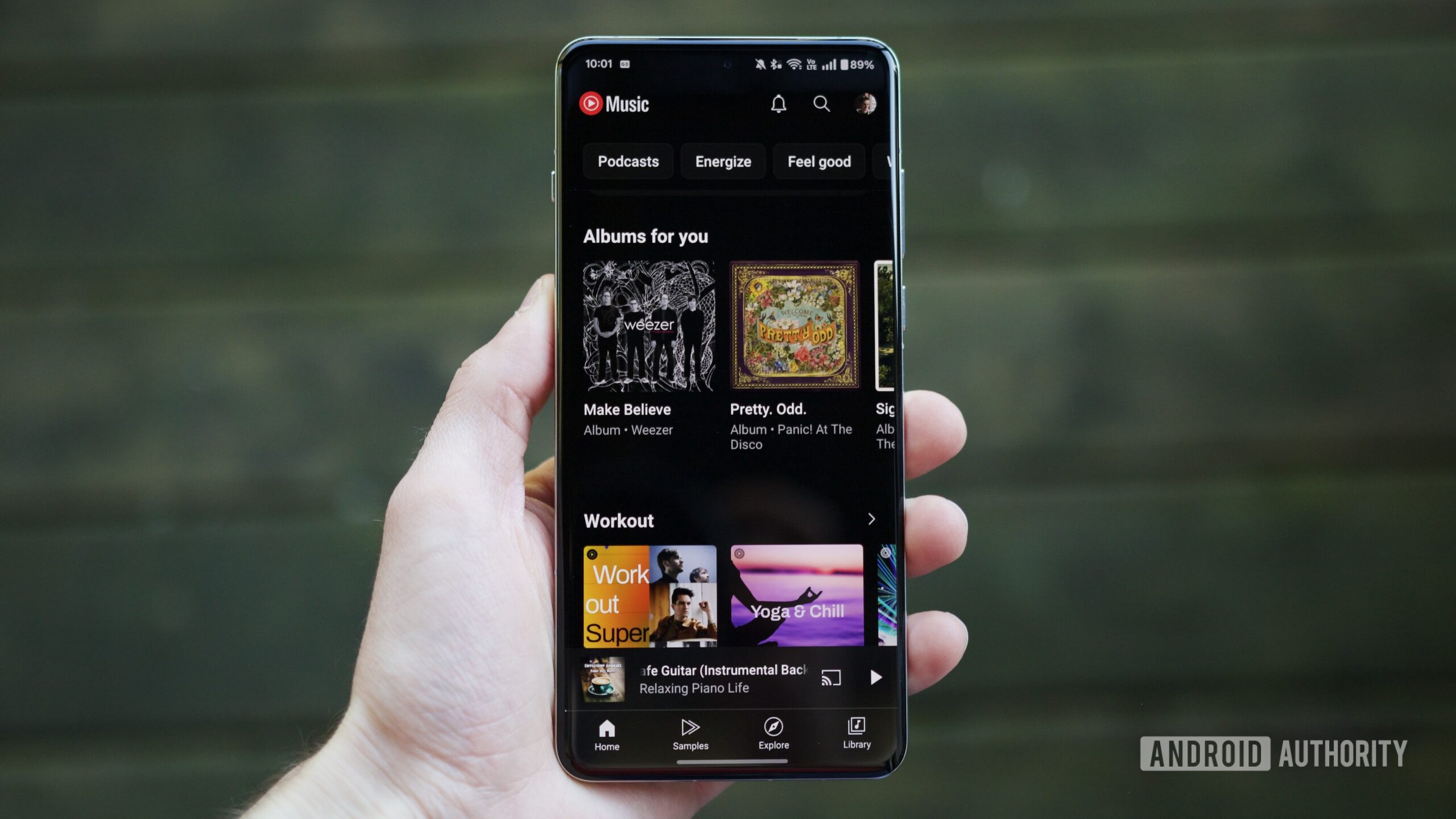
This crisis highlights a diverging path in the music streaming industry. While all platforms are grappling with the advent of AI, their responses have varied significantly. Competitors like Apple Music have maintained a more "walled garden" approach, relying more heavily on human editorial oversight and stricter metadata requirements for uploads, which has largely insulated their user base from the same level of algorithmic pollution. Deezer has taken a more proactive stance, announcing initiatives to specifically tag AI-generated content and develop tools to distinguish between human-made music and synthetic "functional" noise. Spotify, too, has faced its own battles with AI-generated "fake artists," leading to the removal of millions of tracks, yet it continues to struggle with the balance between being an open platform and maintaining a quality-controlled environment.
YouTube Music’s predicament is unique due to its architectural proximity to the main YouTube video platform. Because YouTube is built on the philosophy of user-generated content and open access, the barriers to entry for uploading audio-visual content are significantly lower than those of traditional music distributors. This openness, once the platform’s greatest strength, has become a vulnerability. The algorithm that powers YouTube Music is heavily influenced by the massive data sets of the broader YouTube ecosystem, where "content farms" have long been a known issue. The transition of these "farming" tactics from video to audio has seemingly caught the music-specific branch of the service off-guard.
The repercussions of this shift extend beyond mere user annoyance. There is a growing sentiment among the platform’s most loyal users that the "Premium" tag is losing its meaning. If a paid subscription does not protect a listener from low-quality, automated content, the incentive to maintain that subscription diminishes. Some users have already expressed intentions to migrate to other services, while others are returning to the "old ways" of digital music—curating local, offline libraries of MP3s and FLAC files to regain total control over their listening experience. This represents a significant step backward for a service that aims to be the future of music consumption.
The broader implications for the music industry are equally sobering. As the market becomes saturated with synthetic soundscapes, the "signal-to-noise" ratio for emerging human artists becomes increasingly difficult to navigate. When an algorithm prioritizes a generic, AI-generated "lo-fi" track because it fits a mathematical pattern of "safe" background noise, it actively suppresses the discovery of a new human artist who might be pushing the boundaries of the genre. This "algorithmic meritocracy" is failing when the competitors are not other artists, but infinite loops of data-driven sound.
To rectify the situation, Google and the YouTube Music team face a complex challenge. They must move beyond reactive measures and implement systemic changes to how the platform identifies and prioritizes content. This could involve mandatory disclosure for AI-generated music, similar to the labels YouTube has introduced for AI-generated video content. Furthermore, the algorithm may need to be recalibrated to weigh human-verified metadata and "artist authenticity" more heavily than simple engagement metrics. Providing users with a "Global Filter" to opt-out of AI-generated content entirely would be a drastic but perhaps necessary step to restore trust.
Ultimately, the "AI slop" crisis on YouTube Music serves as a cautionary tale for the age of automation. It proves that while technology can create content at an unprecedented scale, it cannot replicate the curation, soul, and intentionality that listeners demand from a premium service. If YouTube Music continues to allow its recommendations to be dominated by synthetic fillers, it risks alienating the very audience that provides its financial foundation. The platform must decide whether it wants to be a repository for all sounds ever created, or a curated home for the art of music. As of now, the scales are tipping toward the former, and the paying customers are making their frustrations heard.
