
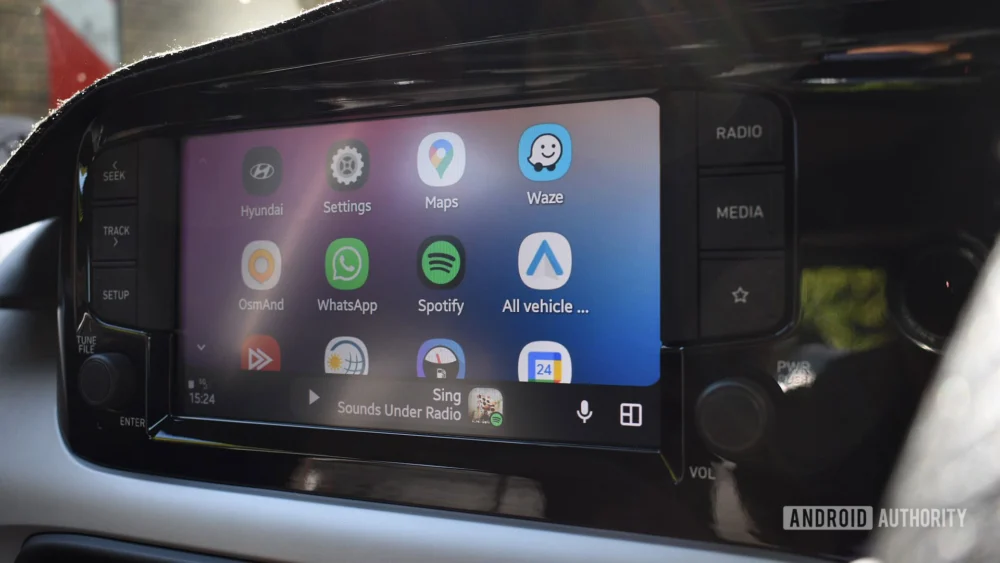
The digital bridge between smartphones and vehicles has become an essential component of the modern commute, transforming the dashboard into a secondary hub for productivity and navigation. However, even the most refined ecosystems are susceptible to technical friction. Recently, a persistent and perplexing software anomaly has begun to disrupt this seamless experience for a specific subset of the Android Auto user base. Reports indicate that a messaging bug is effectively silencing drivers who rely on professional-grade Google accounts, creating a significant hurdle for those who manage their communications through the Google Workspace platform.
The issue, which has gained traction in community forums and technical circles over the past several weeks, manifests during the critical process of replying to incoming messages via the in-car interface. Under normal circumstances, Android Auto utilizes Google Assistant to read messages aloud and transcribe voice-to-text responses, allowing the driver to maintain focus on the road. For the affected users, however, this cycle is being interrupted by a jarring error message. When attempting to dictate a reply, the system responds with a prompt stating that the action cannot be completed without explicit permission from a Google Workspace administrator.
This specific phrasing suggests a conflict within the software’s permission architecture, where the car’s interface incorrectly identifies a standard messaging function as a restricted enterprise-level action. Google Workspace, formerly known as G Suite, is the suite of productivity and collaboration tools used by businesses, educational institutions, and non-profits. While these accounts offer enhanced security and administrative controls, they are frequently used by small business owners and independent contractors as their primary mobile accounts. For these individuals, the bug does not merely represent a minor inconvenience; it serves as a total breakdown of hands-free communication, forcing them to choose between ignoring urgent messages or risking safety by interacting directly with their handheld devices.
The scope of the problem appears to be localized to those signed into Android Auto with a Workspace account, rather than a standard personal @gmail.com address. This distinction is crucial, as it explains why the bug has not triggered a universal outcry across the hundreds of millions of Android Auto users. Nevertheless, for the professional demographic affected, the frustration is compounded by the lack of a clear cause. There is no evidence to suggest that Workspace administrators have actually changed any settings or implemented new policies that would restrict car-based messaging. Instead, the consensus among technical analysts is that a recent update to either the Android Auto app or the integrated Google Assistant service has introduced a logic error that misinterprets the account’s security status.
Documentation of this behavior began surfacing as early as late December, with a steady stream of reports continuing into the first weeks of 2025. On Google’s official support forums, users have expressed a mixture of confusion and exasperation. Many noted that their setups had worked flawlessly for years prior to this sudden shift. The repetitive nature of the error—the system constantly asking for administrative intervention for a task as simple as sending a text message—highlights a breakdown in the "Work Profile" or "Enterprise" logic that Android uses to separate personal and professional data.
As the community seeks answers, attention has turned toward the upcoming release cycle of the Android Auto software. The platform is currently on the verge of a significant milestone with the rollout of version 16.0. While version numbers in the world of Android Auto do not always correspond to massive visual overhauls or the introduction of groundbreaking features, they do represent a primary vehicle for stability improvements and bug fixes. Early reports regarding Android Auto 16.0 suggest that the update may be relatively iterative in terms of user-facing changes. However, the timing of its stable rollout, expected within the next few weeks, offers a glimmer of hope for those currently trapped in the "administrator permission" loop.
The challenge for Google’s engineering teams lies in the fragmented nature of the Android ecosystem. Android Auto is not a standalone operating system running on the car; rather, it is a projected interface powered by the phone. This means a bug could reside in the Android Auto app itself, the Google app (which houses Assistant), the Google Play Services framework, or even the specific messaging app being used, such as WhatsApp, Telegram, or Google Messages. When these components interact with the complex security layers of a Workspace account, the potential for "handshake" errors increases exponentially.
Furthermore, this incident underscores a broader conversation regarding the integration of enterprise tools into consumer hardware. As the boundary between work and personal life continues to blur, particularly for the remote and mobile workforce, the reliability of enterprise accounts on secondary screens becomes paramount. If a professional cannot rely on their vehicle to handle a simple reply to a client or colleague, the utility of the "smart cockpit" is severely diminished. The safety implications are also non-negligible. The core philosophy behind Android Auto and Apple CarPlay is to reduce driver distraction. When the software fails to perform its primary function—voice-controlled communication—it inadvertently incentivizes drivers to reach for their phones, thereby undermining the very safety standards the platform was designed to uphold.
In the interim, affected users have attempted various workarounds with varying degrees of success. Some have found that clearing the cache and storage of the Android Auto and Google apps provides a temporary reprieve, while others have tried toggling the "Work Profile" settings on their Android devices. However, these are often "band-aid" solutions that do not address the underlying code conflict. The definitive fix must come from a server-side update or a new version of the application that correctly identifies the messaging intent as a safe, non-restricted action regardless of the account type.
The transition to Android Auto 16.0 will be closely watched by the tech community. Historically, Google has used these updates to refine the "Coolwalk" interface and improve the reliability of wireless connections, which have been a frequent point of contention for users. If version 16.0 successfully addresses the Workspace messaging bug, it will be a quiet but essential victory for the platform’s professional user base. If not, Google may face increasing pressure to provide a more transparent roadmap for how it handles enterprise-level integration within the automotive space.
As vehicles become more like "computers on wheels," the expectations for software stability mirror those of the desktop and smartphone worlds. For the modern professional, the car is an extension of the office. When a bug interrupts the flow of information, it is more than a technical glitch; it is a disruption of the workday. For now, those affected by the Workspace permission error must wait for the developers to bridge the gap between enterprise security and automotive convenience. The hope is that by the time the stable version of Android Auto 16.0 reaches the general public, the only thing drivers will have to focus on is the road ahead, rather than the administrative hurdles of their messaging apps.
