
Updated on September 26, 2025
The landscape of embedded systems maintenance, particularly for devices powered by Amlogic chipsets—ranging from Android TV boxes and media players to single-board computers—is often fraught with the risk of firmware corruption. When standard Over-The-Air (OTA) updates fail or catastrophic software errors render a device unresponsive, traditional repair methods can become inaccessible. Addressing this critical need for resilient device resuscitation, the Amlogic BootCard Maker for Windows emerges as an indispensable, specialized utility. This compact application is meticulously engineered to bypass standard operating system interfaces and directly inject necessary recovery code onto external media, specifically SD cards, transforming them into potent bootable recovery instruments.
At its core, the Amlogic BootCard Maker serves as a digital lifeline for technicians and advanced users grappling with "bricked" hardware. Its singular focus—the manual flashing of firmware via an SD card interface—provides a vital contingency plan when software dependencies, network connectivity, or the device’s internal bootloader are compromised to the point that conventional USB burning protocols cannot be initiated. The utility leverages the inherent capability of many Amlogic-based platforms to recognize and boot from a properly prepared external storage medium, effectively hijacking the initial boot sequence to load recovery routines or entirely new operating system images.
Comprehensive Feature Set Driving Resilient Recovery
The efficacy of the Amlogic BootCard Maker is derived from a deliberate feature set designed to streamline the complex process of low-level hardware flashing into a manageable sequence of steps. Each component of the tool is geared toward ensuring the created boot card is perfectly calibrated for successful interaction with the target Amlogic System-on-Chip (SoC).
Precision in Firmware Image Deployment
The foundational capability of the software lies in its proficiency to transform raw firmware packages into a bootable SD card structure. Amlogic firmware, often distributed as binary images or packaged archives, must be written to the storage medium in a precise, sector-by-sector manner to ensure the device’s primary bootloader recognizes the files upon startup. The BootCard Maker handles this intricate writing process, embedding the necessary partition tables, boot sectors, and kernel/system images onto the SD card. This functionality is crucial for scenarios where the device’s internal eMMC or NAND storage is inaccessible, allowing the external card to serve as the temporary, yet fully functional, system drive for recovery operations. This capability restores operability by replacing corrupted low-level code, such as the initial bootloader stages, which are beyond the reach of typical application-level recovery tools.
Intuitive Graphical Interface for Technical Tasks
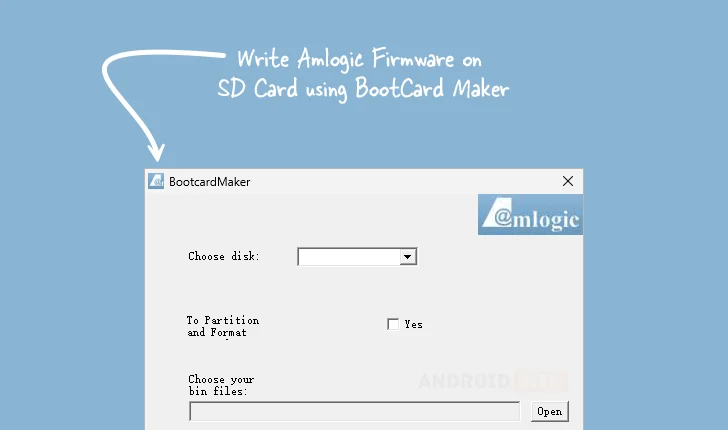
Flashing firmware is inherently a low-level operation, often requiring command-line expertise or deep familiarity with complex software configurations. Recognizing that device repair is not exclusive to expert engineers, the Amlogic BootCard Maker incorporates a clean, graphical user interface (GUI). This design choice democratizes the recovery process. Users are guided through selections for the target disk (the SD card reader), the appropriate partitioning scheme, the necessary low-level formatting commands, and the precise selection of the firmware file. By abstracting the underlying disk management commands into clickable options, the tool significantly lowers the barrier to entry for home users attempting to revive expensive media devices that might otherwise be destined for disposal.
Automated Partitioning and Formatting Protocols
A critical, yet often overlooked, step in preparing bootable media is the correct arrangement of storage partitions. Amlogic devices often require specific partition layouts—sometimes involving multiple small partitions for bootloaders, system data, and user space—that standard operating system format utilities cannot reliably replicate. The BootCard Maker automates this crucial prerequisite. Before writing the firmware payload, the utility executes standardized routines to partition and format the SD card according to the specifications recognized by the Amlogic boot ROM. This automation minimizes the risk associated with manual partitioning errors, which are a common cause of boot failures even when the correct firmware file is used. Ensuring the card’s file system structure and sector alignment are correct is paramount for successful initialization by the target hardware.

Versatile Support for Core Binary Firmware Files
Flexibility in firmware sourcing is a significant advantage. The utility demonstrates robust compatibility with standard .bin firmware files. These files frequently encapsulate critical low-level components, such as updated primary bootloaders (often referred to as U-Boot or similar proprietary initialization code) or complete system images compressed for flashing. The direct support for these binary formats allows technicians to utilize a wide array of firmware sources—whether official releases, community-modified images, or custom development builds—without needing intermediary conversion steps. This broad compatibility ensures that the tool remains relevant across the evolving ecosystem of Amlogic-powered hardware.
Portability Enhancing Field Operations
In professional repair environments or among dedicated hobbyists who service multiple pieces of hardware, installation overhead is a tangible inefficiency. The Amlogic BootCard Maker is structured as a truly portable application. It requires no formal installation process on the host Windows machine; the executable runs directly, leaving no registry entries or system files behind. This characteristic is invaluable for technicians operating from mobile diagnostic kits or shared workstations, allowing immediate deployment of the recovery tool simply by inserting the application folder and connecting the necessary SD card reader. This minimizes potential software conflicts with other installed utilities and ensures consistent performance across different host operating system configurations.
Strategic Alternative to USB Burning Infrastructure
While the Amlogic USB Burning Tool is widely recognized for its ability to recover devices via the USB OTG port, this method inherently relies on the device’s USB Host/Device circuitry being functional and the bootloader being capable of recognizing the USB connection during the initial boot sequence. In cases of severe hardware damage or deep-level firmware corruption that disables USB initialization, the USB method becomes non-viable. The BootCard Maker strategically circumvents this limitation by utilizing the SD card slot, which is often initialized much earlier or via a more resilient hardware pathway in the Amlogic boot chain. By offering a viable SD card pathway, the utility significantly broadens the window of opportunity for successful device recovery, acting as a critical secondary recovery vector when the primary USB route fails.
Accessibility and Distribution
The commitment to providing a robust recovery solution is further evidenced by the accessible distribution model. The Amlogic BootCard Maker is provided as a ready-to-use download for the Windows operating system, accommodating both 32-bit and 64-bit architectures to ensure maximum compatibility with contemporary and legacy PCs used for repair tasks.
The availability is cataloged for immediate deployment:
| Version | Download |
|---|---|
| 1.01 | Link |
This specific version, 1.01, represents a mature iteration of the software, tested for reliability in deployment scenarios. Users are encouraged to utilize the provided direct link to obtain the application, ensuring they receive a verified copy of the utility essential for hardware maintenance.
In conclusion, the Amlogic BootCard Maker transcends the description of a simple utility; it functions as a specialized, essential piece of digital triage equipment. By simplifying the complex mechanics of low-level firmware injection onto external media, and offering a robust alternative to standard USB flashing procedures, it significantly enhances the survivability rate of Amlogic-based hardware facing severe software malfunctions. Its user-centric design, coupled with its technical precision in handling bootable media creation, cements its role as a cornerstone tool in the ongoing maintenance and repair ecosystem for embedded Android and Linux systems utilizing Amlogic SoCs.
