

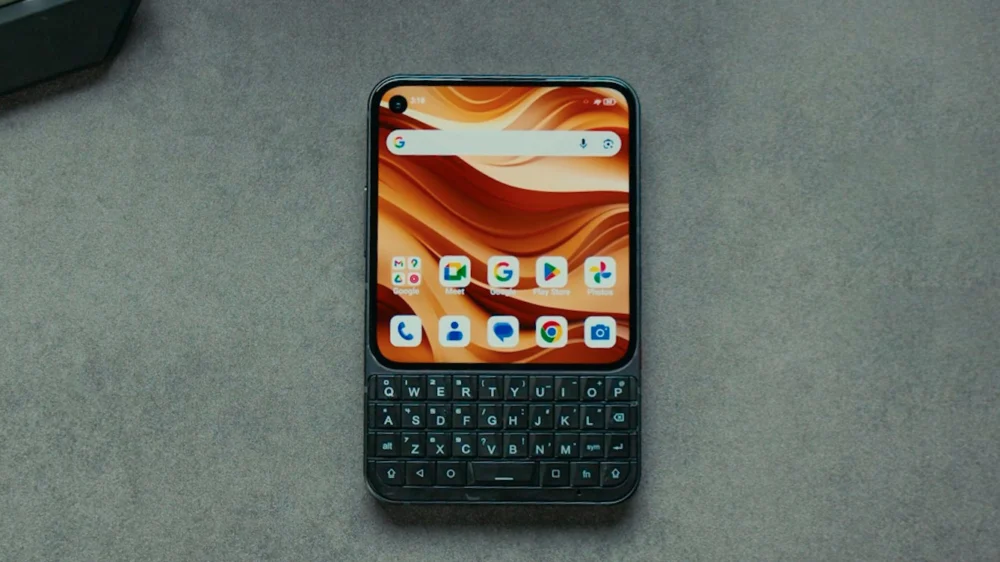
As the mobile industry marches deeper into 2026, the long-standing hegemony of the all-glass slate form factor is facing an unexpected and sophisticated challenge. While the mainstream market remains fixated on folding displays and ultra-thin bezels, a persistent and vocal segment of power users, journalists, and enterprise professionals has continued to demand the return of the physical QWERTY keyboard. This demand has sparked a "tactile renaissance," characterized by a series of high-profile attempts to recapture the legendary productivity of the BlackBerry era. Leading this charge is Unihertz, a company that has spent over half a decade carving out a niche as the spiritual successor to the keyboard-centric pioneers of the early 2000s. With the upcoming debut of the Titan 2 Elite, Unihertz is signaling a significant shift in its design philosophy, moving away from the rugged, oversized aesthetics of its past and toward a refined, compact experience aimed at the modern professional.
The announcement of the Titan 2 Elite comes at a pivotal moment for the niche keyboard market. Throughout 2025, the industry witnessed a surge in interest for physical inputs, most notably with the launch of the Clicks Communicator. Clicks, a company that initially gained notoriety for developing keyboard-integrated cases for iPhones and select foldable devices, eventually transitioned into producing its own compact standalone hardware. However, the Clicks philosophy has largely positioned its devices as secondary companions or "communicator aides" rather than primary smartphones. Unihertz, by contrast, is positioning the Titan 2 Elite as a fully capable, standalone Android powerhouse, ready to serve as a user’s sole daily driver.
To understand the significance of the Titan 2 Elite, one must look at the lineage of the Unihertz Titan series. Since its inception, the Titan line has been defined by its homage to the BlackBerry Passport—a device known for its wide, square screen and expansive keyboard. The original Titan and its immediate successors were celebrated for their rugged durability and massive battery lives, but they were often criticized for being "pocket-burdensome" due to their sheer width and weight. The Titan 2, which debuted in 2025, leaned further into the enterprise sector, featuring a 4.5-inch display that made the device significantly wider than even the most gargantuan modern flagships, such as the Galaxy S25 Ultra. While these dimensions were ideal for spreadsheet management and long-form emailing, they lacked the ergonomic grace required for mass-market appeal.
The Titan 2 Elite represents a dramatic departure from this "rugged-first" approach. Based on early teasers and design leaks, the Elite model appears to take its inspiration not from the Passport, but from the iconic BlackBerry Curve. This shift suggests a focus on one-handed usability and a more traditional smartphone aspect ratio. By narrowing the chassis, Unihertz is making a play for the "pocketability" that has been missing from the QWERTY market for years. The device is visibly more slender, featuring a keyboard layout that prioritizes thumb-reach and ergonomic comfort over pure surface area.
Technologically, the Titan 2 Elite is expected to bridge the gap between niche utility and modern flagship standards. While the 2025 Titan 2 utilized LCD technology—a choice often made to favor battery longevity and cost—the Elite appears to be sporting a more contemporary display assembly. Although the exact panel specifications remain under wraps, visual evidence suggests a move toward OLED technology, providing the deep blacks and vibrant contrast ratios that 2026 consumers expect. Furthermore, the bezel design has undergone a radical transformation. The chunky forehead that housed the sensors and cameras on previous Titan models has been replaced by a sleek, in-display "punch-hole" selfie camera located in the top-left corner. This modernization allows for a higher screen-to-body ratio, ensuring that users do not have to sacrifice display real estate for the sake of physical keys.
The software experience also appears to be a point of pride for Unihertz. Unlike the Clicks Communicator, which often employs a simplified or specialized UI to account for its secondary-device status, the Titan 2 Elite runs a full, unencumbered version of the latest Android operating system. Demonstration units show a standard launcher capable of hosting five icons across the width of the screen, indicating that despite the narrower frame, the resolution and scaling are optimized for a standard Android experience. This ensures that third-party applications—ranging from Slack and Microsoft Teams to social media platforms—will function without the aspect ratio issues that plagued earlier, squarer QWERTY devices.
The competitive landscape in which the Titan 2 Elite arrives is more crowded than it was just two years ago. The market is currently bifurcated between those seeking nostalgia and those seeking utility. On one side, there are projects dedicated to reviving and "Android-ifying" original BlackBerry Classic hardware for a purist audience. On the other side is the aforementioned Clicks, which caters to the "digital detox" crowd and those who want a tactile accessory for their primary ecosystem. Unihertz occupies the middle ground, offering a modern hardware stack with a built-in keyboard that doesn’t feel like an afterthought or a retro-fitted relic.
Unihertz’s strategy for the Titan 2 Elite continues to leverage the power of community engagement and crowdfunding. The company has historically used Kickstarter to launch its products, a move that allows them to gauge precise demand and secure the capital necessary for specialized manufacturing runs. This "direct-to-enthusiast" model has allowed Unihertz to survive in an industry where larger manufacturers like TCL and BlackBerry Mobile ultimately failed. By maintaining a lean operation and focusing on a loyal core audience, Unihertz has become the de facto leader of the QWERTY movement.
The official global unveiling of the Titan 2 Elite is scheduled for the Mobile World Congress (MWC) 2026 in Barcelona. MWC remains the premier stage for mobile innovation, and Unihertz’s presence there in the first week of March underscores the company’s ambition to be seen as a serious hardware contender rather than a mere novelty brand. Following the MWC showcase, the company is expected to launch its Kickstarter campaign, with shipping dates likely to be announced shortly thereafter.
For the mobile professional, the Titan 2 Elite represents more than just a new phone; it is a statement against the homogenization of technology. In an era where every smartphone looks like a variation of a black glass rectangle, the tactile click of a physical keyboard offers a sense of intentionality and precision. It appeals to the "prosumer" who values typing speed, keyboard shortcuts, and the ability to compose long-form content without the intrusion of an on-screen keyboard taking up half the display.
As we look toward the March launch, several questions remain. Will the Titan 2 Elite maintain the legendary battery life of its predecessors despite its slimmer profile? How will the in-display camera impact the durability ratings Unihertz is known for? And perhaps most importantly, can Unihertz convince a generation raised on glass to rediscover the joy of a physical click? While the answers will only come once the device hits the hands of reviewers at MWC, the Titan 2 Elite is already the most anticipated QWERTY device in years. It stands as a testament to the idea that in technology, what was once old can become new again—provided it is refined for the demands of the modern era. Interested parties and long-time keyboard aficionados are encouraged to follow the company’s official channels and community groups, as the road to the MWC 2026 reveal promises to be filled with further technical disclosures and early-bird opportunities.
