


The dream of the truly compact smartphone is rapidly receding into the annals of mobile history, replaced by a relentless industry-wide push toward increasingly expansive screen real estate. For years, the segment of the market dedicated to "small" phones—devices easily operated with a single hand and comfortable in a standard pocket—has been shrinking. Today, what the industry classifies as a compact flagship typically features a display between 6.1 and 6.3 inches. However, new intelligence from the mobile supply chain suggests that even these dimensions may soon be considered diminutive. A new frontier is emerging in smartphone design, one that threatens to push the boundaries of portability by adopting seven-inch displays as the new standard for premium hardware.
This shift is not merely a rumor but a documented trend within the research and development departments of major global manufacturers. According to the prominent industry insider known as Digital Chat Station, several leading smartphone brands are currently testing prototypes that feature massive seven-inch panels. Perhaps more significant than the diagonal measurement itself is the reported shift in aspect ratio. Rather than the ultra-tall, narrow "remote control" silhouettes that have dominated the market since 2017, these upcoming giants are expected to utilize wider aspect ratios, potentially signaling a return to more traditional tablet-like proportions in a handheld form factor.
The move toward wider, seven-inch screens represents a fundamental reimagining of the smartphone’s role in daily life. For the better part of a decade, manufacturers optimized for vertical scrolling, driven by the rise of social media feeds. However, as mobile gaming, high-definition video consumption, and multi-window multitasking become the primary drivers of user engagement, the limitations of narrow screens have become apparent. A wider seven-inch display offers a significantly larger total surface area than a tall 6.7-inch display, providing a canvas that is more conducive to productivity and immersive media.
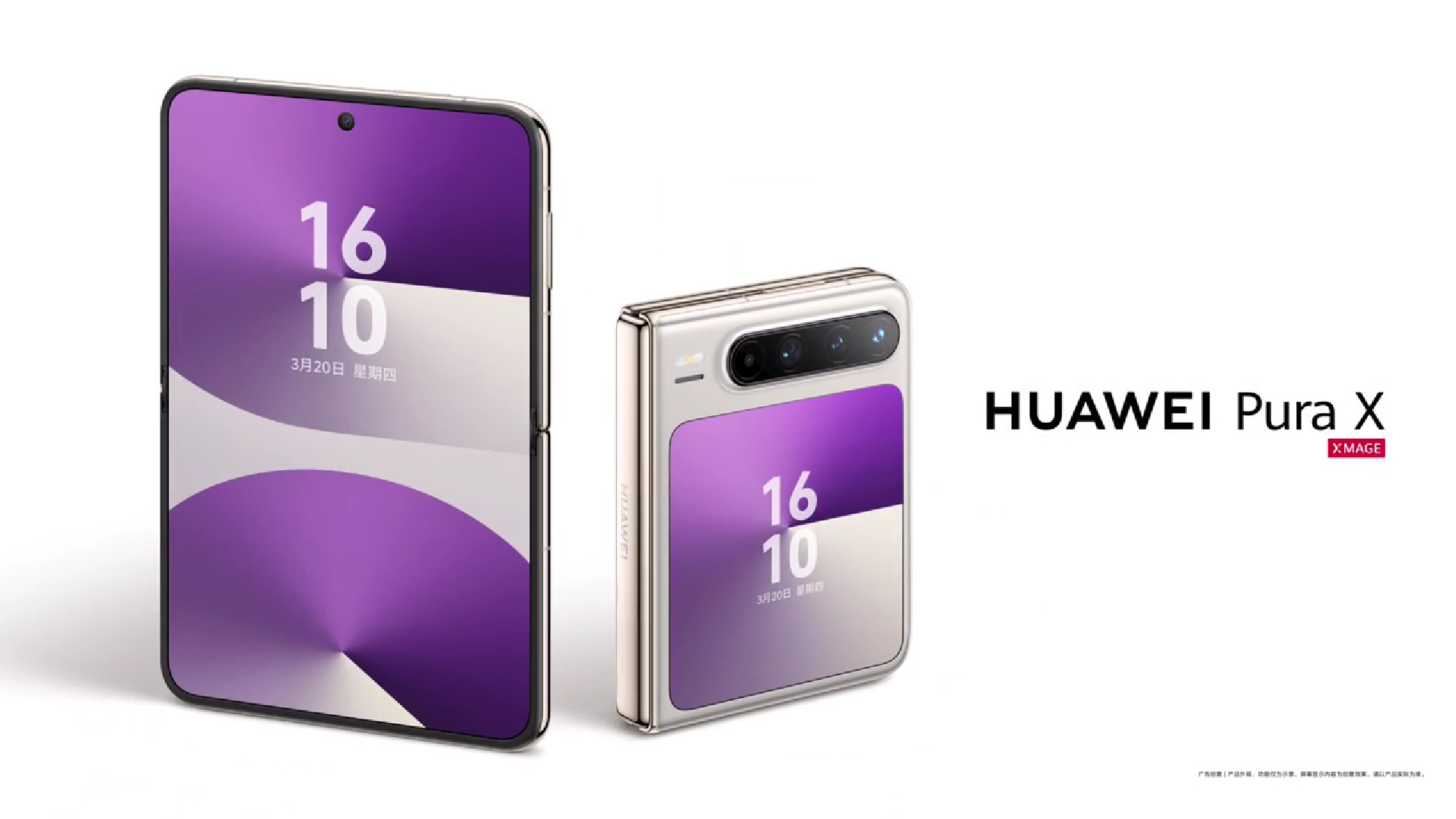
Evidence of this design philosophy is already manifesting in the foldable market, which often serves as a laboratory for technologies that eventually trickle down to traditional "slab" phones. The Huawei Pura X, a sophisticated flip-style foldable, recently turned heads by incorporating a 6.3-inch main display with a 16:10 aspect ratio. This move away from the common 21:9 or 22:9 ratios found in many modern flagships suggests a prioritisation of width and usable space. Rumors surrounding the successor to this device, the Pura X2, suggest an even more radical leap: a folding display that could reach 7.5 inches while maintaining that wider 16:10 orientation. If these dimensions prove successful in the foldable space, the transition to seven-inch non-folding displays becomes a logical progression for manufacturers looking to offer "pro" experiences without the mechanical complexity and high cost of hinges.
Among the companies reportedly experimenting with this "super-sized" format is Motorola. While the brand has found recent success by revitalizing the Razr brand, industry whispers suggest that Motorola is looking to disrupt the traditional flagship market with a device that leans into the "phablet" legacy. Historically, Motorola has not been afraid to experiment with ergonomics, and a wide-screen seven-inch device could position the company as a leader for power users who find current flagship displays too restrictive for document editing or advanced mobile gaming.
The push toward larger screens has historically been hampered by two major factors: physical ergonomics and battery life. While software solutions like "one-handed mode" can mitigate some of the reachability issues, the physical footprint of a seven-inch phone remains a daunting prospect for many consumers. However, the industry believes it has found a solution to the second hurdle—power consumption—through the rapid advancement of silicon-carbon battery technology.
For years, the energy density of traditional lithium-ion batteries acted as a ceiling for smartphone design. Manufacturers were forced into a zero-sum game: if they wanted a small phone, they had to settle for a small battery, which inevitably led to poor endurance. This was the primary criticism leveled against devices like the iPhone 13 Mini or the Asus Zenfone 10. Silicon-carbon batteries change this equation entirely. By replacing the traditional graphite anode with a silicon-carbon composite, manufacturers can achieve significantly higher energy density. This allows for much larger battery capacities to be packed into thinner profiles.
Ironically, while this technology could have been used to create a "small" phone with "big" battery life, manufacturers appear to be using the extra space and efficiency to power larger, more demanding screens. A seven-inch display, particularly one with a high refresh rate and high peak brightness, requires a massive amount of energy. With silicon-carbon cells, a manufacturer can feasibly fit a 6,000mAh or even 7,000mAh battery into a chassis that remains relatively slim, providing the necessary juice to keep a pocket-sized tablet running all day.
This technological evolution highlights a growing disconnect between a vocal minority of enthusiasts and the broader consumer market. On forums and social media, there remains a persistent demand for "mini" flagships—devices under 5.8 inches that offer top-tier cameras and processors. Yet, sales data consistently shows that the majority of the global population prefers larger screens. In emerging markets, where a smartphone is often a user’s primary or only computing device, the "bigger is better" mantra holds even more weight. A seven-inch device is no longer just a phone; it is a primary television, a gaming console, and a workstation.

The move toward wider aspect ratios also addresses a long-standing complaint regarding the "usable" size of modern phones. When a screen is measured diagonally, a tall and narrow 6.7-inch screen actually has less surface area than a wider 6.3-inch screen. By moving to a 16:10 or similar ratio at a seven-inch diagonal, manufacturers are essentially offering the screen real estate of a small tablet (like the original Nexus 7) in a device that, thanks to nearly non-existent bezels, might still fit in a jacket pocket or a handbag.
However, the ergonomic trade-offs cannot be ignored. A wider seven-inch phone will be significantly more difficult to grip for those with smaller hands, and it may mark the final end of the "thumb-reach" era of interface design. We are likely to see a shift in Android and other mobile operating systems toward bottom-heavy navigation, where all interactive elements are placed within the lower third of the screen to accommodate the sheer height and width of the hardware.
As we look toward the late 2025 and early 2026 release cycles, the narrative of the smartphone market seems set. The "compact" phone is not coming back. Instead, we are entering the era of the "Ultra-Phablet." Driven by the demands of high-fidelity mobile content and supported by breakthrough battery chemistry, the seven-inch smartphone is poised to transition from a niche experiment to the new benchmark for premium mobile technology. For those who still miss the days of the four-inch screen, the message from the industry is clear: the future is big, it is wide, and it will require two hands to hold.
