
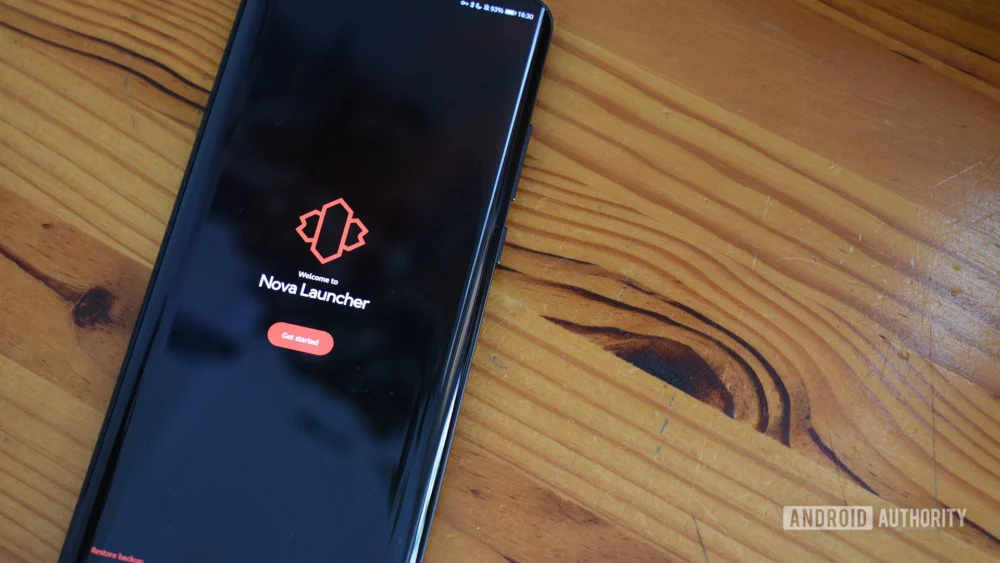
For over a decade, the Android operating system has been defined by a single, resonant promise: the freedom to choose. While manufacturers like Samsung, Google, and Xiaomi have spent years refining their proprietary user interfaces, a significant subset of the Android community has always sought something more personal. At the heart of this movement sat Nova Launcher, an application that became synonymous with the very concept of home screen customization. However, the landscape of third-party development is shifting under the weight of economic necessity and corporate restructuring. As Nova Launcher’s new parent company, Instabridge, signals a major pivot in its monetization strategy, users find themselves at a pivotal moment. The current opportunity to acquire Nova Launcher Prime for a one-time fee of $3.99 may represent the final chance to secure a lifetime of premium features before the application transitions into a potentially more expensive subscription-based or tiered pricing model.
The history of Nova Launcher is a narrative of consistency in a volatile market. Originally developed by Kevin Barry, the launcher garnered a massive following by offering a "clean" version of Android that surpassed even Google’s own Pixel Launcher in terms of sheer utility. It allowed users to resize icons, hide unwanted bloatware, and implement complex gesture controls that turned a standard smartphone into a highly efficient productivity tool. For years, the monetization model was simple and transparent: a free version offered the basics, while a one-time purchase of the "Prime" license unlocked the full suite of professional-grade tools. This model fostered a deep sense of loyalty, with many users reporting that Nova Prime was the first—and sometimes only—app they ever purchased on the Google Play Store.
However, the "golden age" of one-time purchases is rapidly concluding across the software industry. The recent acquisition of Nova Launcher by Instabridge has brought this reality to the forefront. Like many software companies in the 2020s, Instabridge is navigating a market where continuous development, server maintenance, and compatibility updates for ever-evolving Android versions require a steady stream of revenue. In a recent public communication, the company was candid about its need to "evaluate other pricing options or tiers." This phrasing is a clear indicator in the tech world for an impending shift toward a Software-as-a-Service (SaaS) model. Whether this manifests as a monthly subscription or a significantly higher one-time "pro" fee, the result for the consumer remains the same: the era of the $4 lifetime license is ending.
The urgency for users to act now is underscored by Instabridge’s commitment to legacy support. The company has confirmed that it will honor existing purchases made before the official introduction of a new pricing structure. This "grandfathering" clause is a rare olive branch in an industry that often forces long-time users into new payment cycles. By purchasing Nova Prime today, users are essentially buying an insurance policy against future recurring costs. At its current price of $3.99—which is notably a dollar cheaper than its historical standard price—the barrier to entry is remarkably low considering the utility provided.
To understand why Nova Prime remains a high-value proposition despite the looming changes, one must look at the features that the free version lacks. While the base app provides a stable home screen, Prime unlocks the "power user" experience. This includes custom swipe gestures—allowing a user to, for example, swipe up on the camera icon to open the gallery, or double-tap the screen to lock the device. It also provides advanced notification badges, the ability to create custom tabs and folders within the app drawer, and the option to hide apps entirely without uninstalling them. For those who view their smartphone as a specialized tool rather than a generic appliance, these features are indispensable.
Beyond functionality, the acquisition has introduced a more controversial element to the Nova experience: the integration of advertisements. Recent beta versions and updates have seen Instabridge testing display ads within the settings menu, the app drawer, and even the home screen environment. For a community that prides itself on aesthetic minimalism and privacy, this was a jarring shift. However, the company has positioned Nova Prime as the definitive solution to this problem. As of the current roadmap, the Prime version remains an ad-free sanctuary. For many, the $3.99 price tag is not just a fee for features, but a "ransom" paid to maintain a clean, professional user interface free from the visual clutter of modern data-driven advertising.
This shift toward monetization has also raised questions regarding data privacy. Investigative reports and community audits have identified the presence of Meta and Google ad trackers within the application’s code. While Instabridge has defended its data practices, stating that any collected information is used for internal analytics and development rather than being sold to third-party brokers, the presence of these trackers remains a point of contention. In the modern Android ecosystem, however, such trackers are becoming increasingly difficult to avoid in mainstream applications. For the dedicated Nova user, the trade-off remains a matter of practical utility; the launcher’s ability to transform the user experience often outweighs the concerns regarding standard telemetry.
The sentiment among the Android faithful remains overwhelmingly positive, rooted in years of reliable performance. Long-time users often speak of Nova Launcher not just as an app, but as an essential part of their digital identity. On community forums and social media, the consensus is clear: the app has paid for itself many times over. Users who purchased the Prime license as far back as 2012 or 2014, during the era of the Nexus 4 and Nexus 5, are still receiving updates today. This decade-long support cycle is unheard of in the mobile space, where apps are frequently abandoned or rendered obsolete by operating system updates. This historical reliability serves as a powerful argument for the "buy now" strategy. Even if the app’s development slows or changes direction under Instabridge, the current stable build remains one of the most robust launchers available.
As we look toward 2025, the competitive landscape for Android launchers is tightening. Competitors like Niagara Launcher have found success with minimalist, subscription-based models, while others like Lawnchair struggle with the pace of Android’s system-level changes. Nova’s advantage has always been its balance of "everything-and-the-kitchen-sink" customization and rock-solid stability. If Instabridge succeeds in modernizing the app’s backend and stabilizing recent performance bugs, Nova could remain the dominant force in the market for another decade. But that future development will undoubtedly be funded by a more aggressive pricing strategy.
For the undecided user, the math is straightforward. The current $3.99 investment secures a premium experience that has been refined over twelve years of development. It removes the threat of intrusive advertisements and provides a suite of organizational tools that can significantly reduce the friction of daily smartphone use. Most importantly, it bypasses the "subscription fatigue" that has begun to plague the modern consumer. In an age where we are billed monthly for everything from storage to streaming, the ability to "own" a piece of high-quality software for the price of a cup of coffee is a disappearing luxury.
The window is closing. As Instabridge finalizes its realignment and prepares to launch its new pricing tiers, the legacy Nova Launcher Prime license stands as one of the best values in the mobile world. For those who value the ability to shape their digital environment, the message is clear: secure your license now, or prepare to navigate a much more expensive landscape of recurring payments and tiered access in the very near future. Nova Launcher has survived the rise and fall of countless Android trends; by acting today, you ensure that your personal version of that history remains intact, ad-free, and fully featured for the years to come.
