

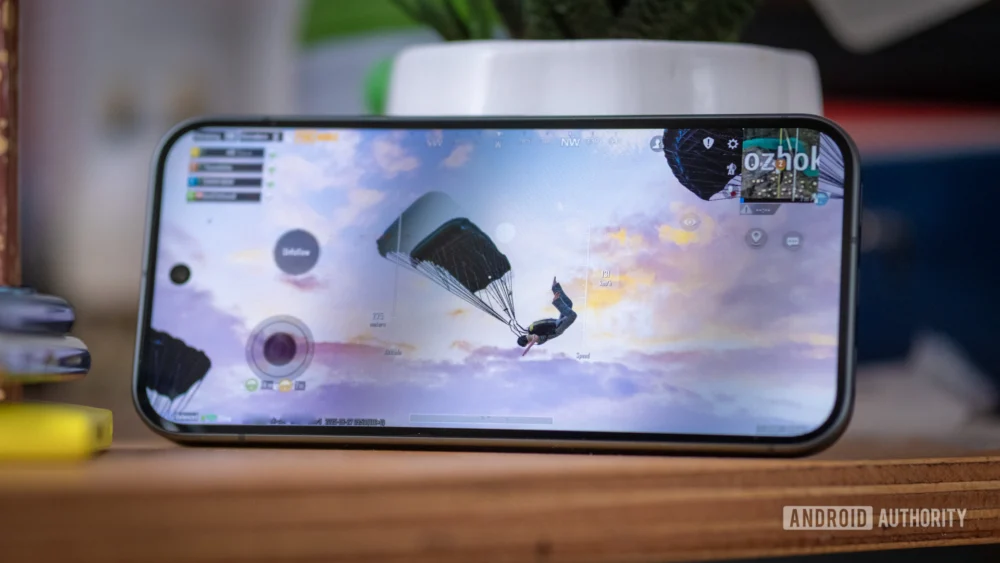
The annual cycle of smartphone releases has long been dictated by a predictable rhythm of incremental hardware upgrades, marketed with the fervor of revolutionary breakthroughs. At the heart of this narrative is the chipset—the silicon brain that determines everything from computational speed to graphical fidelity. With the arrival of the Qualcomm Snapdragon 8 Elite Gen 5, the industry has once again been flooded with promises of "next-generation" performance. Benchmark data initially seemed to validate these claims, showcasing staggering leads in synthetic tests that suggest a wide gulf between the latest devices and their immediate predecessors. However, as these handsets transition from controlled laboratory environments to the hands of everyday users, a different story is emerging. For the dedicated mobile gamer, the hardware reality is one of diminishing returns, where last year’s flagship is not just "good enough," but practically indistinguishable from the latest high-priced models.
To understand why the gap between generations is closing, one must look at the disparity between theoretical peaks and real-world application. Qualcomm’s latest flagship silicon, the Snapdragon 8 Elite Gen 5, arrives with bold claims of a 23% improvement in graphics processing and a 20% reduction in power consumption compared to the previous Snapdragon 8 Elite. On paper, and in the vacuum of a 3DMark or Geekbench run, these numbers are impressive. They suggest that a phone equipped with this new chip should handle the most demanding titles with a level of fluidity that older hardware simply cannot match. Yet, the mobile gaming ecosystem is not governed by benchmarks alone; it is constrained by thermal physics, developer optimization, and the software caps inherent to the Android platform.
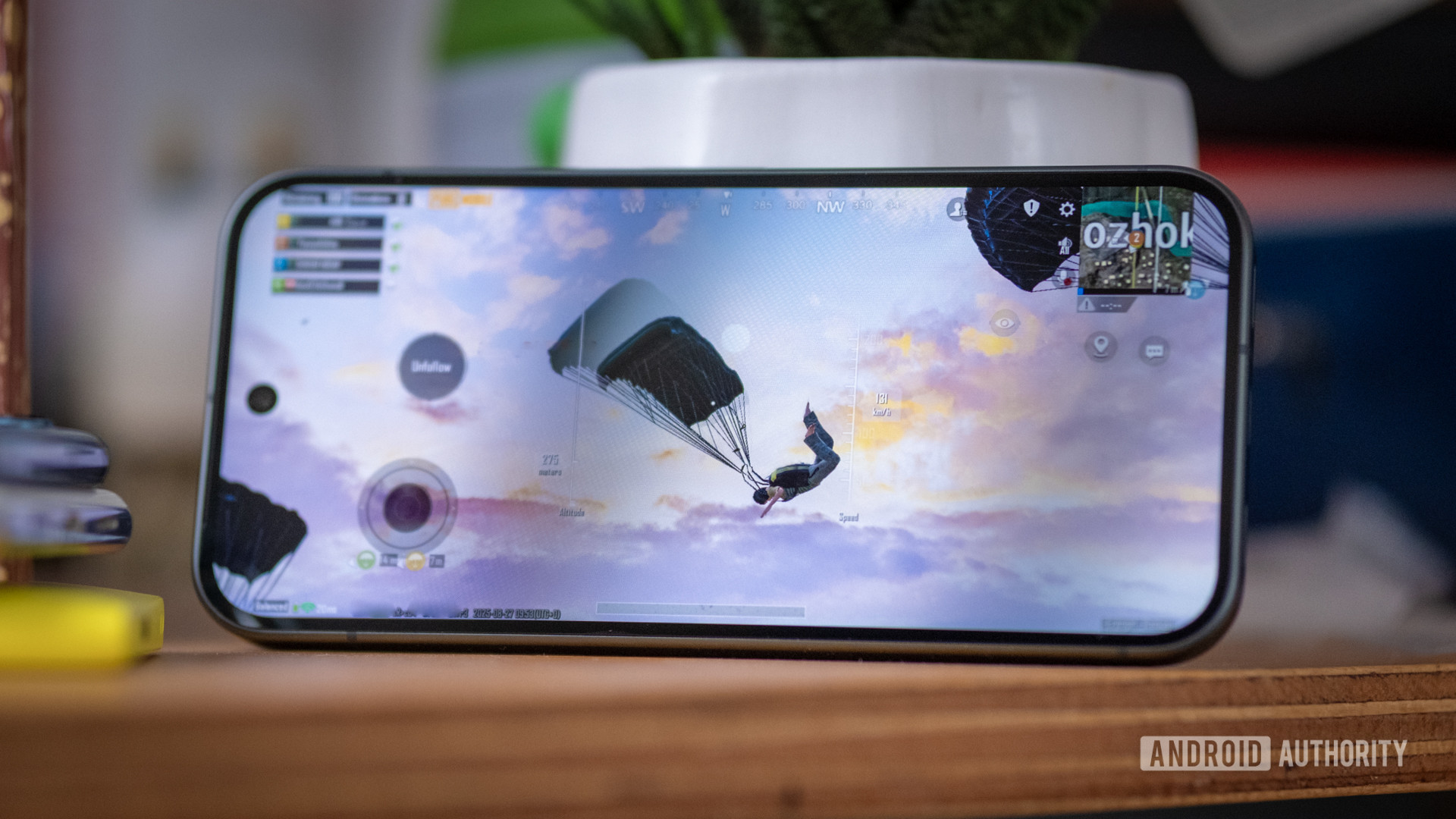
A side-by-side comparison of the new Xiaomi 17 Ultra, featuring the Snapdragon 8 Elite Gen 5, and its predecessor, the Xiaomi 15 Ultra, powered by the original Snapdragon 8 Elite, provides a revealing look at this performance plateau. When subjected to a suite of high-intensity Android games—including Call of Duty: Mobile, Genshin Impact, and Asphalt Legends—the practical differences between the two generations of silicon vanish. In Call of Duty: Mobile’s Battle Royale mode, both devices effortlessly reach a 120 frames-per-second (fps) ceiling. While occasional micro-stutters occur on both models, they remain infrequent and minor, never compromising the competitive integrity of the gameplay.
The true equalizer in mobile gaming is not the processor’s peak clock speed, but its thermal envelope. In testing, both the Xiaomi 17 Ultra and the 15 Ultra exhibited a consistent behavior: once the internal temperature reached approximately 40°C—usually after 20 to 30 minutes of sustained play—the systems triggered power-throttling mechanisms. This resulted in temporary frame drops to the 80 fps range on both devices. This thermal wall represents the current limit of the compact mobile form factor. Regardless of how powerful a chip is, it cannot outrun the laws of thermodynamics in a chassis that lacks active cooling fans. Consequently, the "extra" power of the Gen 5 chip remains largely untapped during long gaming sessions, as the phone must downclock to prevent overheating, effectively bringing it down to the same performance level as the older model.
This trend continues in open-world titles like Genshin Impact, often cited as the gold standard for mobile hardware stress testing. Even with graphical settings pushed to their absolute maximum, both the new and old Snapdragon chips maintained a rock-solid 60 fps. Interestingly, both devices operated at a relatively cool 35°C during this test, suggesting that the software itself—or perhaps the game engine’s optimization—is the bottleneck rather than the hardware. When a game is designed to run smoothly on a wide range of devices to maximize its player base, the "overkill" power of a brand-new flagship becomes a dormant asset.
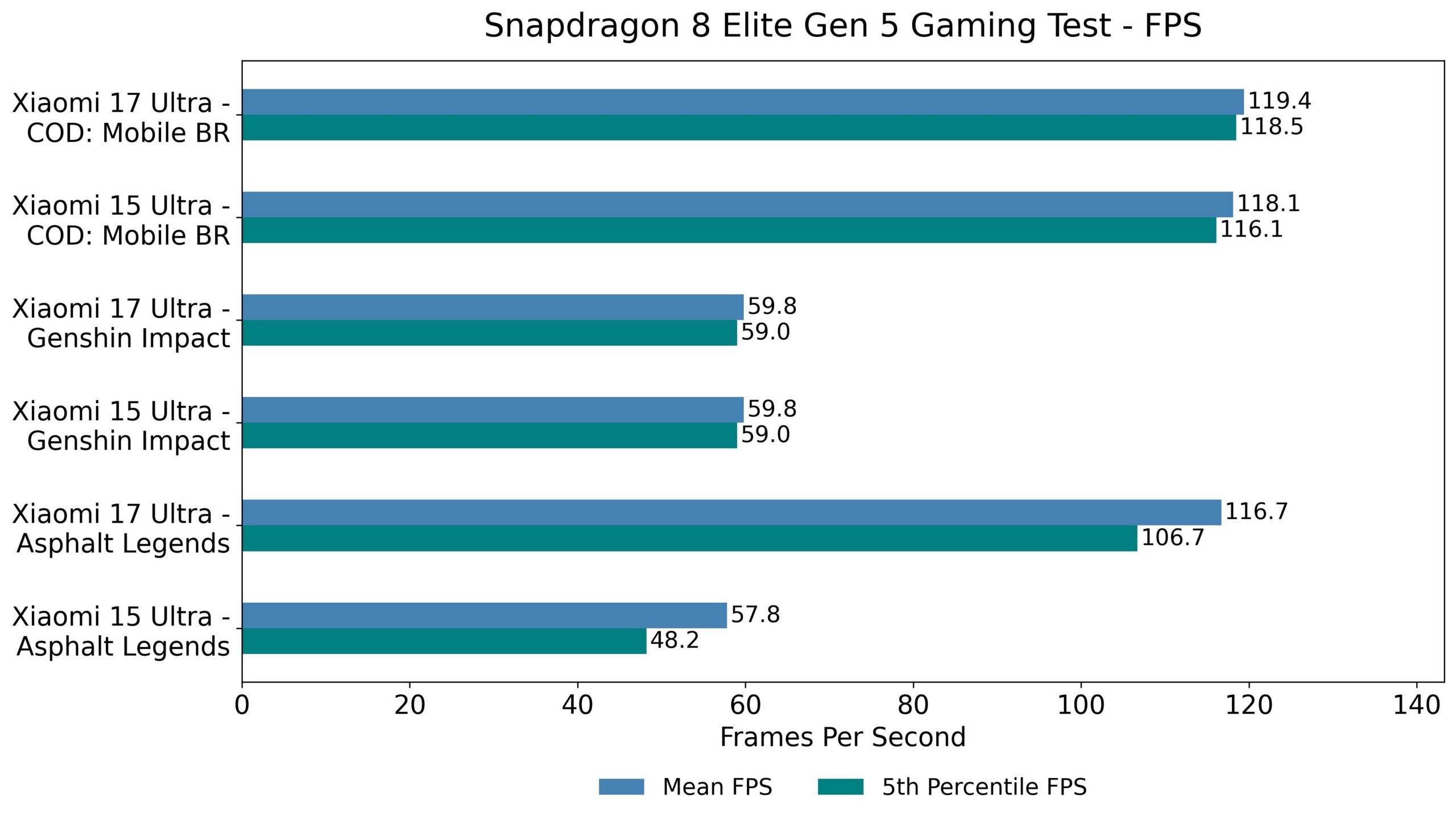
The only notable discrepancy in standard Android gaming appeared in Asphalt Legends. While the Xiaomi 17 Ultra successfully unlocked a 120 fps mode, the 15 Ultra remained capped at 60 fps despite having the raw power to go higher. This illustrates a frustrating reality of the mobile market: "artificial" obsolescence driven by software flags. Developers often whitelist specific frame rates or graphical features for the newest chipsets while leaving older, capable hardware behind. However, for the consumer, this is a matter of software policy rather than a hardware deficiency. In terms of the actual gaming experience, the 60 fps provided by the older chip remains perfectly fluid, and the 5th percentile frame rates—a measure of stability—showed that the older chip was nearly as consistent as the new one.
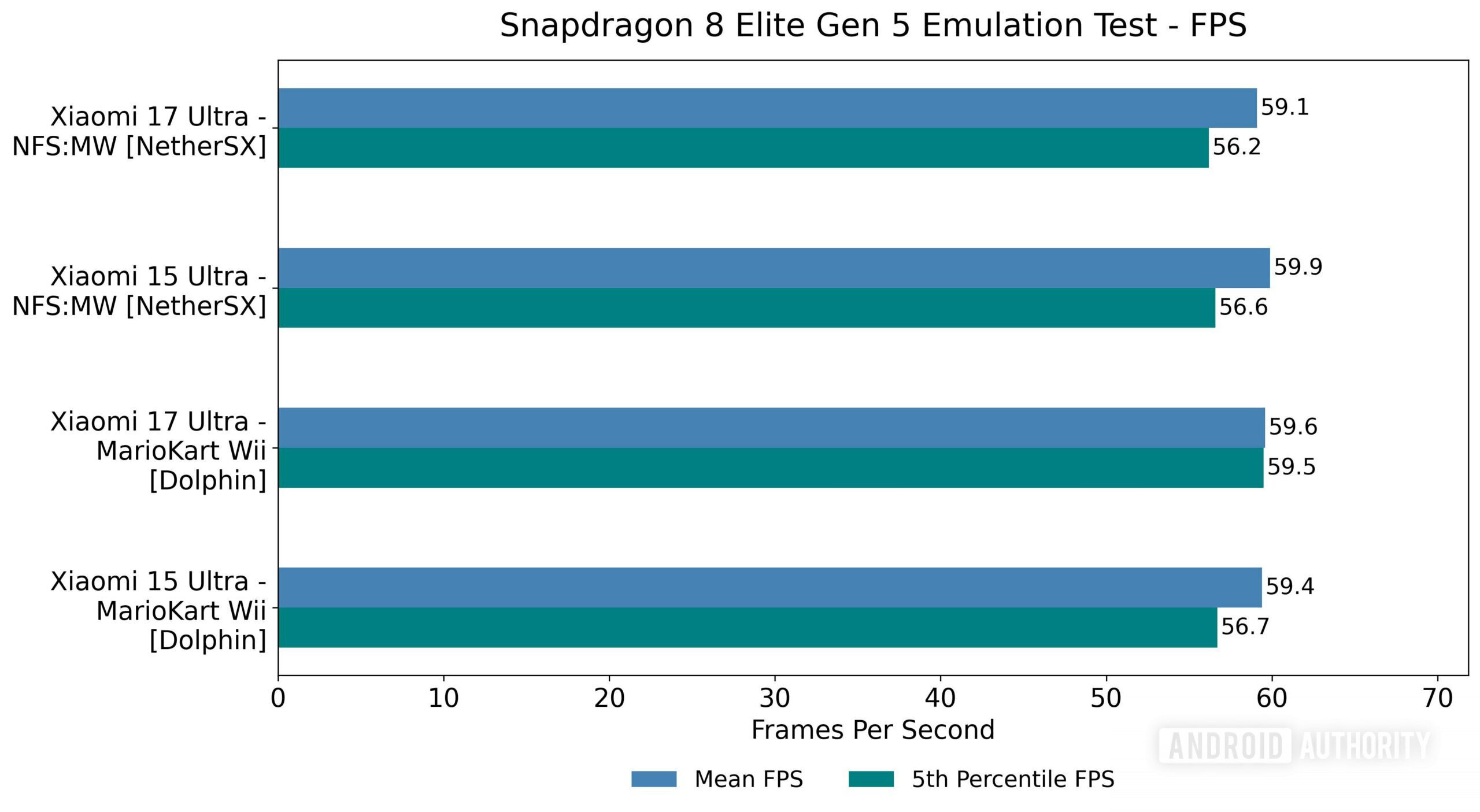
Where the Snapdragon 8 Elite Gen 5 does show a legitimate, measurable advantage is in the niche but demanding world of emulation. When running console-quality software through emulators like NetherSX (for PlayStation 2) and Dolphin (for Nintendo Wii), the new chipset demonstrates superior architectural efficiency. In titles like Need for Speed: Most Wanted and Mario Kart Wii, both generations of chips managed to lock in at 60 fps at high internal resolutions (3x and 4x native, respectively). However, the power draw tellingly favored the newer silicon. The Gen 5 chip averaged between 5.0W and 5.4W during these sessions, while the older chip required between 5.6W and 7.6W to achieve the same results.
This improved efficiency is the most significant "real" upgrade of the new generation. A more efficient chip means less heat generation for the same amount of work and, theoretically, longer battery life during gaming sessions. Yet, even this victory is nuanced. Both phones experienced identical power spikes exceeding 12W during certain CPU-intensive background tasks, suggesting that software optimization at the OS level often outweighs the efficiency gains of the silicon itself. Furthermore, the newer chip faced initial driver instabilities, requiring testers to disable certain multi-core speed-up features to avoid graphical glitches—a common "early adopter tax" that owners of older, more mature hardware avoid.
The conclusion for the modern consumer is clear: the era of "must-have" annual upgrades for gaming is over. While manufacturers will continue to use benchmark scores as a primary marketing tool, the actual utility of that extra power is currently minimal for the vast majority of mobile games. The mobile industry has reached a point of saturation where the hardware has outpaced the software. Most developers target the "median" flagship—hardware that is two to three years old—to ensure their games are accessible to the largest possible audience. As a result, even a last-gen flagship has enough "headroom" to handle upcoming releases for several years.
Choosing a last-generation flagship, such as the Xiaomi 15 Ultra or a similar Snapdragon 8 Elite device, offers a significantly better price-to-performance ratio. These handsets are frequently available at steep discounts as retailers make room for newer inventory, yet they provide a gaming experience that is 95% identical to the latest models. The money saved by opting for a year-old device can often be better spent on high-quality peripherals, such as dedicated mobile controllers or low-latency wireless earbuds, which arguably have a greater impact on the gaming experience than a 20% boost in a benchmark score you will never feel.
Ultimately, the smartphone industry is grappling with a fundamental question of necessity. We are seeing a shift where the focus should perhaps move away from raw peak power and toward sustained performance, better thermal management, and more affordable high-performance silicon. As long as mobile devices are limited by their size and the lack of active cooling, the "next-gen" chips will continue to hit the same thermal ceilings as their predecessors. For those whose primary concern is playing the latest games at high settings with smooth frame rates, the message is simple: look to the past to find the best value for the future. Last year’s flagship is not a compromise; it is a calculated, high-performance choice for the savvy gamer.
