

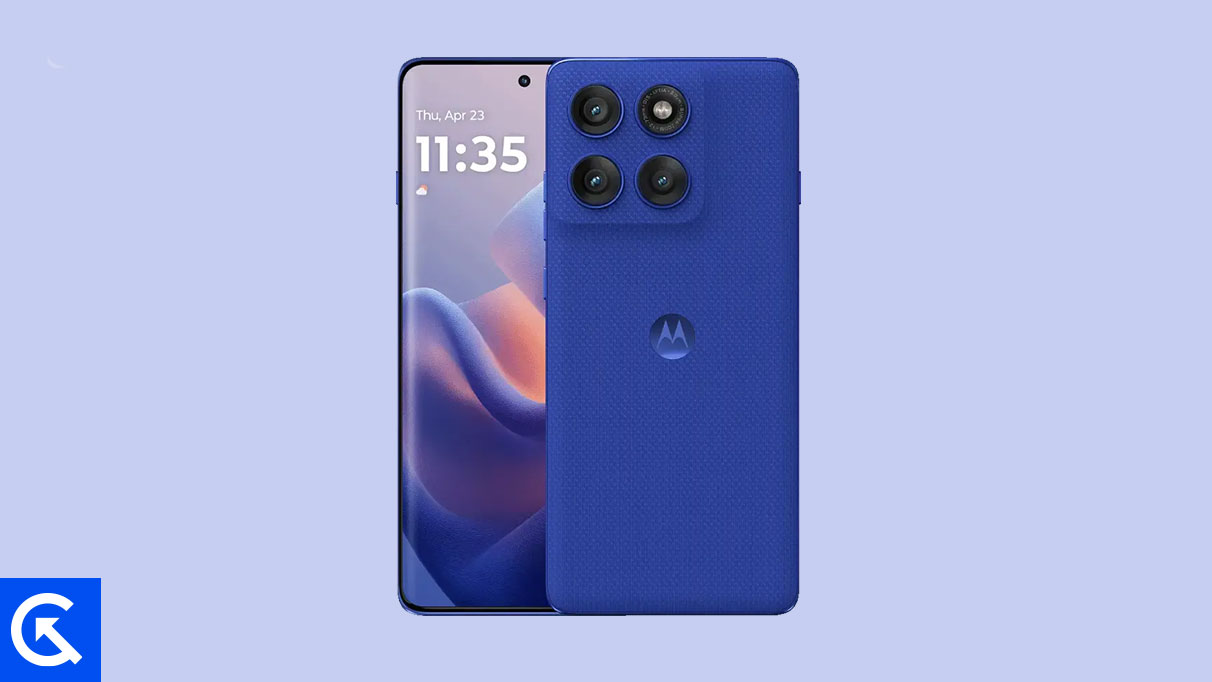
The landscape of mobile operating systems is shifting once again as Google officially pulls back the curtain on Android 16. While the initial rollout of any major Android iteration is traditionally reserved for Google’s own Pixel lineup, the vibrant community of independent developers has wasted no time in bridging the gap for other high-performance hardware. For owners of the Motorola Edge 60 Pro, the opportunity to bypass official manufacturer timelines and experience the cutting edge of mobile software has arrived via unofficial Android Open Source Project (AOSP) builds. This move represents more than just a software update; it is a revitalization of a device that already stands as a titan in the premium mid-to-high-end market. By porting Android 16 to the Edge 60 Pro, developers are allowing enthusiasts to explore the "Material 3 Expressive" design language and various under-the-hood optimizations long before an official over-the-air (OTA) update might appear on the horizon.
![How to Install Android 16 on Motorola Edge 60 Pro [Download Link]](https://www.getdroidtips.com/wp-content/uploads/2026/02/Motorola-Edge-60-Pro.jpg)
To understand why installing Android 16 is such a compelling prospect for this specific device, one must first look at the formidable hardware of the Motorola Edge 60 Pro. Motorola engineered this device to be a balanced powerhouse, centering the experience around a 6.7-inch P-OLED panel. With a 1220p resolution and a fluid 120Hz refresh rate, the display is a perfect canvas for the visual refinements introduced in Android 16. The high peak brightness ensures that the new system animations and bolder typography are legible even under direct sunlight, while the curved aesthetics of the device complement the fluid motions of the new OS. Under the hood, the Dimensity 8350 Extreme chipset, paired with ultra-fast UFS 4.0 storage, provides the computational muscle required to handle the increased complexity of a modern AOSP build without breaking a sweat. Furthermore, the inclusion of a massive 6000 mAh silicon-carbon battery ensures that the experimental nature of a custom ROM does not immediately compromise the device’s legendary endurance.
Android 16 itself introduces a significant design evolution known as Material 3 Expressive. This is not a total departure from the design language established in previous versions but rather a sophisticated refinement. It addresses the "aging" feel of the original Material Design 3 by introducing more dynamic, physics-based animations that respond to user touch with greater intent. Typography has been made bolder to improve readability, and touch targets have been enlarged to accommodate the ergonomic needs of modern, large-screen smartphones. For the Motorola Edge 60 Pro, these changes feel particularly at home. The device’s sophisticated haptic engine and high-refresh-rate screen make the "Expressive" animations feel tactile and immediate. Beyond the aesthetics, Android 16 focuses on system-level efficiency, aiming to reduce background resource consumption and improve the hand-off between different form factors, such as when using the device in a desktop-like environment or multitasking with split-screen apps.
![How to Install Android 16 on Motorola Edge 60 Pro [Download Link]](https://www.getdroidtips.com/wp-content/uploads/2026/02/Motorola-Edge-60-Pro-300x169.jpg)
The transition to a custom ROM, however, is a journey that requires technical precision and careful preparation. Unlike a standard OTA update, which is handled automatically by Motorola’s servers, installing an unofficial AOSP build requires the user to take control of the device’s bootloader and recovery environments. The prerequisite list is non-negotiable for a successful installation. First and foremost is the necessity of a comprehensive data backup. Because the process of unlocking the bootloader—a mandatory step for any custom software installation—triggers a factory reset for security reasons, users must ensure their photos, documents, and application data are safely stored in the cloud or on external hardware. Furthermore, ensuring the battery is charged to at least 50% is a critical safeguard against the device powering down during the sensitive flashing process, which could lead to a software "brick" or a corrupted partition.
Technical connectivity is the next pillar of the installation process. A successful bridge between the PC and the Motorola Edge 60 Pro requires the latest Motorola USB drivers and the Android Debug Bridge (ADB) and Fastboot binaries. These tools act as the communication channel, allowing the computer to send low-level commands to the phone’s hardware. For the Edge 60 Pro, the bootloader must be unlocked following Motorola’s official developer portal protocols, which often involves obtaining a unique unlock key. Once the bootloader is open, the installation of a custom recovery, specifically TWRP (Team Win Recovery Project), becomes possible. TWRP serves as a secondary mini-OS that remains on the device, providing a touch-based interface for wiping partitions and installing the Android 16 ROM files.
![How to Install Android 16 on Motorola Edge 60 Pro [Download Link]](https://www.getdroidtips.com/wp-content/uploads/2020/06/cmd-platform-tools.jpg)
When it comes to the software itself, users must download the specific Android 16 AOSP build tailored for the Edge 60 Pro. Because these are "clean" builds, they often lack the suite of Google services—such as the Play Store, Maps, and Gmail—that users take for granted. To remedy this, a separate package known as GApps (Google Apps) for Android 16 must be downloaded. It is a vital rule of thumb in the developer community to flash the GApps package immediately after the ROM, without rebooting the system in between. This ensures that the Google framework is integrated into the system partitions correctly during the initial boot sequence. While the current reports suggest that "everything is working" in these early builds, the nature of unofficial software means that minor bugs—perhaps related to specific sensors or niche network configurations—may exist. Users are encouraged to act as part of the development cycle by reporting any anomalies to the ROM maintainers with appropriate logs.
The actual installation procedure is a methodical dance within the TWRP recovery environment. After transferring the ROM and GApps files to the device’s internal storage, the user must perform a "Factory Reset" within TWRP to clear out the previous Android 15 data structures. This is followed by the installation of the Android 16 ZIP file, and subsequently, the GApps ZIP. Once the flashing process is complete, a final "Format Data" command is often required to resolve encryption conflicts that can occur when moving between different Android versions. The first boot into Android 16 is notoriously slow, as the system must rebuild its cache and initialize the new "Expressive" UI components. This patience is rewarded when the Motorola "M" logo eventually gives way to the clean, minimalist setup screen of Android 16.
![How to Install Android 16 on Motorola Edge 60 Pro [Download Link]](https://www.getdroidtips.com/wp-content/uploads/2020/08/twrp-custom-rom.jpg)
The benefits of this upgrade extend beyond mere novelty. By adopting Android 16 through the AOSP community, Motorola Edge 60 Pro users are essentially future-proofing their hardware. Official updates from manufacturers often come with "bloatware" or heavy skinning that can degrade performance over time. AOSP builds, by contrast, offer a "Pixel-like" experience that is lean, fast, and highly customizable. This allows the Dimensity 8350 Extreme to operate at its peak efficiency, potentially offering better benchmark scores and smoother gaming performance than the stock software. Furthermore, it gives users access to the latest security patches and privacy controls that Google has baked into the core of Android 16, such as more granular permission settings and improved data encryption protocols.
Ultimately, the availability of Android 16 for the Motorola Edge 60 Pro is a testament to the longevity of high-quality hardware when supported by a dedicated enthusiast community. While Motorola provides a solid foundation with its official Android 15 build and promises of future updates, the custom ROM route offers a parallel path for those who refuse to wait. It transforms the Edge 60 Pro from a standard consumer product into a versatile platform for experimentation and peak performance. As Android 16 continues to mature and more stable builds emerge, the experience will only become more refined, solidifying the Motorola Edge 60 Pro’s reputation as one of the most flexible and durable flagship alternatives on the market today. For the bold user, the future of Android is not something to wait for—it is something to be downloaded and installed today.