

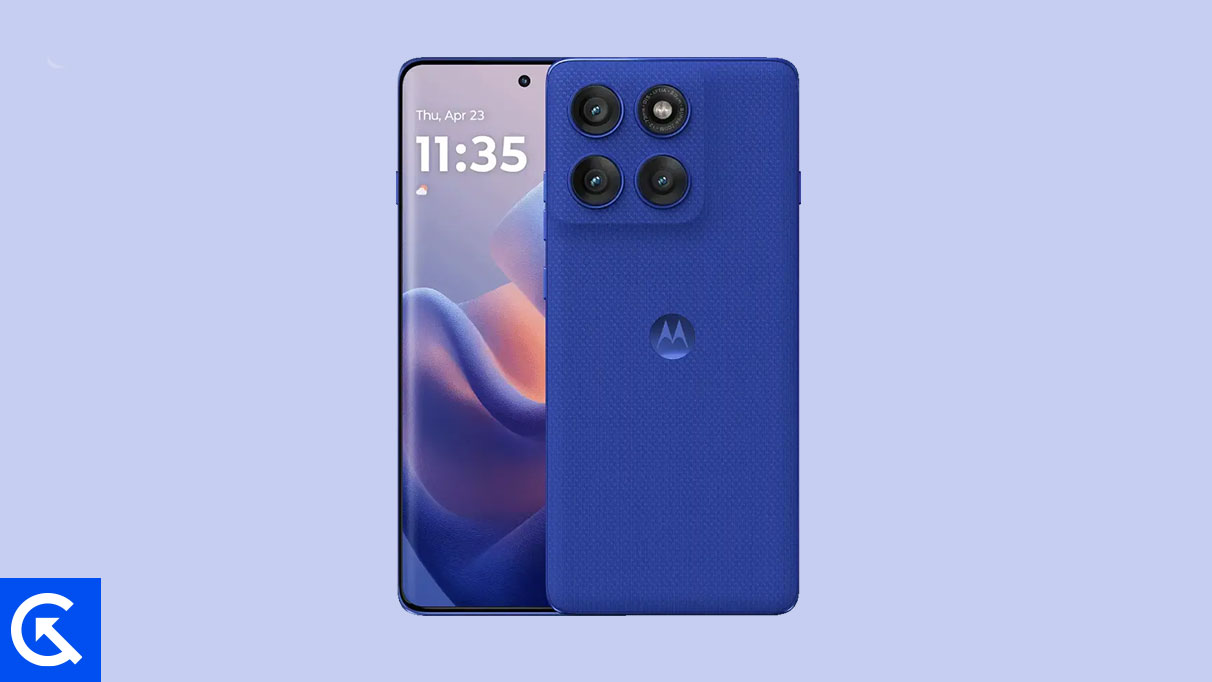
The mobile technology landscape is currently witnessing a significant shift as enthusiasts and power users seek to bypass traditional manufacturer update cycles in favor of bleeding-edge software experiences. While the Motorola Edge 60 Pro debuted as a formidable contender in the premium mid-to-high-end segment, the arrival of Android 16 has sparked a new wave of interest in the device’s untapped potential. Although Google’s latest operating system iteration is initially rolling out to its proprietary Pixel lineup, the developer community has moved with remarkable speed to port unofficial Android Open Source Project (AOSP) builds to high-performance hardware like the Edge 60 Pro. This guide explores the sophisticated process of transitioning to Android 16, a move that promises to rejuvenate the device’s interface and performance metrics.
To understand why a user would undertake the technical challenge of installing a custom ROM, one must first look at the hardware foundation of the Motorola Edge 60 Pro. The device is built around a stunning 6.7-inch P-OLED panel that delivers a crisp 1220p resolution. With a 120Hz refresh rate and peak brightness levels engineered for crystal-clear outdoor visibility, the display serves as a perfect canvas for the visual refinements introduced in the new OS. Under the hood, the Dimensity 8350 Extreme chipset, paired with ultra-fast UFS 4.0 storage, provides the computational overhead required to run unoptimized, early-stage builds of Android 16 with surprising fluidity. The device’s physical architecture is equally impressive, featuring a durable build protected by Gorilla Glass 7i and an eco-leather back, complemented by IP68/IP69 ratings for environmental resistance.
![How to Install Android 16 on Motorola Edge 60 Pro [Download Link]](https://www.getdroidtips.com/wp-content/uploads/2026/02/Motorola-Edge-60-Pro.jpg)
Android 16 represents a philosophical shift in Google’s design language, moving from the foundational Material Design 3 into a more sophisticated era dubbed "Material 3 Expressive." This update is not merely a superficial coat of paint; it is a fundamental refinement of how users interact with their screens. Material 3 Expressive focuses on the "fluidity of motion," introducing dynamic animations that respond more naturally to touch inputs. It addresses long-standing user feedback regarding touch precision by enlarging interactive targets and utilizing bolder, more legible typography across the system. For a device like the Edge 60 Pro, which utilizes a curved display, these refinements in edge-to-edge interaction and visual hierarchy are particularly impactful, making the software feel as premium as the hardware it inhabits.
The transition to Android 16 also brings about deeper system optimizations. These include improved background task management and enhanced privacy controls, ensuring that the massive 6000 mAh silicon-carbon battery of the Edge 60 Pro is utilized more efficiently. While the stock Android 15 experience provided by Motorola is clean and reliable, the AOSP-based Android 16 build offers a "vanilla" experience free from any carrier or manufacturer modifications. This allows the Dimensity 8350 Extreme to operate without the overhead of additional software layers, often resulting in lower latency and faster app launch times.
However, the path to installing a custom ROM requires a disciplined approach to technical preparation. The process is inherently risky and should only be undertaken by those who understand that modifying system-level software can void warranties or lead to temporary device instability. The first and most critical step is the comprehensive backup of all personal data. Since the installation process requires unlocking the bootloader—a security gateway that protects the integrity of the factory software—all user data will be wiped to ensure a clean slate for the new OS.
![How to Install Android 16 on Motorola Edge 60 Pro [Download Link]](https://www.getdroidtips.com/wp-content/uploads/2026/02/Motorola-Edge-60-Pro-300x169.jpg)
Beyond data security, hardware readiness is paramount. A device must maintain at least a 50% battery charge to prevent a catastrophic power failure during the flashing process, which could lead to a "bricked" or unusable state. Furthermore, a stable connection between the smartphone and a computer is required. This necessitates the installation of the latest Motorola USB drivers and the setup of ADB (Android Debug Bridge) and Fastboot binaries. These command-line tools are the primary means of communication between the PC and the phone’s bootloader, allowing for the transmission of system images and recovery environments.
The heart of the installation process lies in the use of a custom recovery environment, most notably TWRP (Team Win Recovery Project). TWRP replaces the stock recovery and provides a graphical interface for advanced operations such as wiping system partitions and installing ZIP files. Once the bootloader is unlocked—a process that involves obtaining a unique key from Motorola’s developer portal—TWRP can be flashed to the recovery partition. This environment acts as the "operating room" where the Android 16 ROM and the necessary Google Apps (GApps) packages are integrated into the device.
A notable characteristic of AOSP builds is their "de-Googled" nature. Unlike the software that comes pre-installed on retail phones, pure AOSP does not include proprietary Google services like the Play Store, Maps, or Gmail. Consequently, users must download a separate GApps package tailored for Android 16. It is vital to flash the ROM and the GApps package in a single session before rebooting the device to ensure that the Google Play Services framework initializes correctly alongside the system.
![How to Install Android 16 on Motorola Edge 60 Pro [Download Link]](https://www.getdroidtips.com/wp-content/uploads/2020/06/cmd-platform-tools.jpg)
The step-by-step execution begins with transferring the downloaded ROM and GApps files to the device’s internal storage. After booting into TWRP recovery, the user must perform a "Factory Reset" to clear the cache and data partitions. Following the wipe, the "Install" menu is used to select the Android 16 ROM file. Once the system flash is complete, the GApps package is added to the queue. After a final cache wipe to ensure no residual data interferes with the new installation, the device is ready for its first boot into the new operating system.
It is important to note that the initial boot sequence after a major software overhaul can take significantly longer than a standard restart. During this time, the system is building its Dalvik cache and configuring hardware-level permissions. Once the Android 16 setup screen appears, users will find a familiar yet distinctly modernized interface. While early reports indicate that the primary hardware functions—including the 50 MP triple camera array and the 90W fast charging system—remain operational on these builds, adopters should remain vigilant for minor bugs. These are common in early unofficial ports and are typically resolved through subsequent community updates.
The decision to install Android 16 on the Motorola Edge 60 Pro is ultimately about longevity and customization. By embracing the community-driven development of AOSP, users can enjoy the latest software innovations years before they might officially reach the device through traditional channels. This process transforms the Edge 60 Pro from a standard consumer product into a personalized powerhouse, showcasing the best that the Android ecosystem has to offer. As the developer community continues to refine these builds, the synergy between Motorola’s high-end hardware and Google’s expressive software will only grow stronger, providing a glimpse into the future of mobile productivity and design. For those willing to navigate the complexities of the flashing process, the reward is a device that feels brand new, powered by the most advanced mobile operating system available today.