

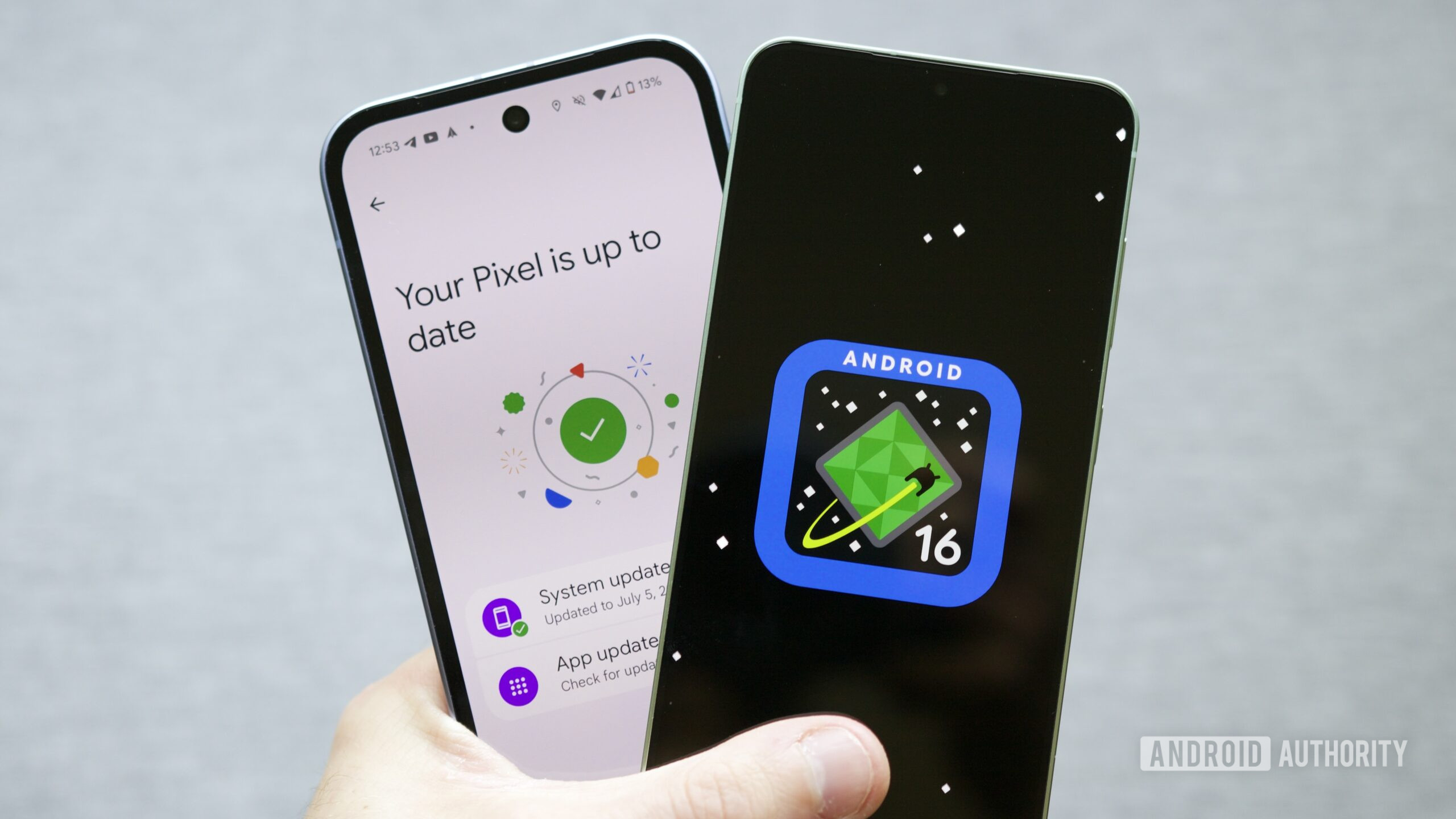
The commencement of 2026 was intended to be a milestone for Google’s hardware ecosystem, signaling a new era of software refinement and the continued evolution of its flagship smartphone line. However, for a significant portion of the Pixel user base, the new year has brought more questions than answers. While Google officially initiated the rollout of the January 2026 security patch and functional update more than ten days ago, a widespread and growing number of users report that their devices remain stuck on December’s software. This delay, which has now exceeded the typical "staged rollout" window, is causing a wave of concern across the Android community, highlighting potential bottlenecks in Google’s increasingly complex software distribution pipeline.
For years, the primary selling point of the Pixel brand has been its "first in line" status for software updates. Unlike the broader Android ecosystem, where carrier testing and manufacturer skins often delay critical security patches by weeks or even months, Pixel owners expect to receive notifications the moment Google pushes the button. That expectation was met with a "holiday hangover" this year, as the January update arrived later than its usual first-Monday-of-the-month slot. Even after the official announcement, the expected wave of installations has seemingly turned into a trickle, leaving enthusiasts and security-conscious users checking their settings menus in vain.
The digital town squares of the smartphone world—specifically Reddit and the Google Support Forums—have become hubs of troubleshooting and shared commiseration. In subreddits dedicated to the Pixel line, the narrative is remarkably consistent: users are manually refreshing the "System Update" screen only to be met with the discouraging message that their device is up to date, despite running outdated firmware. While software rollouts are traditionally staggered to ensure server stability and to catch any last-minute "show-stopping" bugs, a ten-day lag for a significant portion of the global user base is highly irregular for Mountain View.
Analysis of these user reports reveals a peculiar pattern regarding which devices are most affected. While the delay appears to touch almost every supported model, the highest concentration of complaints stems from owners of the Pixel 8 and the newly minted Pixel 10 series. The Pixel 10, Google’s current flagship, was expected to be the priority for this cycle, yet users of the Pro and Pro XL models are among the most vocal about the missing update. Similarly, the Pixel 8 series—which Google famously promised would receive seven years of software support—is seeing a massive gap in availability. There are also scattered reports from Pixel 9 and Pixel 9a users indicating that they, too, are being bypassed by the automated deployment system.
The lack of a clear common denominator has only added to the confusion. Usually, update delays can be traced back to a specific mobile carrier holding up the process for certification. However, the current situation seems to transcend carrier boundaries. Both users with unlocked devices purchased directly from the Google Store and those with units tied to major carriers like T-Mobile, AT&T, and international providers are reporting the same absence of software. There is one notable exception in the official documentation: the January update notes specifically mention the Pixel 9a for Verizon customers, suggesting that certain carrier-specific builds may have been prioritized or separated from the general release path.
Geographic discrepancies are also playing a role in this fragmented rollout. Historical data suggests that Google often staggers releases by region to comply with local regulatory standards or to accommodate specific modem firmware requirements for regional cellular bands. In this instance, there is evidence that the update might not be intended for Pixel 8 series devices in the EMEA (Europe, Middle East, and Africa) and Japan regions at this exact moment. This regional "blackout" often occurs when Google identifies a localized bug—such as a connectivity issue with a specific European carrier—that requires a separate, patched build before it can be safely deployed to the masses.
Beyond the simple absence of the update, a more troubling technical phenomenon has emerged among those who actually see the update notification. Several users, including those on the Pixel 10 Pro XL, have reported a "ghost update" scenario. In these cases, the phone successfully identifies that a new version is available and begins the download process. However, the installation frequently crashes midway through, or the update simply vanishes from the system menu after a failed attempt. One Redditor detailed a frustrating loop where the phone prompted a restart to complete the installation, only to reboot back into the December firmware with no sign of the January patch remaining. This suggests that Google may have "pulled" certain builds from the server after discovering an installation error, leaving the device’s update client in a state of limbo.
This instability comes at a time when the Android operating system is undergoing significant architectural shifts. With Android 16 serving as the underlying framework for the 2026 cycle, Google has been working to modularize the OS further through initiatives like Project Mainline. This allows security updates to be delivered via the Google Play Store rather than a full system OTA (Over-the-Air) update. While this makes the device more secure in the interim, it does not replace the need for the monthly system-level patches that address kernel-level vulnerabilities and hardware-specific optimizations. The current delay highlights the friction that can occur when these modular updates and full system patches are not perfectly synchronized.
The frustration of the Pixel community is compounded by the lack of official communication. In the absence of a formal statement from Google, users are left to speculate whether the delay is due to a critical bug discovered at the eleventh hour or a logistical failure in the deployment servers. When a flagship device like the Pixel 10—designed to showcase the pinnacle of Google’s hardware and software integration—fails to receive a routine security patch, it raises questions about the maturity of Google’s internal testing protocols. This is particularly poignant given the competition; manufacturers like Samsung have made massive strides in update speed, often beating Google to the punch with security patches for their own flagship Galaxy devices.
For the technologically savvy, there is a path forward that does not involve waiting for the "Update" button to turn blue. Google maintains an official repository of Factory Images and Full OTA images for all supported Pixel devices. Users who are comfortable with the Android Debug Bridge (ADB) can manually "sideload" the January update. This process involves connecting the phone to a computer and pushing the update file directly to the device’s recovery partition. While this method is generally safe and does not wipe user data, it is not without risks. A power failure or a disconnected cable during the process can lead to a "soft-brick" state, requiring a full factory reset to recover. Consequently, most experts recommend that the average user avoid this route and simply wait for the official notification.
As the mid-point of January approaches, the pressure is mounting on Google to resolve these distribution hurdles. The January update is not merely a routine maintenance patch; it often includes "Feature Drops" that introduce new AI capabilities, camera refinements, and bug fixes that improve the daily user experience. For those who invested in the Pixel 10 Pro for its cutting-edge features, being sidelined for a fundamental update is a significant disappointment.
We have reached out to Google for clarification on the cause of these widespread delays and whether a fix is imminent for the "disappearing" update bug. As of this writing, the company has not provided a formal response. Until then, the advice for Pixel owners remains the same: ensure your device is backed up, keep an eye on the system update menu, and perhaps exercise a bit of patience. While being "first" is a hallmark of the Pixel experience, ensuring the update is stable and functional is ultimately more important than meeting a monthly deadline. The 2026 update cycle may have started with a stumble, but the hope remains that a swift resolution will bring all Pixel users back into the fold of the latest, most secure version of Android.