

The landscape of mobile computing has reached a significant milestone as Google officially initiates the public testing phase for its next-generation operating system, Android 17. The arrival of Beta 1 marks a pivotal shift in the company’s development cycle, signaling an era of accelerated releases and refined internal architectures. While the tech community often anticipates a visual overhaul with every major iteration, this initial build serves as a foundational pillar, focusing primarily on the underlying framework that will support future innovations. As it stands, Android 17 Beta 1 is a developer-centric release, prioritizing system-level enhancements and application programming interface (API) stability over consumer-facing aesthetics.
In its current state, users transitioning from Android 16 will find a user interface that remains largely indistinguishable from its predecessor. This is a deliberate strategy by Google, as the early stages of a beta cycle are dedicated to ensuring that the "plumbing" of the operating system—the kernel, the hardware abstraction layers, and the core system services—functions harmoniously with modern hardware. The absence of major UI changes or "headline" features at this juncture does not indicate a lack of ambition; rather, it reflects a mature development philosophy where stability and developer readiness take precedence. Developers are encouraged to use this period to test their applications against the new SDKs, ensuring compatibility and leveraging new background optimizations before the software reaches the hands of millions of global users.
However, the prestige of being an early adopter comes with significant caveats. As the inaugural beta build, Android 17 is currently in a state of flux, characterized by inherent volatility. Google has issued clear warnings regarding the presence of bugs, potential memory leaks, and occasional system crashes. For the average consumer who relies on their smartphone for daily productivity, financial transactions, and communication, the installation of Beta 1 is strongly discouraged. The risks extend beyond mere inconveniences; early builds can occasionally lead to data corruption or the temporary loss of specific hardware functionalities, such as biometric authentication or camera stability. Only those with secondary testing devices or enthusiasts who are comfortable navigating the complexities of unreleased software should consider the transition at this stage.

A primary area of interest for the Android community is the list of supported hardware. Traditionally, the lifecycle of a smartphone is dictated by a strict window of software support. However, Android 17 brings a refreshing change to this narrative, particularly for owners of the Pixel 6 series. In a move that underscores a commitment to device longevity and sustainability, Google has confirmed that the Pixel 6, Pixel 6 Pro, and Pixel 6a will all receive the official Android 17 update. While these devices were originally slated to conclude their major OS upgrade path with Android 15, Google’s decision to extend support for an additional two years has been met with widespread acclaim. This extension ensures that the first generation of Google’s custom Tensor silicon continues to benefit from the latest security protocols and system optimizations, effectively narrowing the gap between Android and its competitors in terms of long-term software commitment.
Beyond the Pixel 6 series, the support roster includes the entire modern Pixel lineup, ranging from the Pixel 7 and 8 series to the latest Pixel 9 iterations, including the Fold and Tablet variants. This broad support base allows Google to gather diverse telemetry data across various form factors and chipset generations, which is vital for polishing the experience before the final rollout.
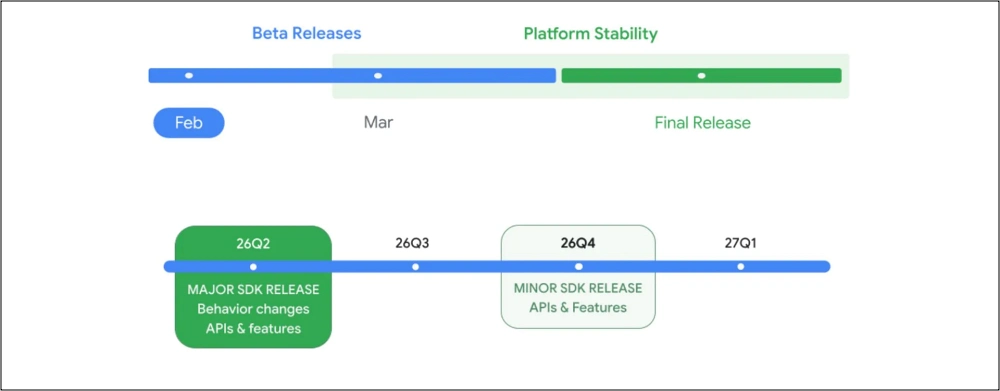
The roadmap for Android 17 reveals a significantly moved-up schedule compared to previous years. Google’s internal timeline indicates that the operating system is expected to reach "Platform Stability" by March 2026. This phase is critical because it signifies that the internal APIs and app-facing behaviors are finalized, allowing developers to perform final compatibility testing without the fear of the underlying code changing beneath them. Following this milestone, the first major stable release for the Pixel lineup is projected for the second quarter of 2026, likely around June. This shift toward a mid-year stable release suggests a strategic realignment, perhaps intended to synchronize software launches more closely with hardware announcements or to provide a more polished experience for the back-to-school and holiday seasons. Furthermore, a minor incremental release is anticipated in the fourth quarter of 2026 to address any lingering issues and introduce secondary feature drops.
For those determined to experience the cutting edge, Google provides several avenues for installation. The most user-friendly method remains the Android Beta Program, which allows users to register their devices and receive the beta update as an over-the-air (OTA) package. This method is preferred for its simplicity and the fact that it typically preserves user data, though a backup is always mandatory. For more advanced users and developers, Google offers the Android Flash Tool—a browser-based utility that facilitates the installation of factory images—as well as the traditional method of sideloading OTA files via recovery mode. It is important to note that while the Android Beta Program can work with a locked bootloader, the more manual methods of flashing full system images require an unlocked bootloader, which introduces its own set of security implications and may void certain warranty conditions depending on the region.

The path back to stability is just as important as the path to the beta. Should the bugs in Android 17 prove too cumbersome for daily use, users have the option to downgrade to the stable version of Android 16. This process, however, is not a simple "undo" button. Reverting to a previous version of the operating system necessitates a complete factory reset, meaning all local photos, messages, and application data will be erased. The downgrade process generally requires the use of the Android Flash Tool or manual flashing of the older factory images, both of which require an unlocked bootloader. This highlights the necessity of maintaining a robust cloud or local backup before venturing into the beta ecosystem.
The launch of Android 17 has not been without its logistical hurdles. While the tech world anticipated a release on February 11th, Google encountered unforeseen delays that pushed the initial rollout back. The company has characterized this as a minor setback, stating that the build will be available "soon." Such delays are common in high-stakes software development, where a last-minute discovery of a critical "showstopper" bug can necessitate a pause to ensure that the initial release does not render devices inoperable. This transparency from Google serves as a reminder of the complexity involved in maintaining an operating system that must run seamlessly across a diverse array of hardware components.
As the industry waits for the full rollout of the subsequent beta phases, the focus remains on what Android 17 represents for the future of the platform. By prioritizing developer tools and extending hardware support, Google is laying the groundwork for a more resilient and long-lasting ecosystem. Future beta updates are expected to gradually introduce the highly anticipated user-facing features, which rumors suggest may include enhanced multitasking capabilities, deeper integration of artificial intelligence across the system UI, and more granular privacy controls. For now, Android 17 Beta 1 stands as the first chapter in a new volume of the Android story—a chapter dedicated to stability, developer empowerment, and the continued evolution of the world’s most popular mobile operating system. The coming months will undoubtedly bring more clarity as the build progresses from this initial developer preview toward a polished, consumer-ready release in mid-2026.