

The landscape of mobile computing is currently witnessing one of its most significant architectural shifts in over a decade as Google begins the transition from the traditional 4 KB memory page size to a more robust 16 KB configuration. For the vast majority of Android’s history, the operating system was hardcoded to support 4 KB page sizes, a standard inherited from the early days of Linux and optimized for devices with limited physical memory. However, with the release of Android 15 and the latest updates to the Android Open Source Project (AOSP), Google has officially introduced support for 16 KB page sizes. This move is designed to leverage the massive increase in physical RAM found in modern flagship devices, promising substantial performance gains at the cost of a slight increase in memory overhead. As hardware continues to evolve, this architectural change represents the next phase in mobile optimization, though it currently remains a feature reserved for power users and developers willing to navigate the complexities of bootloader manipulation.
To understand the significance of this shift, one must first grasp the concept of memory paging. In a modern operating system, the kernel manages memory in fixed-size blocks called "pages." When an application requests data, the system maps virtual memory to physical RAM using these pages. Since the inception of Android, the 4 KB page size was the industry standard because it minimized "internal fragmentation"—the wasted space that occurs when a process doesn’t perfectly fill its allocated memory blocks. In an era where smartphones had 512 MB or 1 GB of RAM, every kilobyte was precious. However, as modern devices now ship with 12 GB, 16 GB, or even more RAM, the overhead of managing millions of tiny 4 KB pages has become a performance bottleneck. By quadrupling the page size to 16 KB, the system reduces the number of entries the CPU must track in its Translation Lookaside Buffer (TLB), leading to more efficient memory addressing and reduced CPU cycles spent on memory management.
The benefits of moving to a 16 KB page size are not merely theoretical; they translate into tangible improvements in the user experience. According to official data shared by Google, devices configured with 16 KB page sizes can see an overall system performance boost of roughly 5% to 10%. One of the most noticeable improvements occurs during app launches. Because the system can pull larger chunks of data into memory simultaneously, initial load times for heavy applications and games are significantly reduced. Furthermore, the efficiency gains extend to power consumption. By reducing the frequency of page faults—instances where the CPU must pause to fetch data not currently in the immediate cache—the processor can complete tasks faster and return to a low-power state, potentially extending battery life during intensive multitasking sessions. Additionally, system-wide smoothness is enhanced, as the reduced pressure on the memory management unit allows for more fluid transitions and lower latency when switching between multiple high-demand background processes.

Despite these advantages, the transition to 16 KB pages is not without its drawbacks. The primary trade-off is an increase in memory footprint. Because the minimum allocation unit is now four times larger, some memory is inevitably wasted when applications do not utilize the full extent of their allocated pages. In testing, devices configured with 16 KB page sizes typically use about 9% more RAM on average compared to their 4 KB counterparts. For a device with 12 GB of RAM, this loss is negligible, but it explains why Google is limiting this feature to high-end hardware for the time being. There is also the significant hurdle of app compatibility. While applications written entirely in Java or Kotlin (which run on the Android Runtime) are generally unaffected, apps that utilize native code via the Native Development Kit (NDK) must be recompiled with 16 KB alignment. If a native library is hardcoded for 4 KB, the app will simply crash on a 16 KB system, creating a transitional period where developers must update their software to support the new architecture.
For tech enthusiasts and developers eager to experience this performance boost, the path to enablement is currently restricted by strict security protocols. The most significant barrier is that booting an Android device with a 16 KB page size currently requires an unlocked bootloader. This requirement is a major deterrent for the average user, as unlocking the bootloader triggers a factory reset, wiping all personal data from the device. More importantly, an unlocked bootloader compromises the device’s "Verified Boot" status. This leads to failures in Play Integrity and SafetyNet checks, which in turn renders many essential applications—such as banking tools, contactless payment services like Google Pay, and high-security enterprise apps—completely non-functional. Furthermore, unlocking the bootloader often voids the manufacturer’s warranty, placing the risk of hardware failure squarely on the shoulders of the user.

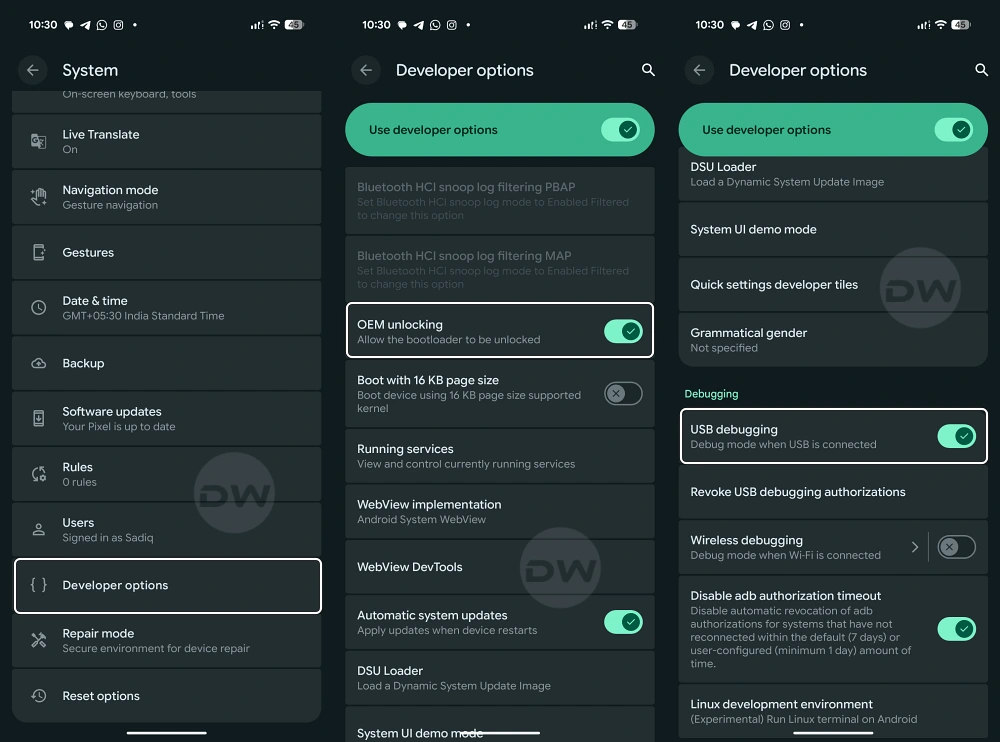
Currently, the hardware and software requirements for testing 16 KB page sizes are quite specific. As of the latest Android 15 QPR1 (Quarterly Platform Release) builds, the feature is primarily supported on Google’s own flagship hardware, specifically the Pixel 8, Pixel 8 Pro, and newer models. Users must be running the appropriate beta or stable version of Android 15 that includes the 16 KB kernel option. To enable the feature, a user must first navigate to the Developer Options in the system settings. Within this menu, a specific toggle allows the user to "Boot with 16 KB page size." Selecting this option prompts a warning regarding the necessity of an unlocked bootloader and the impending data wipe. Once confirmed, the device reboots and reconfigures the kernel to operate under the new memory architecture.
One of the more convenient aspects of the current implementation for developers is the ability to switch back and forth. Once the initial hurdle of unlocking the bootloader is cleared and the device is running in 16 KB mode, the system allows for a relatively seamless transition back to the 4 KB standard. This is achieved via a single reboot through the same Developer Options menu. This "dual-mode" capability is essential for developers who need to test their applications in both environments to ensure that their native libraries are correctly aligned and that there are no regressions in performance or stability when the page size changes.

The community’s reaction to the unlocked bootloader requirement has been vocal. Many power users argue that if Google intends for 16 KB to be the future of Android, there should be a "production-ready" path that maintains the security of Verified Boot. This has led to the creation of a high-profile feature request on the Google Issue Tracker, titled “Allow ‘Verified Boot’ (Locked Bootloader) for 16KB Page Size Mode on Pixel Devices.” The petitioners are requesting that Google provide signed OTA (Over-The-Air) images or a secure toggle that allows users to opt into the 16 KB architecture without sacrificing the integrity of the device’s security model. As the number of "stars" and comments on this issue increases, there is hope that Google might provide a more official, secure method for enthusiasts to utilize this high-performance mode in future Android 15 updates or with the release of Android 16.
Looking ahead, the shift to 16 KB page sizes appears to be an inevitable evolution for the Android ecosystem. As mobile processors become more powerful and RAM capacities continue to climb, the efficiency of the 4 KB page size will continue to diminish. By laying the groundwork now with Android 15, Google is giving developers the lead time necessary to update their native code and libraries. While the current implementation is experimental and carries significant risks for the average consumer, it represents a bold step toward a more efficient, high-performance future for mobile computing. For those who prioritize speed and are comfortable with the risks of bootloader modification, the 16 KB page size offers a glimpse into the next generation of Android optimization, where the marriage of high-end hardware and refined software architecture unlocks the full potential of the modern smartphone.