

The landscape of mobile security and device recovery is poised for a significant revelation as internal system logs from an unreleased Samsung flagship have surfaced online. Discovered through an incidental report on the Google Issue Tracker, details surrounding the upcoming Samsung Galaxy S26 Ultra suggest that the South Korean tech giant may once again bypass a critical security feature that has become a standard expectation for premium smartphones. Specifically, leaked "dumpstate" logs indicate that the Galaxy S26 series will likely lack support for Google’s "Powered Off" Find My Device functionality, a specialized hardware-level feature that allows lost or stolen handsets to be tracked even after they have been shut down or their batteries have been depleted.
The discovery originated from a technical bug report filed by a user testing a pre-release version of the Galaxy S26 Ultra, identified by the build number BP4A.251205.006.5948U1AYl7. While the original intent of the report was to address a minor aesthetic issue regarding serif fonts, the accompanying system logs provided a rare and comprehensive look into the device’s internal configurations. Within the dense lines of code, a specific system property—[ro.bluetooth.finder.supported]: [false]—has sent ripples through the enthusiast community. This Boolean value serves as the definitive indicator of whether a device’s hardware is equipped to support the Bluetooth Finder Hardware Abstraction Layer (HAL), the essential framework required for tracking a device in a powered-off state.
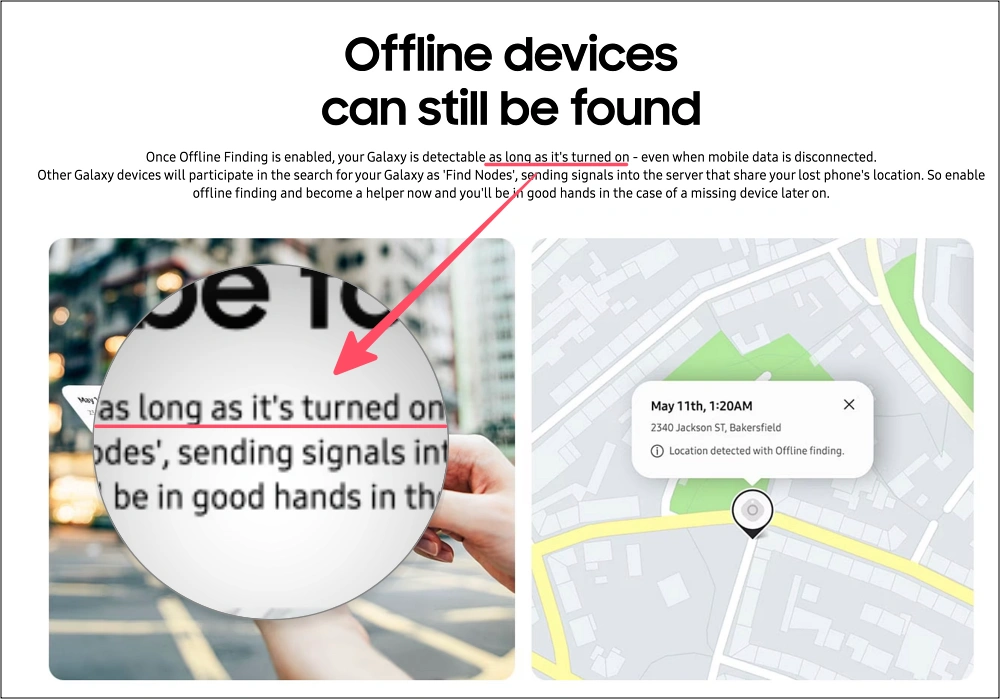
To understand the weight of this revelation, one must distinguish between "offline tracking" and "powered-off tracking," two concepts that are frequently conflated in consumer marketing. Samsung’s existing recovery ecosystem, known as SmartThings Find, currently offers robust offline tracking. This allows a Galaxy device to be located via a mesh network of other Samsung devices using Bluetooth Low Energy (BLE) signals, even if the lost phone has no active Wi-Fi or cellular data connection. However, this capability is strictly contingent upon the device being powered on. If a thief manually shuts down the phone, or if the battery reaches zero percent, the internal components responsible for broadcasting those Bluetooth signals typically cease to function, rendering the device invisible to the network.
In contrast, the "Powered Off" Find My Device feature—pioneered by Apple and later adopted by Google for its Pixel 8 and Pixel 9 series—utilizes specialized hardware within the Bluetooth chipset. This hardware is designed to remain energized by a tiny reserve of power even after the main operating system has been terminated. By maintaining this low-level broadcast capability, the device can continue to ping nearby units in the Find My Device network for several hours or even days after losing main power. For many security experts, this is considered the "gold standard" of anti-theft technology, as the first action a sophisticated thief takes after stealing a device is to power it off to prevent GPS tracking.
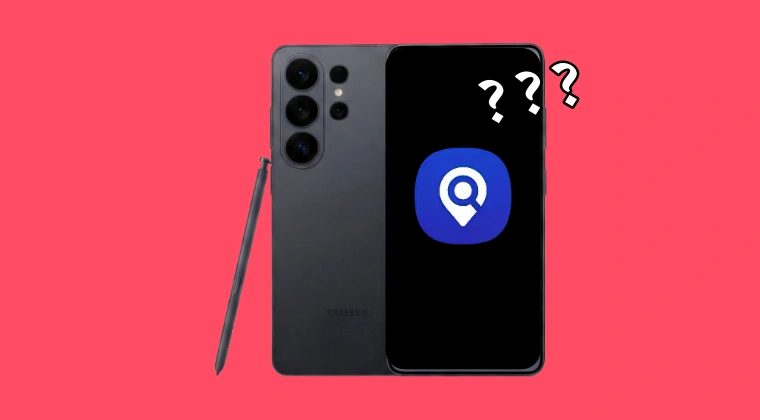
The apparent absence of this feature in the Galaxy S26 Ultra is particularly striking given Samsung’s position as a leader in smartphone innovation. By the time the S26 series reaches global markets in 2026, the Pixel series will have supported powered-off tracking for three generations. The industry had largely assumed that Samsung would integrate the necessary hardware components into its 2026 flagship lineup to remain competitive with both Google and Apple. The leaked log suggests that Samsung may be opting to stick with its proprietary SmartThings Find architecture, which, while effective in many scenarios, lacks the deep hardware integration required for a "dead battery" recovery.
The technical requirements for supporting powered-off finding are non-trivial. It requires a Bluetooth controller that can function independently of the Application Processor (AP). In a typical smartphone architecture, when the phone is turned off, the AP—the "brain" of the device—is powered down. For tracking to work, the Bluetooth chip must have its own dedicated power path and a small amount of memory to store pre-computed "owner keys" provided by the Find My Device network. If the ro.bluetooth.finder.supported flag is indeed set to false, it implies that the Galaxy S26 Ultra’s hardware design does not include this specialized power routing or the necessary firmware support at the silicon level.
This potential omission raises questions about Samsung’s long-term strategy regarding the unified Android Find My Device network. Google launched its revamped network in early 2024, aiming to create a massive, crowdsourced ecosystem similar to Apple’s "Find My" network. While Samsung has pledged support for the broader Android ecosystem, it also maintains its own siloed SmartThings Find network. There is a possibility that Samsung is prioritizing its own ecosystem’s development over deep integration with Google’s hardware-level protocols. However, from a consumer perspective, this creates a fragmented experience where the most expensive Android flagship on the market offers less recovery protection than its Google-branded counterparts.
The implications for device security are significant. Statistics from law enforcement agencies in major metropolitan areas suggest that "kill switches" and tracking features have significantly deterred opportunistic smartphone theft. However, as thieves become more tech-savvy, the ability to track a device that has been forced into a shutdown state becomes the primary line of defense. For a consumer investing upwards of $1,200 in a Galaxy S26 Ultra, the realization that the device becomes a "black hole" the moment it is switched off is likely to be a point of contention.
Furthermore, this development highlights a growing divide in the Android world between "software-based" features and "hardware-integrated" features. While many AI-driven capabilities can be backported to older devices via software updates, powered-off tracking is a binary hardware capability. If the hardware is not present at the time of manufacture, no amount of firmware optimization or Android OS updates can enable it. If the leaked logs accurately reflect the final production hardware, the Galaxy S26 series will be permanently excluded from this security tier.

Industry analysts suggest several reasons why Samsung might have bypassed this feature. Cost-cutting is an unlikely factor for the "Ultra" model, which typically features the highest-end components available. Instead, the decision may stem from complexities in the supply chain or battery management protocols. Samsung has historically been conservative with battery reserves following the high-profile challenges of previous years, and the company may be hesitant to implement features that draw even microscopic amounts of power when a device is purportedly "off." Alternatively, there may be ongoing negotiations or technical hurdles in reconciling Samsung’s proprietary encryption methods with Google’s standardized Find My Device framework.
As the mobile industry moves toward 2026, the expectation for "un-loseable" hardware continues to grow. The Google Issue Tracker leak serves as a reminder that even the most advanced devices can have surprising limitations. While the Galaxy S26 Ultra will undoubtedly boast industry-leading displays, camera arrays, and processing power, its apparent inability to signal for help in its darkest hour remains a notable vulnerability.
For now, the enthusiast community and potential buyers must wait for official confirmation, which typically arrives during Samsung’s annual "Unpacked" event. However, system logs of this nature are rarely incorrect, as they reflect the core configuration files used by developers to interface with the device’s hardware. If the status remains unchanged, users will have to rely on the traditional SmartThings Find network and hope that their device stays powered on long enough to be recovered. As we look toward the future of mobile technology, the hope remains that Samsung will eventually align its hardware capabilities with the evolving security needs of its global user base. Until then, the "Powered Off" tracking remains an elusive luxury for the Galaxy faithful.