

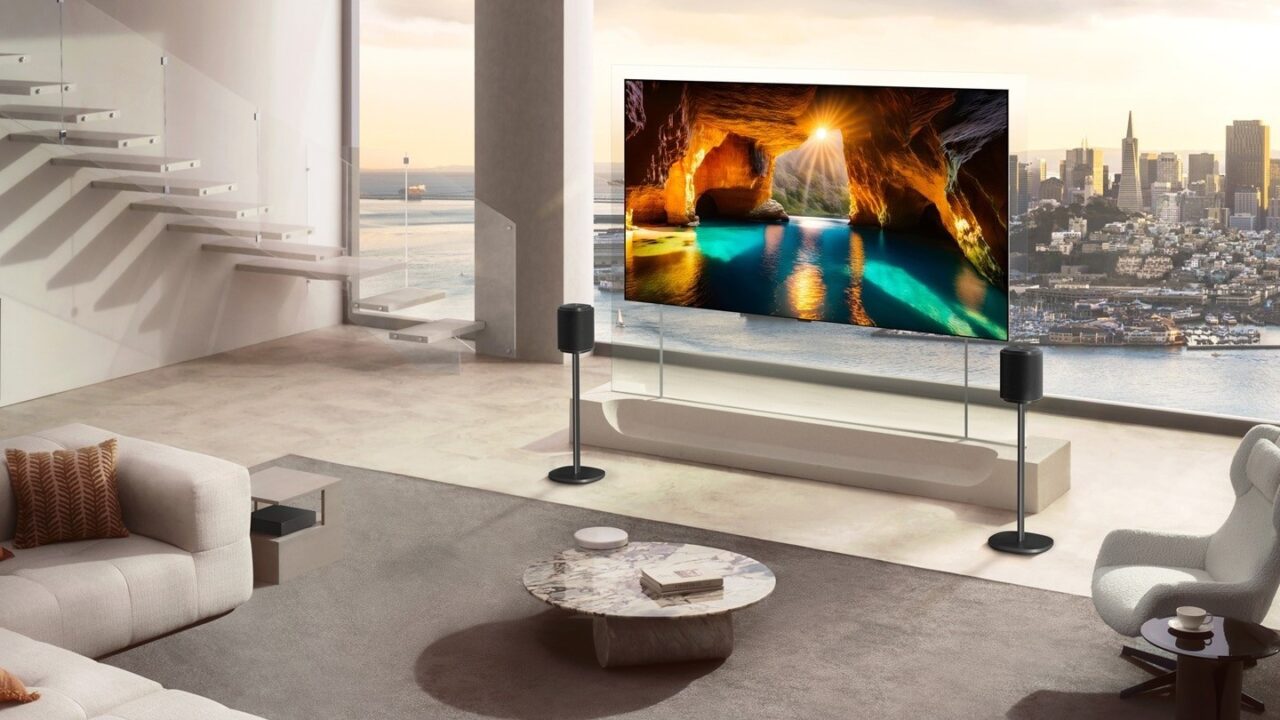
The landscape of home entertainment has long been a battleground between technological capability and aesthetic harmony. For decades, the television has occupied a central, often intrusive, position in the modern living room—a "black mirror" that dominates the decor even when powered down. At the 2026 Consumer Electronics Show (CES) in Las Vegas, LG Electronics signaled a definitive shift in this paradigm by reintroducing a concept that once seemed like science fiction: the Wallpaper TV. The newly unveiled LG OLED evo W6 represents not just a return to a beloved form factor, but a total technological overhaul that solves the fundamental engineering hurdles that plagued its predecessors. By merging ultra-thin panel engineering with cutting-edge wireless transmission, LG is attempting to turn the television into a digital canvas that is as unobtrusive as a framed photograph.
To understand the significance of the W6, one must look back at the original LG W7 Wallpaper TV, which debuted in 2017 to both critical acclaim and practical skepticism. The W7 was a marvel of industrial design, featuring a screen only 2.57mm thick that attached to the wall via magnets. However, the laws of physics and the limitations of 2017-era technology necessitated a major compromise. Because the screen was too thin to house a power supply, processing chips, or ports, all of its "brains" and connectivity were moved into a large, mandatory Dolby Atmos soundbar. This soundbar was connected to the screen by a thick, proprietary ribbon cable that was difficult to hide without professional in-wall installation. For enthusiasts who already owned high-end, custom home theater audio systems, being forced to use and display the bulky LG soundbar was a dealbreaker. The "wallpaper" dream was, in reality, a "wallpaper and a giant shelf-cluttering box" reality.
The LG OLED evo W6, the 2026 iteration, finally fulfills the promise of the original concept by eliminating the umbilical cord. The defining feature of the W6 is its "True Wireless" architecture, powered by LG’s proprietary Zero Connect technology. Instead of a ribbon cable or a stack of HDMI wires dangling from the display, the W6 delegates all connectivity, processing, and input management to a separate, standalone unit called the Zero Connect Box. This hub can be placed across the room, tucked away in a media cabinet or on a bookshelf, up to 30 feet away from the display itself. The box transmits uncompressed 4K video and high-fidelity audio wirelessly to the screen with near-zero latency. While the screen still requires a discreet power connection, the elimination of the data cable allows the W6 to sit perfectly flush against the wall, indistinguishable from a piece of modern art.
Interestingly, the W6 has seen a slight increase in physical depth compared to the original W7, moving from 2.57mm to approximately 9mm. While this might seem like a regression on paper, it is a calculated engineering decision that enhances the device’s longevity and performance. The 9mm profile allows for more efficient heat dissipation and accommodates the sophisticated wireless receivers and internal shielding necessary for high-bandwidth data transmission. Despite this increase, the W6 remains thinner than the majority of flagship smartphones. When mounted using LG’s specialized magnetic bracket system, the gap between the wall and the glass is virtually non-existent, creating a "window into another world" effect that traditional "thin" TVs cannot replicate.
The internal hardware of the W6 is equally ambitious. At the heart of the system is the Alpha 11 AI Processor Gen3, a specialized chipset designed to handle the massive computational loads required for real-time AI image enhancement and wireless data management. LG reports that the Neural Processing Unit (NPU) in the Alpha 11 Gen3 is 5.6 times faster than previous generations. This massive leap in processing power is dedicated to "AI Picture Pro," which uses deep learning to identify objects, faces, and backgrounds in a scene, applying localized sharpening and color correction to create a more three-dimensional image. This is not merely about making the picture look "better"; it is about compensating for the variables of wireless transmission to ensure that the 4K signal remains pristine and artifact-free.
Brightness has historically been the Achilles’ heel of OLED technology, but the W6 addresses this through the integration of Hyper Radiant Color Technology and Brightness Booster Ultra. By utilizing a new micro-lens array (MLA) structure and advanced heat-management algorithms, the W6 can achieve peak brightness levels up to 3.9 times higher than a standard OLED panel. This makes the W6 a viable option even for brightly lit living rooms, where older OLED models might have struggled with glare and washed-out colors. Furthermore, the W6 has earned the "Reflection Free Premium" certification. This specialized anti-reflective coating ensures that the deep, inky blacks characteristic of OLED technology are preserved even when the sun is shining directly on the screen, preventing the "mirror effect" that often ruins the immersion of dark cinematic scenes.
LG is also positioning the W6 as a premium choice for the gaming community, a demographic that has traditionally been wary of wireless displays due to concerns over input lag. The W6 supports a 165Hz refresh rate at 4K resolution, a specification that rivals high-end dedicated gaming monitors. It features full compatibility with NVIDIA G-Sync and AMD FreeSync Premium, ensuring tear-free gameplay for users with the latest consoles or high-performance PCs. The Zero Connect Box includes HDMI 2.1a ports, supporting features like Auto Low Latency Mode (ALLM) and Enhanced Audio Return Channel (eARC). By moving the ports to a separate box, LG has made the W6 the ultimate gaming setup: the PC or console can stay hidden in a ventilated closet, while the player interacts with a massive, floating 165Hz canvas on the wall.
Beyond the technical specifications, the reintroduction of the Wallpaper TV speaks to a broader trend in the premium consumer electronics market: the "invisible" home. As living spaces become more multifunctional, consumers are increasingly seeking technology that blends into the environment rather than demanding focus. The W6 includes an "Always-Ready" mode, which transforms the screen into a digital gallery when not in use. Users can display world-class artwork, atmospheric motion graphics, or personal photography. Because the OLED pixels are self-lit and can turn off completely, the TV consumes minimal power in this mode and avoids the "backlit glow" that plagues LCD-based "art" TVs, making the digital paintings look remarkably lifelike.
While LG has not yet finalized the retail pricing for the W6, the industry consensus is that it will occupy the highest tier of the company’s product lineup. This is a "halo" product, designed to showcase the pinnacle of what is possible in display science. It targets a specific demographic: those who value the purity of interior design as much as they value the quality of their home cinema experience. For the luxury homeowner, the architect, or the minimalist, the W6 represents the removal of the final barrier to a clean, cable-free home.
The LG OLED evo W6 is a testament to the idea that innovation is often a journey of refinement rather than a single moment of discovery. The original Wallpaper TV was a visionary concept that arrived before the supporting infrastructure—specifically wireless data transmission—was ready to support it. By waiting for the technology to catch up to the dream, LG has created a product that finally lives up to its name. The W6 is more than just a television; it is a sophisticated piece of industrial design that suggests a future where our devices are powerful, pervasive, and yet entirely invisible. As CES 2026 concludes, the W6 stands as a reminder that the most impressive technology is often the kind that disappears.