

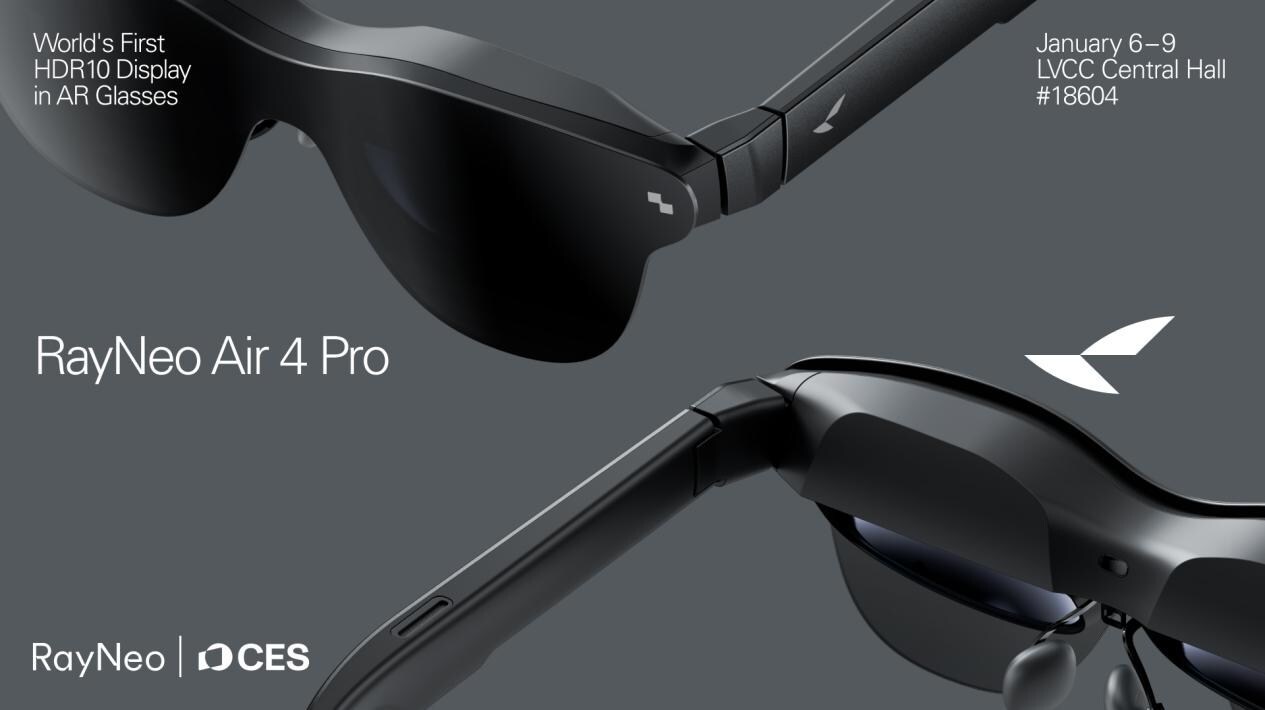
The landscape of augmented reality (AR) has undergone a seismic shift at the 2026 Consumer Electronics Show (CES) in Las Vegas, as RayNeo, a prominent innovator in the smart glass sector, officially unveiled its latest flagship: the RayNeo Air 4 Pro. While the AR industry has spent years grappling with the trade-offs between bulk and performance, the Air 4 Pro arrives as a bold statement of intent, merging high-fidelity cinematic visuals with a form factor that feels more like a lifestyle accessory than a piece of heavy industrial equipment. This launch marks the global debut of a device that previously generated significant buzz during its limited release in Asian markets, signaling a new era for portable entertainment and mobile productivity.
At the heart of the RayNeo Air 4 Pro’s value proposition is a technological world-first: the integration of HDR10 support within an AR display. High Dynamic Range (HDR) has long been the gold standard for high-end televisions and monitors, prized for its ability to produce a wider spectrum of colors and more pronounced contrast between the brightest highlights and the deepest shadows. Bringing this capability to a pair of glasses, where the display must interact with the ambient light of the wearer’s environment, is a feat of optical engineering. The inclusion of HDR10 ensures that content—ranging from blockbuster films to high-fidelity video games—retains its intended visual impact, preventing the "washed out" look that has plagued earlier generations of AR wearables.
Powering this visual experience is the Pixelworks-customized Vision 4000 chip. This specialized silicon acts as the neurological center for the glasses, performing real-time image processing that elevates standard content into the realm of the extraordinary. One of the chip’s most impressive capabilities is its sophisticated SDR-to-HDR upscaling algorithm. This allows users to view legacy content or standard streaming media with the enhanced vibrance and depth typically reserved for native HDR files. Furthermore, the Vision 4000 chip handles the complex task of 2D-to-3D conversion, allowing users to breathe new life into their existing media libraries by adding a layer of stereoscopic depth that mimics the theatrical 3D experience.
The hardware responsible for projecting these images is equally impressive. The Air 4 Pro utilizes dual-layer 0.6-inch micro-OLED displays. Micro-OLED technology is currently the pinnacle of wearable display tech, offering incredibly high pixel density and near-perfect black levels because each pixel is its own light source. With a Full HD (FHD) resolution per eye and a 120Hz refresh rate, the motion clarity is designed to meet the demands of competitive gamers and action cinema enthusiasts alike. To address the common issue of eye strain associated with near-eye displays, RayNeo has implemented 3,840Hz PWM (Pulse Width Modulation) dimming. This high-frequency dimming significantly reduces flicker, making the glasses more comfortable for extended use during long flights or marathon gaming sessions.
When donned, the glasses project a virtual screen that defies the physical constraints of the device. RayNeo claims the optical engine creates the sensation of viewing a 201-inch screen from a distance of six meters. This "IMAX-in-your-pocket" philosophy is further bolstered by a peak brightness of 1,200 nits, ensuring that the virtual image remains crisp and legible even in well-lit environments, such as a sunny train car or a brightly lit office. The transparency of the lenses allows for a "heads-up" experience, where the digital world is overlaid onto the physical one, though the high brightness allows the digital content to take center stage when desired.
Audio is often the forgotten half of the immersive experience, but RayNeo has sought to avoid this pitfall through a high-profile collaboration with Bang & Olufsen. The Air 4 Pro features a four-speaker acoustic system precision-tuned by the legendary Danish audio brand. These speakers are integrated into the temples of the glasses, utilizing directional audio technology to funnel sound toward the wearer’s ears while minimizing "sound leakage" to the surrounding environment. This creates a private sonic bubble, allowing users to enjoy high-fidelity audio without the need for bulky over-ear headphones, which often interfere with the fit of AR glasses.
Despite the heavy-duty specifications packed into the frame, the RayNeo Air 4 Pro maintains a remarkably lightweight profile, weighing in at just 76 grams. For context, this is only slightly heavier than a pair of premium designer sunglasses, making them viable for hours of continuous wear. The ergonomics have been refined to distribute weight evenly across the bridge of the nose and the ears, avoiding the front-heavy fatigue that characterized many early entries in the AR space. The aesthetic remains sleek and understated, avoiding the "cyborg" look in favor of a contemporary, tech-forward design that blends into social settings.
Connectivity remains a cornerstone of the RayNeo ecosystem. The Air 4 Pro utilizes a universal USB-C connection, supporting DisplayPort (DP) Alt Mode. This makes the glasses a "plug-and-play" peripheral for a vast array of modern devices. It can mirror or extend the displays of the latest smartphones, tablets, and laptops. For gamers, the compatibility extends to handheld consoles like the Steam Deck, ASUS ROG Ally, and the Nintendo Switch (via a compatible dock or adapter), transforming a small handheld screen into a cinematic theater. This versatility positions the Air 4 Pro not just as a toy for enthusiasts, but as a legitimate tool for digital nomads who require a large, private workspace while traveling.
While the official press release from RayNeo focused on the technical specifications and the global launch at CES, market analysts and industry insiders have filled in the remaining blanks regarding the consumer rollout. According to reports from Mashable and other tech outlets, the RayNeo Air 4 Pro is slated to go on sale officially on January 25. Perhaps the most disruptive aspect of this launch is the pricing: the glasses are expected to retail for $299. This price point is significantly lower than many of its direct competitors in the "Pro" AR category, some of which retail for $450 or more. By pricing the Air 4 Pro under the $300 threshold, RayNeo is clearly aiming for mass-market adoption, positioning the device as an accessible upgrade for anyone looking to enhance their mobile media consumption.
Beyond the Air 4 Pro, RayNeo used its presence at CES 2026 to offer a glimpse into the future of the brand. The company showcased a prototype version of its flagship RayNeo X3 Pro, which features integrated eSIM technology. Unlike the Air 4 Pro, which is a "tethered" device relying on a host for power and data, the X3 Pro prototype explores the possibility of independent connectivity. This would allow the glasses to function autonomously, making calls, streaming data, and running AR applications without being wired to a smartphone. While this remains a concept for testing and development, it highlights RayNeo’s long-term vision of AR glasses eventually replacing the smartphone as the primary interface for our digital lives.
As the curtains rise on the 2026 tech cycle, the RayNeo Air 4 Pro stands out as a mature, polished product that addresses the core desires of the modern consumer: portability, visual excellence, and affordability. By bringing HDR10 to the face and partnering with audio giants like Bang & Olufsen, RayNeo is not just selling a gadget; they are selling a portable sanctuary for digital content. Whether it is used for working on a confidential spreadsheet in a public cafe or watching a 3D movie in a cramped airplane seat, the Air 4 Pro represents a significant leap forward in making the virtual world feel as vibrant and tangible as the real one. With the January 25 release date fast approaching, the industry will be watching closely to see if this combination of high-end specs and aggressive pricing will be the catalyst that finally pushes AR glasses into the mainstream.