

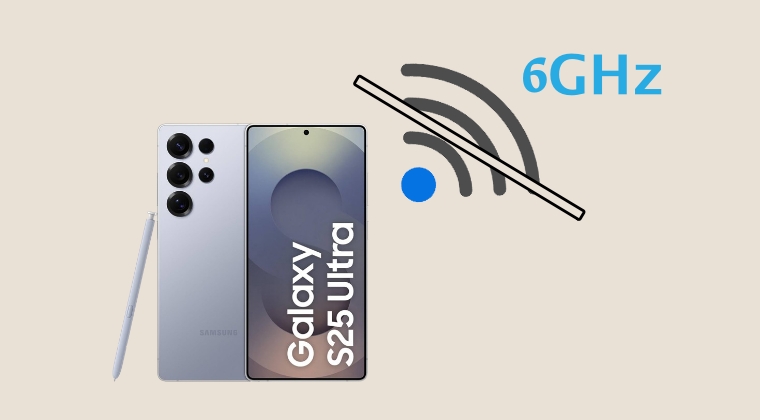
The launch of the Samsung Galaxy S25 Ultra was met with significant anticipation, primarily due to its position as a flagship pioneer for Wi-Fi 7 technology. With the integration of the 802.11be standard, the device promises unprecedented wireless speeds, ultra-low latency, and enhanced stability by utilizing the 2.4GHz, 5GHz, and the relatively new 6GHz frequency bands. However, early adopters and technical testers have encountered a puzzling obstacle: the inability to detect or connect to 6GHz Wi-Fi networks under certain conditions. Investigation into this phenomenon has revealed a controversial software-level restriction that ties the activation of the 6GHz radio to the presence of an active SIM card, a move that has sparked debate regarding regional regulatory compliance and user autonomy.
The 6GHz band is the cornerstone of the Wi-Fi 6E and Wi-Fi 7 revolutions. Unlike the crowded 2.4GHz and 5GHz bands, which suffer from interference from legacy devices, household appliances, and neighboring networks, the 6GHz spectrum offers a massive increase in available channels. This "greenfield" spectrum allows for wider 320MHz channels, which are essential for the multi-gigabit speeds promised by the Galaxy S25 Ultra. For power users, gamers, and professionals working with massive data transfers, the 6GHz band is not merely a luxury but a fundamental requirement of modern high-end networking.
The issue first came to light during real-world testing environments where the Galaxy S25 Ultra, despite being advertised as fully compatible with Wi-Fi 7, failed to populate 6GHz SSIDs in its network scan results. In these instances, the routers were verified to be broadcasting correctly, and other 6GHz-capable hardware—including modern laptops and gaming consoles like the PlayStation 5—connected to the high-frequency band without incident. Even after rigorous troubleshooting, including router reboots, network setting resets, and deep dives into Samsung’s "Intelligent Wi-Fi" and "Connectivity Labs" menus, the 6GHz band remained invisible to the device.
The breakthrough in understanding this limitation occurred when testers inserted a physical SIM card into the device. Immediately upon the registration of the SIM with a cellular network, the Galaxy S25 Ultra successfully scanned, identified, and connected to the 6GHz network. This indicates that Samsung has implemented a software handshake that requires the device to verify its geographical location via a Mobile Country Code (MCC) provided by a cellular provider before it authorizes the 6GHz radio to transmit and receive data.
This restriction is rooted in the complex global landscape of telecommunications regulations. The 6GHz spectrum is not globally harmonized; while the United States and several other nations have opened the full 1,200 MHz of the 6GHz band for unlicensed use, other regions have only opened a portion of it, and some countries have yet to authorize its use at all. Because Wi-Fi signals can potentially interfere with licensed services such as satellite links or fixed-point microwave signals, manufacturers are legally obligated to ensure their devices comply with local spectral laws.
By requiring a SIM card, Samsung utilizes the MCC to determine exactly which regulatory domain the device is operating within. While this ensures the company remains in compliance with international law, it creates a significant hurdle for users in specific scenarios. For instance, individuals who use their tablets or flagship phones primarily as media devices without a dedicated cellular plan, or those who frequently operate in "Airplane Mode" with Wi-Fi enabled to save battery or avoid distractions, find themselves locked out of the fastest available wireless speeds. This also impacts digital nomads who may swap SIM cards frequently or rely on local Wi-Fi hotspots while their primary SIM is deactivated.
The frustration among the tech community stems from the fact that other methods of geolocation exist that do not require a SIM card. Modern smartphones are equipped with sophisticated GPS modules and can utilize Wi-Fi-based positioning systems (WPS) to determine their location with high accuracy. However, Samsung appears to have prioritized the SIM-based MCC as the most definitive and legally defensible method of verification. This is not the first time the South Korean tech giant has faced scrutiny over regional locks; previous generations of the Galaxy S-series have seen similar restrictions regarding 5G bands and Samsung Pay features based on the inserted SIM or the device’s "Software Customization ID" (SWC).
Within the Galaxy S25 Ultra’s software ecosystem, there are hidden menus designed for developers and power users. The "Connectivity Labs" section, found within the Intelligent Wi-Fi settings, provides a wealth of data regarding network health, interference, and band usage. Yet, even within these advanced diagnostic tools, there is currently no consumer-facing toggle to override the SIM requirement for 6GHz connectivity. This suggests that the restriction is hardcoded deep within the device’s radio firmware or the Android-based One UI framework.
The comparison with other 6GHz-capable devices, such as the PlayStation 5 or high-end PC motherboards, highlights the discrepancy in how "fixed" versus "mobile" devices are treated. A gaming console is generally assigned a regional code at the factory or during initial setup based on the user’s account region, and it does not need a SIM card to prove its location. Smartphones, by their very nature as highly mobile devices, are held to a stricter standard of real-time location verification to prevent a user from bringing a device from a "permissive" 6GHz region into a "restricted" one and inadvertently causing interference.
For users seeking a workaround, the options are currently limited. Rooting the device and modifying system files to spoof a specific region or bypass the check is a theoretical possibility, but it comes with significant risks. Unlocking the bootloader on a Samsung device typically trips the Knox security flag, permanently disabling features like Samsung Pay, Secure Folder, and potentially voiding the manufacturer’s warranty. For most users, particularly those with brand-new Galaxy S25 Ultra units, this is an unacceptable trade-off.
The situation leaves a segment of the user base in a difficult position. As home networks evolve to include Wi-Fi 7 routers, the expectation is that a flagship device costing well over a thousand dollars should be able to utilize those speeds out of the box. The discovery that the device’s most advanced networking feature is tethered to a cellular subscription—even if that subscription is not being used for data—is a point of contention that Samsung has yet to address in official documentation or marketing materials.
Looking forward, there is hope that Samsung might refine this process through a future firmware update. A more flexible approach could involve using a combination of IP-based geolocation and GPS to verify the regulatory domain, allowing 6GHz access even in the absence of a SIM card. Until such an update is released, users must be aware that the Galaxy S25 Ultra’s Wi-Fi 7 capabilities are essentially "SIM-locked" from a regulatory standpoint.
As the industry moves toward a more unified adoption of the 6GHz band, these teething issues are likely to become less frequent. However, for the time being, the Galaxy S25 Ultra stands as a reminder of the complex intersection between cutting-edge hardware and the rigid world of global telecommunications law. For those who have invested in high-end Wi-Fi 7 infrastructure, the simple act of keeping a SIM card—even an inactive one from a recognized carrier—inside the tray may be the only way to bridge the gap between their router and their smartphone’s maximum potential. The tech community remains watchful for any non-root workarounds or official patches that might grant users the freedom to use their hardware as intended, regardless of their cellular status.