
For over a decade, the technological landscape has been defined by a stark, invisible wall separating the world’s two dominant mobile operating systems. On one side, Apple users have long enjoyed the seamless, almost magical utility of AirDrop, a proprietary peer-to-peer service that allows for the instantaneous transfer of high-resolution photos, massive video files, and complex documents between iPhones, iPads, and Mac computers. On the other side, Android users navigated a more fragmented history of sharing solutions, ranging from the NFC-based Android Beam to the more modern Nearby Share, which was recently rebranded and overhauled as Quick Share in collaboration with Samsung. Despite the individual merits of these systems, they existed as isolated silos. Moving a file from a flagship Android device to a MacBook typically required the cumbersome mediation of cloud storage, email attachments, or third-party messaging applications. However, a seismic shift in this paradigm has finally arrived, as Google’s Quick Share begins its first official, albeit complex, integration with Apple’s AirDrop environment.

The genesis of this interoperability began several months ago when Google surprised the industry by announcing that Quick Share would eventually support transfers to Apple devices. This announcement was met with a mixture of excitement and skepticism, as the technical hurdles involved in bridging two fundamentally different encrypted protocols are immense. Initially, this functionality was reserved exclusively for the vanguard of Google’s hardware—the upcoming Pixel 10 series—leaving owners of current and older models waiting in the wings. However, that waiting period has come to an end for a specific subset of the Android community. The Pixel 9 series, including the standard Pixel 9, the Pixel 9 Pro, and the massive Pixel 9 Pro XL, has officially gained the ability to interface with AirDrop. While this represents a monumental leap forward for cross-platform productivity, the current implementation is far from a "plug-and-play" experience.
Early adopters and technical enthusiasts have discovered that while the bridge exists, crossing it requires a level of persistence and technical maneuvering that the average user might find daunting. Unlike the native AirDrop experience, which is characterized by its simplicity, activating this feature on a Pixel 9 requires a series of non-obvious adjustments within the system architecture. These are not merely a matter of toggling a single switch in the settings menu; rather, they involve a sophisticated dance of permission management, network configuration, and perhaps most importantly, a deep dive into the experimental flags that Google uses to test features before they are polished for the general public.

The complexity of the setup process is a reflection of the underlying technology. AirDrop relies on a combination of Bluetooth Low Energy (BLE) to discover devices and a point-to-point Wi-Fi connection to facilitate the actual data transfer. Google’s Quick Share uses a similar logic, but the handshaking protocols—the "language" the two devices speak to recognize and trust one another—have historically been incompatible. To make a Pixel 9 "visible" to a Mac or an iPhone, the Android device must essentially learn to mimic the specific broadcast signals that Apple’s hardware expects. This requires the Pixel’s Tensor G4 chip and its dedicated wireless hardware to operate in a high-visibility mode that bypasses traditional Android sharing restrictions.
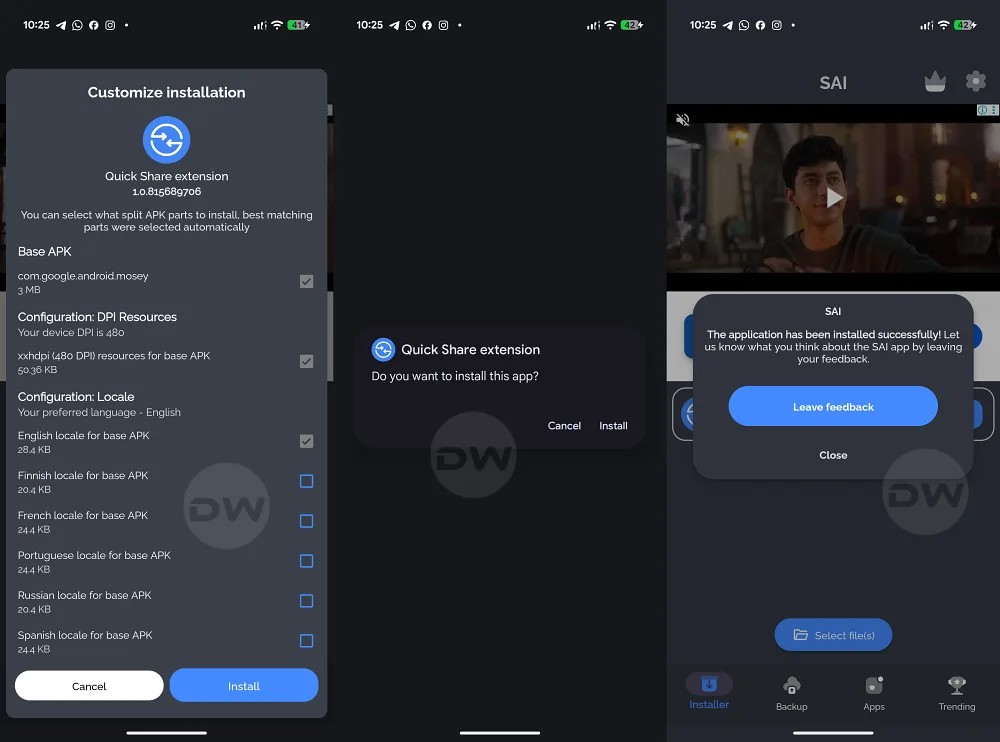
For users currently holding a Pixel 9 Pro XL, the journey to cross-platform sharing begins with ensuring that the Google Play Services and the Quick Share app itself are updated to the most recent beta versions. Because this feature is still in its infancy, it has not yet been rolled out to the stable, public-facing software branches. Once the software environment is prepared, users must navigate the intricate maze of system tweaks. These adjustments involve recalibrating how the device handles "Nearby Visibility" and ensuring that the device’s identity is broadcast in a format that Apple’s "Everyone" or "Contacts Only" filters can interpret. In many cases, users have reported that they must manually clear the cache of their connectivity services and restart the device multiple times to force the Pixel to recognize a nearby Mac as a valid destination.

The significance of this development cannot be overstated for creative professionals and students who often live in "mixed" households or workplaces. Imagine a photographer capturing high-detail 50-megapixel RAW files on a Pixel 9 Pro and needing to move them instantly to an iMac for editing in Adobe Lightroom. Previously, this would involve a slow upload to Google Drive or the use of a physical USB-C cable. With this new compatibility, the Pixel 9 can theoretically "see" the iMac in its sharing tray, allowing for a direct, local transfer that preserves every byte of data without the compression often found in messaging apps.
While the current focus remains on the Pixel 9 and the future Pixel 10, Google has signaled that this is not intended to be an exclusive club forever. The roadmap for Quick Share’s AirDrop compatibility includes eventual support for the Pixel 8 series and even older legacy devices. However, the hardware requirements for such a feat are stringent. Older devices may lack the specific antenna configurations or the processing power required to maintain the high-speed, encrypted tunnels that AirDrop demands. As Google refines the software, the "complicated tweaks" currently required for the Pixel 9 are expected to be streamlined into a more user-friendly interface, eventually becoming a standard feature of the Android operating system.

However, there is also the question of Apple’s cooperation. While Google is making the effort to reach across the aisle, AirDrop remains a closed-source, proprietary technology owned by Apple. History has shown that Apple is often protective of its "walled garden," using exclusive features like AirDrop and iMessage to maintain customer loyalty. The fact that Quick Share can now interface with AirDrop suggests either a quiet collaboration between the two tech giants—perhaps spurred by increasing regulatory pressure in the European Union regarding interoperability—or a highly sophisticated bit of reverse-engineering by Google’s engineers. If Apple chooses to update its security protocols to block these unauthorized handshakes, this feature could become a cat-and-mouse game between the two platforms.
For now, the Pixel 9 stands as a pioneer. It is a device that refuses to be limited by the software boundaries of the past. For the user who is willing to spend an afternoon digging through developer settings and testing various network configurations, the reward is a device that feels more connected to the world around it. The ability to bridge the gap between a Google-powered smartphone and an Apple-powered workstation represents the pinnacle of modern mobile utility. It acknowledges a reality that many tech companies have long ignored: that consumers do not always want to be locked into a single ecosystem. They want the best camera, which might be on a Pixel, and the best laptop, which might be a MacBook, and they want those two devices to work together without friction.

As we look toward the future, the successful integration of Quick Share and AirDrop on the Pixel 9 series serves as a proof of concept. It demonstrates that the technical barriers to interoperability are not insurmountable; they are merely choices made by corporations. As the steps to enable this feature move from "complicated tweaks" to a simple button press, we may be entering a new era of mobile computing where the brand of your device matters less than the tasks you can accomplish with it. For the Pixel 9 owner, the world just got a little bit smaller, and the wall around the Apple garden just got a little bit shorter. This is more than just a software update; it is a declaration of independence for the modern consumer, proving that with the right tools and a bit of technical know-how, we can finally make our gadgets talk to one another, regardless of the logo on the back.
