

In the rapidly evolving landscape of digital communication, Discord has long maintained a reputation as the premier sanctuary for gamers, hobbyists, and professional communities alike. By offering a robust suite of text, voice, and video tools, the platform has successfully bridged the gap between casual chat applications and high-performance collaboration software. However, the company’s recent trajectory toward a more aggressive, engagement-driven social discovery model has begun to encounter significant friction from its core user base. The primary catalyst for this growing discontent is a new feature known as "Hangout Notifications," a system designed to alert users to their friends’ real-time activities and social gatherings within shared servers. While intended to foster community interaction, these prompts have instead sparked a widespread debate regarding digital privacy, notification fatigue, and the fundamental purpose of the platform.
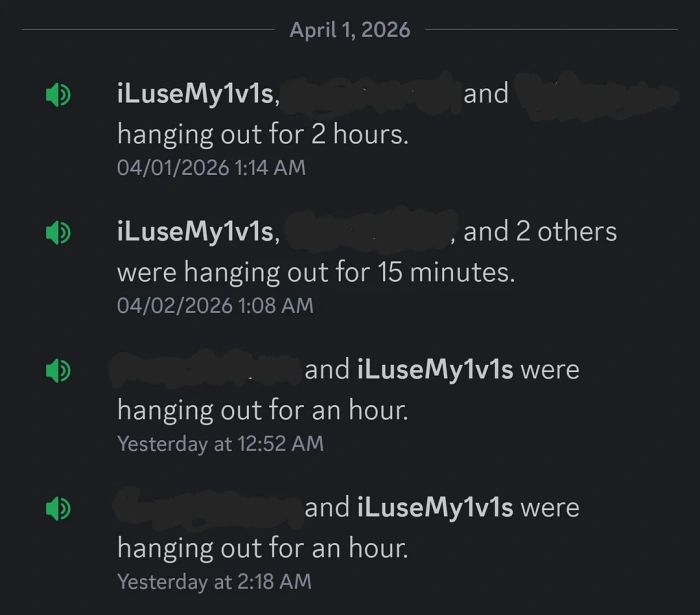
For years, Discord’s notification system was largely transactional: users received alerts for direct messages, mentions within specific channels, or announcements from server administrators. This hierarchy allowed individuals to maintain a high degree of control over their digital environment, ensuring that a "ping" usually signaled a direct need for their attention. The introduction of Hangout Notifications represents a departure from this philosophy. These alerts do not signify a direct message or a mention; instead, they serve as unsolicited updates on the peripheral activities of others. Users across mobile and desktop platforms have reported receiving push notifications and in-app prompts with messages such as “Your friend started a game,” or “Your friend and two others were hanging out for 2 hours.” These notifications are often generated from shared servers where the user may not even be active at the time, leading to a sense of intrusion that many find difficult to reconcile with the platform’s original utility.
The backlash to these features has been palpable across social media and community forums, most notably on platforms like Reddit. Users have expressed frustration that Discord appears to be moving toward a model reminiscent of traditional social media feeds, where algorithmic suggestions and "fear of missing out" (FOMO) are used to drive daily active usage metrics. From a user experience perspective, the grievance is twofold. First, there is the issue of notification clutter. In an era of "digital burnout," where individuals are inundated with alerts from dozens of applications, the addition of non-essential pings can be overwhelming. When an app as central as Discord begins to generate "noise" rather than "signal," users often respond with a desire to silence the platform entirely, which ultimately undermines the very engagement Discord is attempting to cultivate.

Second, there is a more nuanced concern regarding privacy and social surveillance. By notifying a user’s entire friend list that they have been "hanging out for 2 hours" in a specific voice channel, Discord inadvertently creates a surveillance-like atmosphere. For many, the appeal of Discord was the ability to jump into a voice channel for a quiet conversation or a gaming session without feeling as though their activity was being broadcast as a public event. The granular nature of these notifications—tracking both the activity and the duration—adds a layer of visibility that many users find unnecessary and uncomfortable.
Despite the controversy, Discord has provided the technical means to mitigate these interruptions, though the settings are often tucked away in menus that the average user might not frequent. To reclaim a distraction-free experience, users must navigate the platform’s intricate "Settings" architecture. On both the desktop client and the mobile application, the process begins by accessing the "User Settings" menu, typically represented by a cog icon near the user’s profile information. Within this menu, the "Notifications" tab serves as the primary control center for all outgoing alerts.
To specifically target the Hangout and activity prompts, users must look for a section often labeled "Activity Suggestions" or "Friend Activity." It is here that Discord houses the toggles for the prompts that have caused such a stir. By disabling these specific options, users can effectively opt out of the automated updates regarding their friends’ gaming habits or time spent in voice channels. Furthermore, for those who wish to go a step further, the "Privacy & Safety" menu offers additional controls that can limit how a user’s own activity is broadcast to others. This dual approach—managing what you see and what others see about you—is essential for maintaining a balanced presence on the platform in its current state.
The debate over these features highlights a broader tension in the tech industry: the conflict between user-centric design and engagement-driven growth. For a platform like Discord, which is now a multi-billion dollar entity, there is an inherent pressure to increase the time users spend on the app. Social discovery features, such as notifying users when their friends are active, are classic "growth hacks" designed to pull people back into the ecosystem. If a user sees that three friends are "hanging out," they are statistically more likely to open the app and join the conversation. While this may look positive on an internal analytics dashboard, it often fails to account for the qualitative experience of the user.

Critics argue that these features should be "opt-in" rather than "opt-out." If the goal were truly to enhance the user experience, the platform would allow those who desire more social prompts to enable them manually. By making them the default setting, Discord forces its entire population to deal with the change, placing the burden on the user to find a way to disable it. This "opt-out" culture is frequently cited as a major contributor to the erosion of trust between developers and their communities. It assumes that the developer knows what the user wants better than the user does, or worse, it prioritizes corporate metrics over individual preference.
However, it is worth noting that Discord remains one of the most customizable communication tools available. The very fact that granular controls exist to disable these notifications is a testament to the platform’s underlying flexibility. Unlike many social media giants that offer "all or nothing" notification settings, Discord allows for a high degree of "fine-tuning." Users can mute entire servers, specific channels, or even individual threads, and the ability to silence these new Hangout Notifications is an extension of that philosophy. The challenge for the modern user is staying informed enough to navigate these menus as the platform continues to iterate and add new features.
As Discord continues to expand its reach—moving beyond its gaming roots to serve as a home for study groups, corporate teams, and fan clubs—the company will likely continue to experiment with features that blur the line between a chat app and a social network. The "Hangout Notification" saga serves as a case study in how sensitive users are to changes in their digital environment. For many, Discord is not just an app; it is a digital living room. When the "walls" of that living room begin to broadcast what is happening inside to everyone on the street, it is only natural for the residents to look for a way to close the curtains.
In conclusion, while the introduction of activity-based alerts has been a source of significant annoyance for a large portion of the Discord community, the solution remains within reach for those willing to dive into the settings. By understanding the mechanics of these notifications and utilizing the provided toggles, users can restore the platform to its intended state: a powerful, focused tool for communication. As the platform matures, the ongoing dialogue between the developers and the user base will remain crucial. If Discord wishes to maintain its status as a beloved community hub, it must balance its quest for engagement with a profound respect for the user’s right to a quiet, private, and controlled digital experience. For now, the power to silence the noise remains in the hands of the individual, provided they know where to look.
