

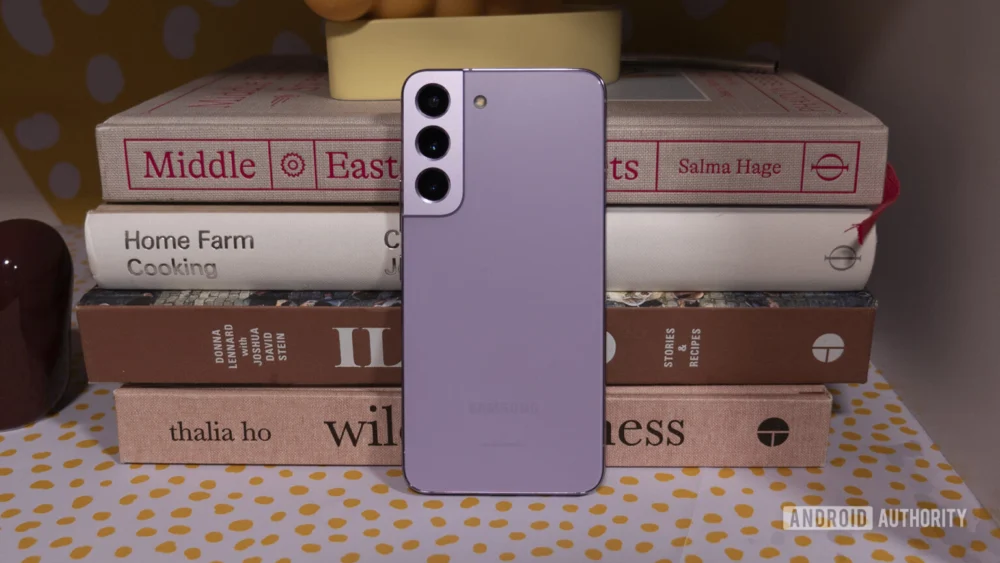
The delicate balance between digital security and device stability has been upended for a significant portion of the Samsung Galaxy S22 user base. What began as a routine deployment of the February 2026 security maintenance release has rapidly evolved into a technical crisis, as reports flood in regarding a catastrophic software failure that leaves these former flagship devices trapped in a state of perpetual rebooting. This phenomenon, commonly referred to in the tech industry as a "boot loop," has rendered an increasing number of handsets completely inoperable, sparking a wave of frustration and renewed scrutiny over Samsung’s software quality assurance protocols.
The crisis began to gain momentum shortly after the global rollout of the February update. On various social media platforms and technical support forums, including Reddit and PiunikaWeb, Galaxy S22 owners began documenting a harrowing sequence of events. Following the installation of the patch, the devices would attempt to restart, only to fail during the initial loading sequence. Instead of reaching the home screen, the phones would vibrate, display the manufacturer logo, and then abruptly power down, only to repeat the process indefinitely. For many, the situation is even more dire; some users have reported that their devices suffer from extreme thermal spikes during these cycles, while others experience complete system freezes that necessitate a forced manual shutdown, often with no guarantee that the phone will ever power on again.
The scope of the issue appears to be remarkably broad, affecting the entire S22 family. Whether users are sporting the standard Galaxy S22, the larger S22+, or the premium S22 Ultra, the reports of instability are consistent across the board. This suggests that the flaw lies deep within the core system architecture shared by the series rather than being an isolated bug affecting a specific hardware component or regional variant. While security patches are traditionally designed to be minor "under-the-hood" adjustments that patch vulnerabilities and improve minor performance metrics, this particular release seems to have introduced a critical conflict within the system’s kernel or the One UI framework.
For the modern consumer, a smartphone is far more than a communication tool; it is a repository for personal data, a gateway for financial transactions, and a primary method for multi-factor authentication. When a device enters a boot loop, the user is effectively locked out of their digital life. The psychological and professional toll of such a failure is immense. Reports have emerged of users losing access to work-related applications, emergency contact lists, and irreplaceable personal media. Because the device cannot reach the operating system’s main environment, traditional backup methods are often inaccessible, leaving owners in a state of technological limbo.
In an attempt to reclaim their devices, savvy users have experimented with a variety of desperate workarounds. Some have found marginal success by entering the Android Recovery Mode—a low-level interface that operates independently of the main OS—to clear the system’s cache partition. Others have gone a step further, performing a full factory reset. However, the efficacy of these measures is inconsistent. For many, a factory reset results in the loss of all local data without actually resolving the underlying software conflict, meaning the phone remains stuck in the loop even after being wiped clean.
More advanced users have turned to specialized PC-based tools, such as Samsung’s Odin software, to manually "re-flash" the device’s firmware. This process involves downloading the entire operating system image and overwriting the corrupted software on the phone. While this can sometimes bypass the boot loop, it is a complex and risky procedure that carries the potential for "hard-bricking" the device if not executed perfectly. Furthermore, such technical interventions are well beyond the comfort level of the average consumer, who expects their device to function reliably after an official, manufacturer-sanctioned update. Interestingly, a small subset of the community has reported that updating the "One UI Home" launcher through the Galaxy Store—if they can manage to keep the phone stable long enough to do so—has provided a temporary reprieve, hinting that the conflict might be related to the graphical interface or the home screen environment.
This is not the first time the Galaxy S22 series has been the center of a software-driven controversy. Industry analysts and long-time owners have been quick to point out a troubling sense of déjà vu. In late 2024, the rollout of the One UI 6.1.1 update was marred by nearly identical issues. During that period, the software caused such widespread instability that Samsung was forced to officially pause the distribution of the update to investigate the root cause. That historical context has turned the current situation from a mere technical glitch into a reputational nightmare for the South Korean tech giant.
The fallout from the 2024 incident is still being felt today, as Samsung is currently embroiled in a significant class-action lawsuit in the United States. The plaintiffs in that case allege that Samsung’s negligence in releasing untested or flawed software updates led to the "bricking" of their expensive flagship devices. The lawsuit argues that consumers have a reasonable expectation that official security updates will not destroy the functionality of the hardware they were designed to protect. The emergence of a similar crisis in February 2026 will undoubtedly provide more ammunition for legal teams and consumer advocacy groups, who argue that Samsung’s quality control measures are insufficient for a company of its stature.
The technical cause of these recurring failures remains a subject of intense speculation. Software development for modern smartphones is an incredibly complex endeavor, requiring the integration of thousands of lines of code with various hardware drivers and regional configurations. However, the frequency with which these issues are appearing in the S22 series suggests a potential "technical debt" or a fundamental incompatibility that has become more pronounced as the hardware ages. As Samsung focuses its engineering resources on its newer Galaxy S25 and S26 lines, there are growing concerns that older models are not receiving the rigorous regression testing necessary to ensure long-term stability.
As of this writing, Samsung has not issued a comprehensive public statement regarding the February 2026 patch failures, nor has it provided a definitive timeline for a corrective update. The company’s silence has only added to the anxiety of its customers. In previous instances, Samsung has eventually released "hotfix" patches to address critical bugs, but for those whose phones are currently trapped in a boot loop, a digital patch is useless if the device cannot stay powered on long enough to download and install it. This creates a catch-22 situation where the only remaining recourse for many owners is to seek physical repairs at authorized service centers, which may involve motherboard replacements or other costly out-of-warranty hardware interventions.
For Galaxy S22 owners who have not yet hit the "install" button on the latest update notification, the consensus among tech experts is clear: wait. Disabling automatic updates in the system settings is a prudent temporary measure until Samsung officially acknowledges the problem and provides a verified fix. For a flagship device that was marketed on its longevity and premium build quality, the current state of the S22 is a stark reminder of the fragility of the modern smartphone ecosystem.
The broader implications for the industry are significant. As manufacturers move toward longer software support cycles—some promising up to seven years of updates—the burden of maintaining software stability on aging hardware increases. If these updates continue to pose a risk to the physical integrity and usability of the devices, consumers may become increasingly hesitant to maintain their security hygiene, leaving the entire ecosystem more vulnerable to the very cyber threats these patches are meant to prevent. For Samsung, the immediate challenge is not just fixing a line of code, but restoring the trust of a loyal user base that currently feels abandoned by the very company that promised to keep their technology safe and secure.
