

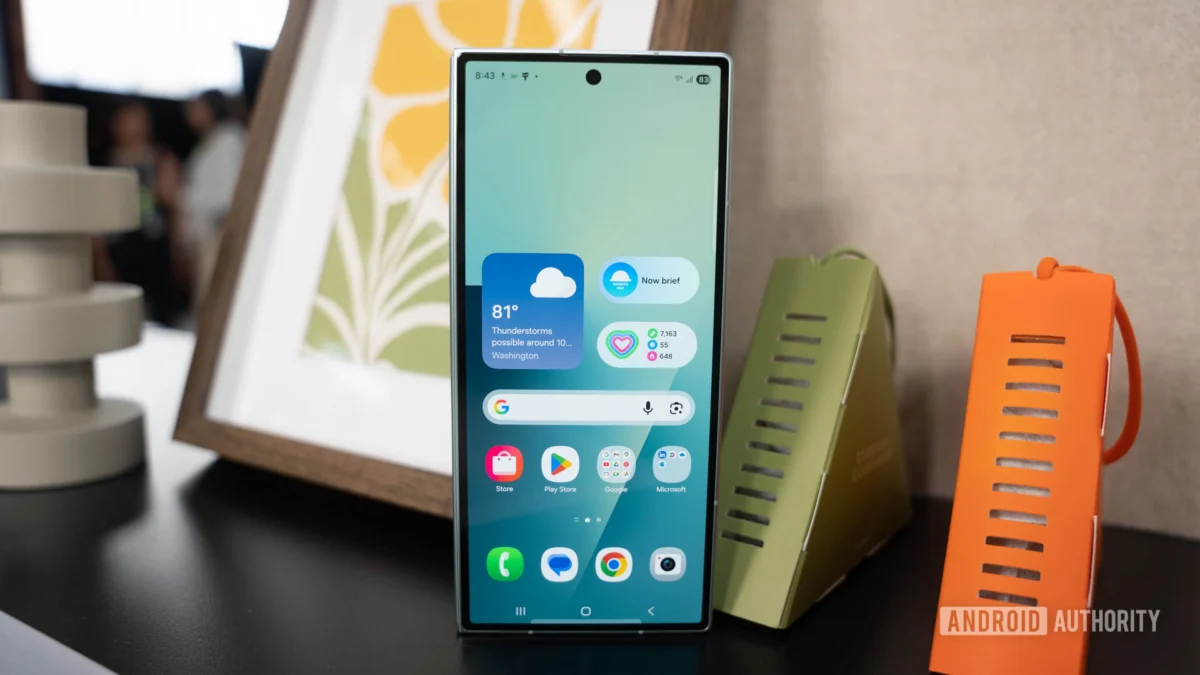
As the mobile industry marches toward the second half of the decade, the narrative surrounding foldable smartphones has shifted from a sense of experimental wonder to a rigorous demand for refinement. Samsung, the progenitor of the modern book-style foldable, finds itself at a critical juncture. While competitors from China and domestic rivals have pushed the boundaries of thinness and screen dimensions, Samsung has often been criticized for a conservative approach to hardware evolution. However, recent leaks surrounding the upcoming Galaxy Z Fold 8 suggest that the South Korean tech giant is focusing on a "death by a thousand cuts" strategy—where small, sophisticated engineering triumphs accumulate to create a vastly superior user experience. While much of the recent discourse has been dominated by the rumored "Galaxy Z Fold 8 Wide," a new leak regarding the standard model highlights a subtle but profound upgrade to the device’s cover display that speaks volumes about Samsung’s current design philosophy.
The focal point of this new revelation comes from the seasoned industry insider known as Ice Universe, whose track record with Samsung hardware is historically robust. According to the leak, Samsung is set to significantly reduce the footprint of the front-facing camera cutout on the Galaxy Z Fold 8’s cover screen. For the average consumer, a millimeter’s difference might seem negligible, but in the high-stakes world of smartphone aesthetics and ergonomics, it represents a substantial technological leap. The current Galaxy Z Fold 7 features a camera punch-hole measuring approximately 3.7mm in diameter. The Galaxy Z Fold 8 is reportedly shrinking this aperture to a mere 2.5mm. This 1.2mm reduction might not sound revolutionary on paper, but when translated to the visual real estate of a narrow cover display, the impact on immersion and notification bar cleanliness is expected to be immediate.
This reduction in size is not merely a matter of shrinking a plastic ring; it involves a complex interplay of optics and display manufacturing. The leak suggests that Samsung has adopted a new generation of "Hole-in-Active-Area" (HiAA) technology. This process requires extreme precision to drill through the OLED layers without damaging the surrounding organic light-emitting diodes or the touch-sensitive matrix. Furthermore, shrinking the physical aperture of the camera housing often presents a challenge for light intake. To maintain or improve image quality while reducing the hole size, Samsung likely had to employ a higher-density sensor or more advanced lens elements capable of channeling light more efficiently into a smaller surface area. This subtle change suggests that Samsung is listening to power users who find the "punch-hole" an eyesore during full-screen video playback or gaming on the external display.
While the minimized camera cutout serves as the "surprise" upgrade of the season, it joins a list of more predictable, yet highly requested, improvements. For years, Samsung has been arguably over-cautious regarding charging speeds and battery capacities, a legacy often attributed to the cautionary tale of the Galaxy Note 7. However, the Galaxy Z Fold 8 is rumored to finally break this cycle. Reports indicate that the device will feature a larger battery capacity than its predecessor, a feat that is particularly difficult to achieve in a foldable form factor where every cubic millimeter is contested by hinges, magnets, and complex cooling systems. Coupled with this is the rumor of increased charging speeds. As competitors now regularly offer 65W to 100W charging, Samsung’s move toward faster wired charging for the Fold 8 is a necessary step to ensure the device remains competitive for professional users who cannot afford to have their primary productivity tool tethered to a wall for long periods.
The context of these upgrades is further complicated by the emergence of the Galaxy Z Fold 8 Wide. For months, rumors have swirled that Samsung intends to bifurcate its flagship foldable line. The "Wide" variant is expected to address the long-standing criticism of the Fold’s "remote control" aspect ratio—the tall, narrow cover screen that can make typing difficult for those with larger hands. By introducing a Wide model, Samsung can cater to the enthusiasts demanding a more traditional smartphone feel when the device is closed. However, this leaves the standard Galaxy Z Fold 8 in an interesting position. Rather than being the "compromise" model, the standard Fold 8 appears to be positioning itself as the refined, one-handed productivity powerhouse. By shrinking the camera cutout and optimizing the internals, Samsung is doubling down on the idea that the standard Fold is for the user who values portability and one-handed utility without sacrificing the "wow factor" of the inner display.
Despite these internal and technical shifts, early CAD-based renders of the Galaxy Z Fold 8 suggest that Samsung is not planning a radical departure from its established design language. The overall silhouette remains familiar, characterized by sharp lines, a premium aluminum frame, and a refined hinge mechanism. This "evolutionary, not revolutionary" design path is a calculated move. Samsung has spent years perfecting the durability of its foldable hinge—now rated for hundreds of thousands of folds and featuring impressive water resistance. By maintaining the core chassis design of the Fold 7, Samsung can focus its research and development budget on the "invisible" upgrades: the screen technology, the battery density, and the camera miniaturization.
Furthermore, the software ecosystem remains Samsung’s "ace in the hole." As the hardware becomes more refined, the role of One UI becomes more prominent. A smaller camera cutout provides more space for the status bar, allowing for more notification icons or system information to be displayed without clutter. This is particularly relevant as Samsung continues to integrate more "Galaxy AI" features into the interface. With more screen real estate, even if it is just a few square millimeters reclaimed from the camera hole, the AI-driven taskbars and multitasking windows have more room to breathe.
The competitive landscape makes these subtle upgrades even more vital. With the Google Pixel Fold offering a different take on the aspect ratio and the OnePlus Open receiving rave reviews for its near-invisible crease and superior camera hardware, Samsung can no longer rely on brand loyalty alone. The Galaxy Z Fold 8 needs to prove that it is the most "polished" foldable on the market. While a 2.5mm camera cutout might not be the headline-grabbing feature that a 200-megapixel sensor or a rollable screen would be, it represents a level of manufacturing maturity that few other companies can match. It is a signal to the market that Samsung is focused on the details that users notice every single time they wake their phone.
As we move closer to the official unveiling, the narrative of the Galaxy Z Fold 8 is becoming clear. It is a device built for the "prosumer" who has already integrated foldables into their daily life and is now looking for the friction points to be sanded down. The combination of a larger battery, faster charging, and a less intrusive display suggests a device that is more reliable and more immersive than anything Samsung has produced in this category before. While the Galaxy Z Fold 8 Wide may capture the imagination of those wanting a new form factor, the standard Galaxy Z Fold 8 is shaping up to be the most balanced and technically sophisticated version of Samsung’s original vision.
In conclusion, the leak from Ice Universe regarding the 2.5mm camera cutout is a reminder that in the world of premium technology, the most significant changes are often the ones that are designed to be overlooked. By reclaiming the screen from the camera, Samsung is moving one step closer to the "all-screen" future that has been the industry’s north star for over a decade. When paired with the necessary upgrades to power management and the potential for a more diverse lineup with the "Wide" model, the Galaxy Z Fold 8 stands as a testament to Samsung’s commitment to the foldable category. It is not just about making a phone that folds; it is about making a folding phone that offers no compromises when compared to the best traditional flagships on the market. As the countdown to launch begins, the tech world will be watching to see if these small, subtle refinements add up to the giant leap Samsung needs to maintain its crown.
