

The landscape of modern mobile communication is undergoing a quiet but profound transformation, driven largely by Google’s persistent integration of artificial intelligence into the most fundamental aspect of a smartphone: the phone call. For years, the humble voicemail has remained a static, carrier-dependent relic of the analog age. However, recent developments within the Google Phone app ecosystem suggest that the technology giant is on the verge of finalizing a significant upgrade to its "Take a Message" feature. This upcoming enhancement, discovered through deep technical analysis of the latest software builds, aims to provide Pixel users with unprecedented control over how they present themselves to missed callers through highly customizable and contact-specific greetings.
The "Take a Message" feature originally made its debut alongside the flagship Pixel 10 series, representing a natural evolution of Google’s existing suite of "Call Assist" tools. While features like Call Screen and Hold for Me focused on managing active interactions and navigating automated menus, Take a Message was designed to bridge the gap between a missed call and a traditional voicemail. It allowed the device’s internal intelligence to interact with callers in real-time, offering a more dynamic interface than a simple recording. Since its high-profile launch, Google has demonstrated a commitment to democratization by expanding the feature’s availability backward through the Pixel hardware lineup, reaching as far back as the Pixel 6 series. This expansion ensured that a significant portion of the Pixel user base could benefit from the sophisticated call-handling capabilities once reserved for the newest hardware.
Despite the initial success of Take a Message, one notable limitation remained: the lack of personalization. Users were largely restricted to a standardized, albeit professional, automated response. Evidence of a shift toward personalization first surfaced late last year when early code fragments hinted at a "Manage greetings" interface. At that stage, the functionality was skeletal—a placeholder for a vision not yet realized. However, the latest iteration of the Google Phone app for Android, specifically version 214.0.888174602-publicbeta-pixel, reveals a feature that has matured significantly. The "Manage greetings" section is no longer a dormant menu; it is now a functional workspace where users can record, preview, and assign specific audio messages to different segments of their contact list.
The technical progress observed in this beta update is substantial. Developers and enthusiasts exploring the software have noted that the introductory onboarding flow is now largely intact. When the feature eventually goes live, users will likely be greeted by a series of explanatory screens detailing how custom greetings can enhance their professional and personal boundaries. More importantly, the core recording mechanism, which was previously prone to errors or simply non-functional in earlier builds, appears to be operational. This suggests that the underlying APIs responsible for capturing audio and linking it to the Phone app’s database are nearing a production-ready state.
The implications of contact-specific greetings extend far beyond mere novelty. In a professional context, a user might want to provide a detailed, formal greeting for colleagues or clients, perhaps mentioning a specific timeframe for a return call or directing them toward an assistant. Conversely, for family and close friends, a more casual, warm, or even humorous message would be appropriate. By moving this control directly onto the device, Google is bypassing the often-clunky interfaces provided by cellular carriers. Traditionally, setting up custom voicemail greetings required navigating a series of prompted keypad entries through a carrier’s server—a process that has remained virtually unchanged for decades. Google’s implementation brings this into the modern era, utilizing the familiar Material You design language to make the process as intuitive as sending a text message.
This move also aligns with Google’s broader strategy of "on-device intelligence." By processing these greetings and managing the interaction locally on the Pixel’s Tensor-powered hardware, Google enhances user privacy and reduces latency. The phone acts as a sophisticated digital secretary, capable of distinguishing between a high-priority contact and a potential solicitor. For those contacts who are not assigned a specific recording, the system is designed to fall back to a default greeting, ensuring a consistent experience for all callers. This "fallback" logic is a critical component of the user experience, preventing the system from feeling disjointed or unfinished.
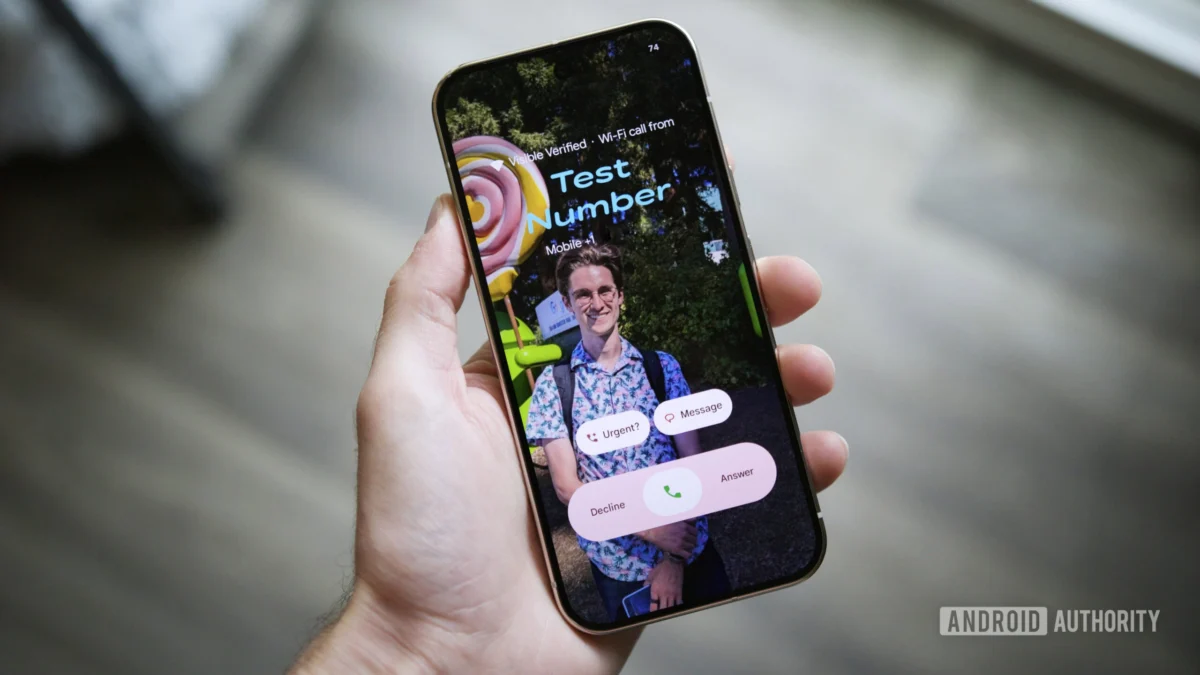
The evolution of Take a Message is part of a larger trend where the smartphone is no longer just a conduit for a call, but an active participant in it. We have seen this trajectory begin with Call Screen, which uses Google’s Assistant to interrogate unknown callers and provide a transcript to the user. Take a Message takes this a step further by focusing on the conclusion of the call. When paired with the "Calling Cards" UI—a visual overhaul of the incoming call screen that provides more context about the caller—the Pixel is positioning itself as the most "intelligent" phone on the market. These Calling Cards provide a streamlined, card-based interface that allows users to quickly decide whether to answer, screen, or direct the caller to the Take a Message system.
While the technical foundations for custom greetings appear solid, the timing of the public release remains a matter of strategic speculation. Google has a history of "feature drops"—quarterly updates that bring new capabilities to Pixel devices. It is highly probable that this enhanced version of Take a Message will be a headlining feature of a future drop. The presence of fully functional code in a public beta is usually the final harbinger of a general rollout, indicating that the company is currently in the "bug-squashing" phase rather than the conceptual phase.
However, as with any information gleaned from an APK teardown or a beta build, there are caveats. Software development is an iterative and sometimes unpredictable process. Features that appear nearly complete can be delayed due to unforeseen compatibility issues with specific carrier networks or regulatory requirements in different regions. Furthermore, Google occasionally chooses to hold back features to align with major hardware launches or marketing campaigns. Nevertheless, the momentum behind Take a Message suggests that the company views it as a core component of the "Pixel Experience"—the unique suite of software features that differentiates Google’s hardware from the broader Android ecosystem.
In the competitive landscape of mobile operating systems, this level of telephony integration serves as a significant differentiator against Apple’s iOS. While Apple recently introduced "Live Voicemail," which allows users to see a real-time transcript as a caller leaves a message, Google’s approach with Take a Message and custom greetings focuses on the outgoing side of the interaction. It empowers the user to curate their digital persona with precision. By allowing for multiple, context-aware greetings, Google is acknowledging the complex social and professional lives of its users, where a "one size fits all" approach to communication is increasingly inadequate.
As we look toward the final release, the focus will likely shift to how seamlessly these custom greetings integrate with other Google services. There is potential for integration with Google Calendar, for instance, where the Take a Message feature could automatically play a specific greeting if the user is currently in a scheduled meeting. While that level of automation has not yet been confirmed, the groundwork being laid in version 214 of the Phone app provides the necessary infrastructure for such advanced features. For now, the ability to simply record a personalized message for a spouse, a boss, or a delivery driver represents a significant leap forward in making the smartphone a more personal and capable assistant. The "Take a Message" update is not just about voicemail; it is about the continued refinement of the Pixel as a device that understands the nuances of human communication.
