

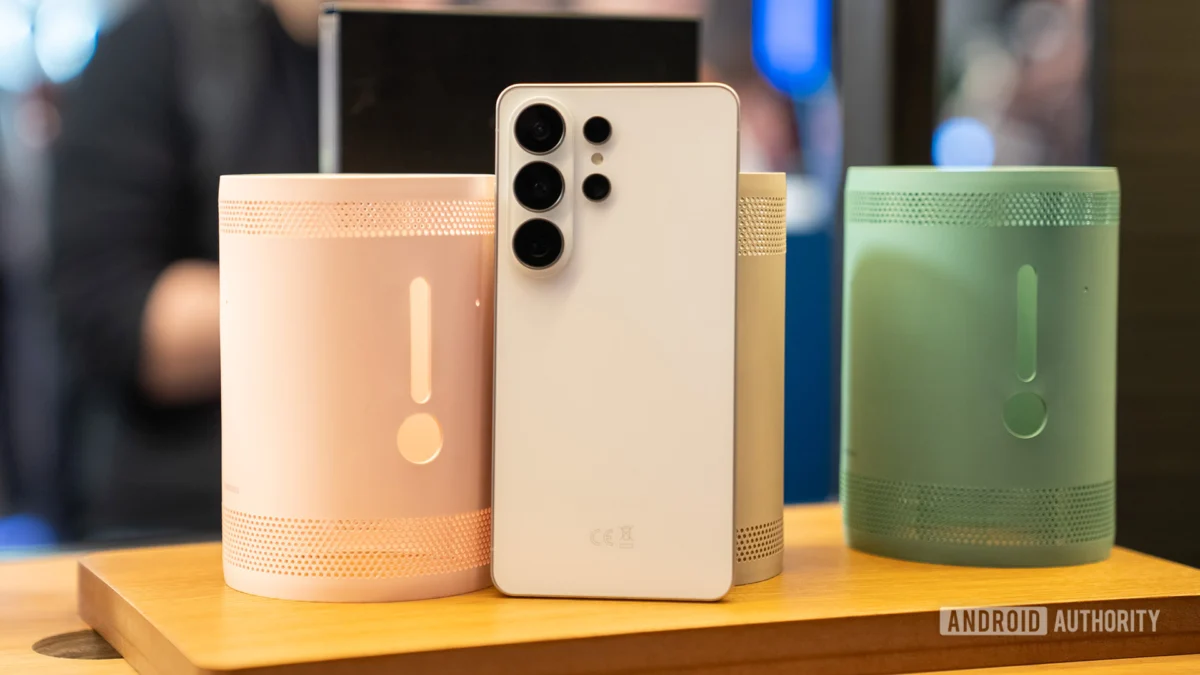
The launch of the Samsung Galaxy S26 series has been met with a mix of technical admiration and cautious observation. In an era where smartphone hardware appears to have hit a temporary plateau, the narrative surrounding new flagship releases has shifted from megapixel counts and sensor sizes to the sophisticated nuances of computational photography and artificial intelligence. While the Galaxy S26 Ultra may not boast a radical departure in its physical chassis or lens array compared to its predecessor, it hides a significant technological leap within its software ecosystem. One of the most compelling, yet curiously obscured, additions to Samsung’s photographic arsenal is the "Virtual Reflector," a tool housed within the Expert Raw application that promises to bring professional-grade studio lighting control to the palm of a user’s hand.
To understand the significance of the Virtual Reflector, one must first understand the traditional challenges of portrait photography. In a professional studio environment, a photographer rarely relies solely on the primary light source. To eliminate harsh shadows, highlight the contours of a subject’s face, or counteract a strong backlight, photographers utilize physical reflectors—large, foldable discs of fabric, usually colored silver, gold, or white. These tools bounce ambient light back onto the subject, acting as a "fill light" that balances the exposure. In mobile photography, achieving this balance has historically been a struggle; subjects captured against a bright sunset often end up as dark silhouettes, or the background becomes a blown-out white mess as the camera tries to expose for the face.
Samsung’s Virtual Reflector attempts to solve this physical limitation through the power of the Snapdragon processor’s Neural Processing Unit (NPU). Rather than requiring a photographer to carry bulky equipment or a second person to hold a reflector, the Galaxy S26 Ultra simulates the physics of light reflection in real time. Recently brought to public attention by tech enthusiast and YouTuber Steven Divish, this feature is currently tucked away in the "Expert Raw Labs" section of Samsung’s advanced camera app. By moving this functionality into the computational space, Samsung is effectively giving users a virtual lighting assistant that can be summoned at the tap of an icon.
The tool operates with a level of granularity that mirrors professional workflows. Within the Virtual Reflector interface, users are presented with two primary color profiles: Silver and Gold. In the world of traditional photography, a silver reflector is prized for its ability to provide a neutral, high-contrast bounce. It brightens the subject without altering the color temperature of the scene, making it ideal for clinical, high-fashion, or modern portraits where clarity is paramount. Conversely, the gold reflector is a staple for outdoor and "golden hour" photography. It introduces a warm, amber hue to the reflected light, which serves to enhance skin tones, giving the subject a healthy, sun-kissed glow that feels organic and inviting.
Beyond mere color selection, the Virtual Reflector allows for precise control over "Reflectance" and "Direction." This is where the Galaxy S26 Ultra’s AI-driven depth mapping truly shines. The software utilizes the device’s sophisticated sensor array to create a three-dimensional map of the scene. When a user adjusts the "Direction" slider, the AI calculates how light would realistically fall across the curves of a human face if a physical reflector were being moved around them. If the sun is positioned behind the subject, the user can virtually place a reflector in front of them to illuminate their features. The "Reflectance" setting acts as a dimmer switch, allowing the user to dial in the intensity of the effect—from a subtle lift of the shadows to a dramatic, high-key studio look.
The decision to house this feature within the Expert Raw app, rather than the primary camera application, speaks to Samsung’s current software philosophy. Expert Raw has become a sandbox for the company’s most ambitious photographic experiments. It is a destination for "prosumers"—users who understand the basics of ISO, shutter speed, and white balance, and who are willing to dig through menus to find specialized tools. However, the "Labs" designation suggests that Virtual Reflector is still in a developmental or beta phase. While the results demonstrated by early adopters are impressive, Samsung likely wants to refine the edge detection and light-bleeding algorithms before rolling it out to the hundreds of millions of casual users who utilize the standard "Photo" mode.
This hidden innovation arrives at a time when Samsung is facing stiff competition from Google’s Pixel series and Apple’s iPhone Pro models. Google has long dominated the "Relighting" space with its Portrait Light feature in Google Photos, which allows users to adjust lighting after a photo has been taken. Samsung’s approach with the Virtual Reflector is distinct because it is designed for real-time use. It encourages the photographer to compose the shot with the lighting already in mind, rather than relying on post-capture fixes. This real-time feedback loop is essential for professional creators who need to see the final composition before hitting the shutter button.
The technical architecture required to run the Virtual Reflector in real time is substantial. It requires the phone to perform semantic segmentation—the ability to distinguish between the subject, the foreground, and the background—at a high frame rate. The AI must identify the planes of the face (the forehead, cheeks, and nose) to ensure that the virtual light wraps around the subject naturally. If the light appears too flat or ignores the contours of the subject, the "uncanny valley" effect takes over, making the photo look over-processed or "Photoshopped." The early feedback on the S26 Ultra suggests that Samsung has made significant strides in making these virtual light sources look physically plausible.
However, the "hidden" nature of the tool highlights a recurring critique of Samsung’s user interface design: feature bloat and fragmentation. To access the Virtual Reflector, a user must first know that the Expert Raw app exists, download it from the Galaxy Store (as it is not always pre-installed), navigate to the "Labs" section, and then toggle the feature on. For the average consumer, these steps represent a significant barrier to entry. Many tech analysts argue that for a feature as transformative as the Virtual Reflector, it should be front and center in the main Portrait mode. By burying it, Samsung risks its best innovations going unnoticed by the very people who would benefit from them most—parents taking photos of their children at the park or travelers trying to capture a memory against a bright landmark.
Looking toward the future, the Virtual Reflector could be the precursor to a broader suite of "Virtual Studio" tools. Imagine a scenario where the Galaxy S27 or S28 Ultra can simulate not just reflectors, but softboxes, rim lights, and colored gels, all through AI. As mobile sensors reach their physical limits due to the thinness of smartphone bodies, software will be the primary battlefield for image quality. Samsung is betting heavily on the idea that if they cannot make the sensor significantly larger, they can make the software significantly smarter.
In conclusion, while the Galaxy S26 Ultra might appear to be an incremental hardware update, tools like the Virtual Reflector prove that the real revolution is happening in the code. This feature bridges the gap between amateur snapshots and professional portraiture, democratizing lighting techniques that were once the exclusive domain of those with expensive equipment. As Samsung continues to polish this "Labs" experiment, it is only a matter of time before virtual lighting becomes a standard expectation for mobile photography. For now, those in the know can enjoy a "secret" studio-quality experience, proving that sometimes the most powerful tools are the ones you have to go looking for.
