

The landscape for Android enthusiasts and power users has undergone a seismic shift over the last several years, transitioning from an era of open experimentation to one of increasingly rigid manufacturer controls. OnePlus, a brand that once built its entire identity around the "Never Settle" mantra and a deep-rooted commitment to the developer community, is currently at the center of a controversial pivot. Recent developments within the OnePlus software ecosystem have signaled a departure from this enthusiast-friendly heritage, introducing sophisticated barriers that complicate the processes of rooting, flashing custom ROMs, and, most crucially, recovering devices from software-induced "bricks." For owners of the OnePlus 11, navigating this new reality requires a nuanced understanding of firmware versioning, security patches, and the underlying mechanisms that govern device recovery.
At the heart of the current concern is the implementation of the Anti-Rollback (ARB) mechanism. While ARB is not a new concept in the broader Android world—having been popularized by manufacturers like Xiaomi and Google itself for security purposes—its integration into the OnePlus OxygenOS pipeline represents a significant hurdle for those who enjoy hopping between different software builds. The Anti-Rollback mechanism is designed to prevent a device from being downgraded to an older, potentially more vulnerable version of the operating system. It functions by checking a hardware-level fuse or a secure storage index. If the firmware being flashed has a lower ARB index than the one currently installed on the device, the system will refuse to boot, or worse, permanently brick the hardware. In the context of the OnePlus 11, the current landscape is a precarious one. While many current stock and custom ROMs have not yet fully implemented a restrictive ARB index—meaning the index remains at zero or "safe" levels—the threat of a permanent lockout looms with every new OTA (Over-the-Air) update.

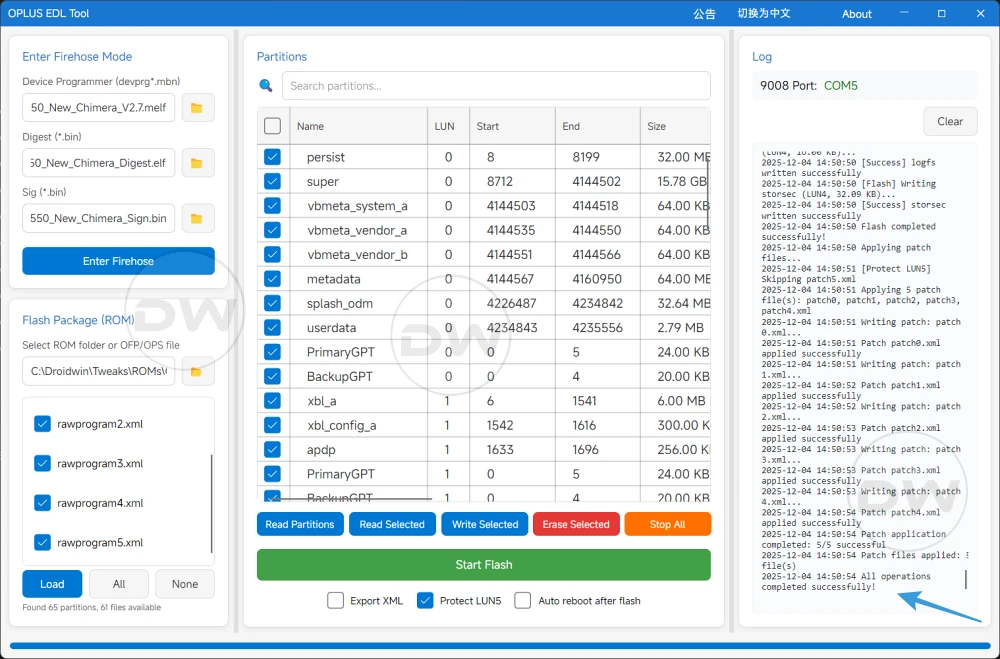
However, ARB is only one half of the current dilemma. A more immediate and pressing issue for OnePlus 11 users is the systematic patching of the Emergency Download (EDL) mode loophole. For years, EDL mode has been the ultimate safety net for Qualcomm-based devices. It is a low-level boot mode that allows a user to flash firmware directly to the device’s storage chips, bypassing the standard bootloader and recovery partitions. This is typically achieved using "firehose" files—leaked or reverse-engineered programmer files that facilitate communication between a PC and the device’s chipset. For the modding community, these files were the holy grail, providing a way to "unbrick" a device that would otherwise require a motherboard replacement.
In a move that has frustrated the community, OnePlus has begun closing these loopholes. By requiring authenticated handshakes with proprietary servers to utilize EDL flashing tools, or by updating the primary bootloader to reject older, leaked firehose files, the manufacturer has effectively monopolized the repair process. This leaves users in a difficult position. If a OnePlus 11 becomes bricked due to a failed flash or a software conflict, the user is often faced with two unappealing options: seeking out third-party "remote unbricking" services, which are frequently expensive and rife with fraudulent actors, or sending the device to an official service center. The latter is often impossible for users in regions where OnePlus lacks a physical presence, turning a software issue into a permanent hardware loss.
For those currently utilizing custom ROMs on the OnePlus 11 who wish to return to the official OxygenOS environment, the choice of firmware is now a strategic decision rather than a routine task. The goal is to return to stock while maintaining the ability to use EDL mode should something go wrong in the future. Exhaustive testing within the community has identified a specific "point of no return" regarding OxygenOS 16 updates. Firmware versions designated as .500 or higher—specifically version 16.0.3.500 for the OnePlus 11—contain the updated security protocols that effectively patch the EDL loophole. Once a device is updated to this level, the traditional methods of unbricking via leaked firehose files are rendered obsolete.

To maintain a safety net, enthusiasts are advised to target OxygenOS version 16.0.2.400. This specific build represents the final frontier for the OnePlus 11 where the EDL service remains functional and accessible to standard community tools. By flashing version 16.0.2.400, a user can return their device to a stable, official state without sacrificing the ability to recover the device in a worst-case scenario. This process is typically performed using a Fastboot Firmware Flasher, a tool that utilizes the device’s bootloader to write the various partitions of the OS. However, even when targeting this "safe" version, the specter of Anti-Rollback remains. It is considered best practice for any user to manually verify the ARB index of their current system and the target firmware before proceeding. A mismatch here is the most common cause of "hard bricks" in the modern era.
The situation is further complicated by the arrival of newer security patches within the custom ROM ecosystem. Recent updates indicate that custom ROMs incorporating the April 2026 security patch (or subsequent iterations) may also implement the same EDL-patching logic found in official OxygenOS builds. This means that even if a user avoids official OnePlus updates, staying "current" on a custom ROM could inadvertently lock them out of EDL recovery. This creates a paradox for the security-conscious enthusiast: staying updated with the latest security patches protects against software exploits but simultaneously removes the primary hardware-level recovery tool.
The broader implications of these changes reflect a trend toward "walled garden" ecosystems, even on hardware that users technically own. By restricting EDL access and tightening ARB protocols, OnePlus is aligning its security posture with that of Oppo, its parent company. While this move is ostensibly defended as a measure to protect users from unauthorized software modifications and to ensure device integrity, it significantly raises the stakes for the hobbyist developer. The margin for error has shrunk to nearly zero. In the past, a mistake during a kernel flash was a minor inconvenience solved by twenty minutes in EDL mode; today, that same mistake can result in a $700 paperweight.

For the OnePlus 11 community, the path forward involves a mixture of vigilance and technical restraint. Users must become accustomed to reading detailed changelogs and community reports before accepting any update, whether it comes from OnePlus or a third-party developer on platforms like XDA Developers. The reliance on the Fastboot Firmware Flasher as a primary tool for transitioning back to stock is now a necessity, but it must be used with the specific 16.0.2.400 firmware to preserve the device’s long-term viability.
In conclusion, while the OnePlus 11 remains a powerful and capable piece of hardware, its software environment is becoming increasingly hostile to the very people who once championed the brand. The systematic removal of recovery loopholes and the implementation of rollback protections signify a new era of corporate control over hardware. By adhering to the specific firmware versions identified—avoiding the 16.0.3.500 threshold and being wary of post-April 2026 security patches—users can still enjoy the benefits of custom software while keeping the "emergency exit" of EDL mode propped open. As the ecosystem continues to evolve, the burden of device maintenance has shifted from the manufacturer to the user, requiring a level of technical awareness that was previously reserved for only the most advanced developers. The "Never Settle" era has not ended, but the terms of engagement have certainly changed.
