
The mobile technology landscape is currently witnessing a significant shift as Google accelerates its development cycle, leading to the early emergence of Android 16. While the official rollout of this latest operating system remains primarily tethered to Google’s own Pixel lineup, the enthusiast community has wasted no time in bridging the gap for other high-performance hardware. At the forefront of this movement is the Motorola Edge 60 Pro, a device that has recently become the subject of intense interest within the developer community. Through the deployment of unofficial Android Open Source Project (AOSP) builds, users of this premium handset can now experience the cutting edge of mobile software long before the manufacturer’s official update schedule commences. This transition to Android 16 represents more than just a version increment; it is an exploration of the next generation of user interface design and system efficiency.
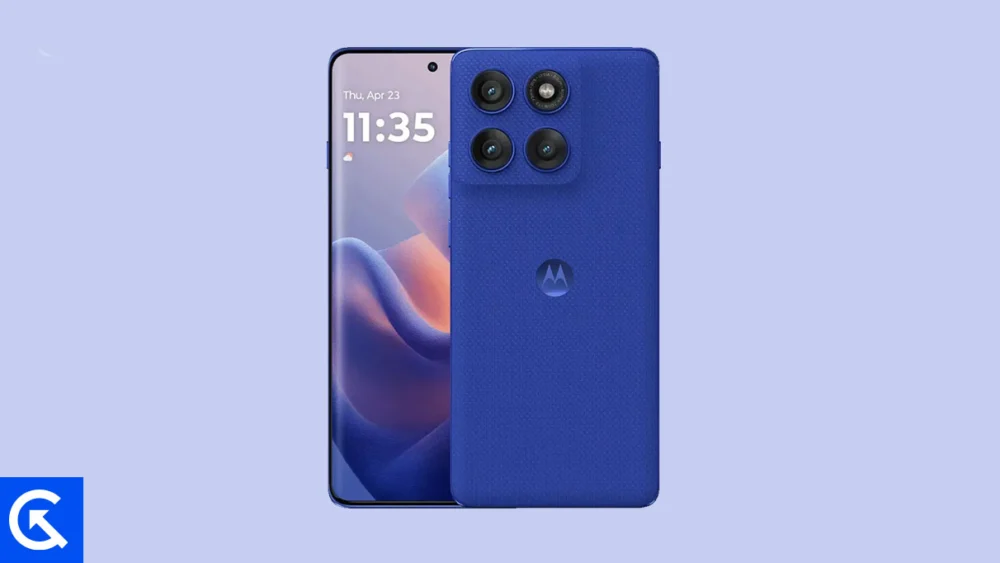
The Motorola Edge 60 Pro serves as an ideal candidate for such software experimentation due to its robust hardware profile. Positioned as a formidable alternative to mainstream flagships, the device is engineered around a 6.7-inch P-OLED display that pushes the boundaries of visual fidelity. With a 1220p resolution and a fluid 120Hz refresh rate, the panel offers the necessary canvas to showcase the graphical refinements introduced in the new OS. Furthermore, its peak brightness capabilities ensure that the nuanced color palettes of the updated interface remain vivid even under direct sunlight. Beyond the screen, the device’s structural integrity is reinforced by Gorilla Glass 7i and a unique eco-leather finish, complemented by IP68 and IP69 ratings for water and dust resistance. This combination of elegance and durability makes the Edge 60 Pro a long-term companion for users who prioritize both aesthetics and resilience.
![How to Install Android 16 on Motorola Edge 60 Pro [Download Link]](https://www.getdroidtips.com/wp-content/uploads/2026/02/Motorola-Edge-60-Pro.jpg)
Under the hood, the Edge 60 Pro is powered by the MediaTek Dimensity 8350 Extreme chipset, a processor designed to balance high-performance gaming with sophisticated power management. Coupled with UFS 4.0 storage technology, the device ensures that data throughput is instantaneous, a critical factor when running a modern operating system like Android 16. The inclusion of a massive 6,000 mAh silicon-carbon battery is perhaps the most significant hardware advantage, providing the endurance required to handle the increased background processing often associated with early-release software. When the battery does eventually deplete, the 90W fast-charging ecosystem allows users to return to full capacity with minimal downtime.
The primary allure of transitioning to Android 16 lies in the introduction of "Material 3 Expressive." This design philosophy represents the most significant evolution of Google’s visual language since the debut of Material You. Material 3 Expressive is not a radical departure from the existing aesthetic but rather a sophisticated refinement focused on the tactile and psychological aspects of the user interface. It introduces more dynamic, fluid animations that respond to user intent with greater precision. Typography has been adjusted to be bolder and more legible, while touch targets have been enlarged to improve accessibility and reduce input errors. For the Motorola Edge 60 Pro, these changes breathe new life into the curved-edge display, making every interaction feel more organic and responsive.
Beyond the visual overhaul, Android 16 brings a suite of system-level optimizations aimed at improving the synergy between hardware and software. These updates include enhanced support for multi-tasking on large-format displays, improved privacy controls that give users more granular authority over their data, and refined notification management systems. While the Edge 60 Pro officially launched with Android 15 and a promise of three major updates, the ability to jump ahead to Android 16 via a custom ROM allows power users to bypass the traditional waiting period associated with carrier and manufacturer certifications. This "early access" is made possible by the dedicated efforts of independent developers who port the AOSP code to specific hardware configurations.
![How to Install Android 16 on Motorola Edge 60 Pro [Download Link]](https://www.getdroidtips.com/wp-content/uploads/2026/02/Motorola-Edge-60-Pro-300x169.jpg)
However, the path to installing custom firmware requires a meticulous approach and an understanding of the technical prerequisites. The first and most vital step for any user considering this upgrade is the comprehensive backup of all personal data. Flashing a new operating system is an invasive process that necessitates a complete wipe of the device’s internal storage. Following data security, the physical state of the device must be addressed; maintaining a battery charge of at least 50% is mandatory to prevent a catastrophic power failure during the sensitive flashing sequence.
The technical foundation of this installation relies on the Android Debug Bridge (ADB) and Fastboot binaries. These command-line tools serve as the communication bridge between a desktop computer and the mobile device, allowing for low-level modifications that are otherwise restricted by the standard user interface. To utilize these tools effectively, users must also install the specific Motorola USB drivers to ensure a stable data connection. The most significant hurdle in this process is the unlocking of the bootloader. Motorola provides official channels for this procedure, but it is a step that permanently alters the device’s security profile and usually voids the manufacturer’s warranty. Unlocking the bootloader is the "point of no return" that enables the installation of custom recovery environments like Team Win Recovery Project (TWRP).
TWRP is the gateway through which the Android 16 ROM and the necessary Google Apps (GApps) packages are installed. Most AOSP-based ROMs are distributed in a "vanilla" state, meaning they lack the proprietary Google services that most users rely on, such as the Play Store, Maps, and Gmail. Consequently, the GApps package must be flashed immediately following the ROM installation to ensure a complete and functional ecosystem. It is a critical nuance of the process that these two components be installed in a single session without an intermediary reboot, as failing to do so can lead to software instability or "boot loops."
![How to Install Android 16 on Motorola Edge 60 Pro [Download Link]](https://www.getdroidtips.com/wp-content/uploads/2020/06/cmd-platform-tools.jpg)
The current state of the Android 16 AOSP builds for the Motorola Edge 60 Pro is surprisingly mature. Early adopters report that the core functionality of the device—including the complex triple-camera system with its 50MP main sensor and 3x telephoto lens—remains operational. The Pantone color validation, a hallmark of Motorola’s recent camera tuning, continues to provide accurate skin tones and environmental colors. Similarly, the Dolby Atmos-tuned stereo speakers and the 50MP front-facing camera maintain their performance standards under the new OS. While these unofficial builds are often labeled as "beta" or "experimental," the underlying stability of the Dimensity 8350 platform has allowed for a relatively smooth transition.
Nevertheless, the nature of custom ROMs means that users must remain vigilant. While "everything seems to be working" is the common refrain among early testers, the sheer complexity of modern mobile software means that edge-case bugs may still exist. These can range from minor graphical glitches in the Material 3 Expressive animations to more significant issues with specific connectivity bands or power-saving modes. The developer community relies on user feedback, accompanied by technical logs, to identify and rectify these issues in subsequent releases.
Ultimately, installing Android 16 on the Motorola Edge 60 Pro is an act of digital empowerment. It allows the user to reclaim control over their hardware, removing the limitations imposed by official release cycles and bloatware. By embracing the latest innovations in the Android ecosystem, owners of the Edge 60 Pro can enjoy a software experience that is as premium as the hardware it runs on. As Google continues to polish Android 16 toward its final stable release, the Motorola community stands as a testament to the enduring appeal of open-source development and the pursuit of mobile excellence. For those with the technical inclination and a desire for the newest features, the future of Android has already arrived on the Edge 60 Pro.
