

The global smartphone market has long been characterized by regional variations that go far beyond simple differences in power adapters or language settings. For tech-savvy consumers and budget-conscious enthusiasts, the allure of importing flagship devices directly from China is significant. Brands like OnePlus, Xiaomi, and Vivo often release high-tier hardware in their domestic market at price points substantially lower than their international counterparts. However, these cost savings frequently come at the expense of software compatibility and hardware features tailored for Western markets. Among the most frustrating omissions for international users is the lack of eSIM support in Chinese-variant hardware. While this was once considered an insurmountable hardware limitation, a new generation of hardware-based workarounds is empowering users to bridge the gap between regional hardware restrictions and global connectivity standards.
To understand the challenge, one must first examine why Chinese smartphone variants differ so drastically from global models. When a consumer purchases a Chinese OnePlus device, for instance, they are engaging with hardware designed for a specific regulatory and digital ecosystem. One of the most immediate drawbacks is the compromise in digital rights management (DRM) certifications. Many Chinese devices arrive with Widevine L3 certification rather than the L1 standard found on global models. This technical distinction determines the quality of streaming video; an L3-certified device is restricted to standard definition (480p) on platforms like Netflix and Amazon Prime Video, regardless of the screen’s actual resolution or the user’s subscription tier. Furthermore, the operating system landscape is bifurcated. While global OnePlus users enjoy the OxygenOS experience, Chinese models ship with ColorOS. While the two have shared a codebase in recent years, the regional nuances, pre-installed bloatware, and notification handling remain distinct, often requiring the user to manually flash a different ROM—a process that has become increasingly complex as manufacturers tighten bootloader security.

The most significant hurdle for the modern traveler or digital nomad, however, is the absence of an embedded Universal Integrated Circuit Card (eUICC), more commonly known as an eSIM chip. In the Chinese market, dual physical SIM slots are the industry standard, and local carriers have historically been slower to adopt consumer-facing eSIM technology for smartphones. Consequently, manufacturers omit the dedicated internal hardware required to support virtual SIM profiles. For a user in Europe or North America, where carriers are increasingly moving toward eSIM-only configurations or offering secondary lines via eSIM, this hardware omission makes a Chinese import feel like a legacy device despite its cutting-edge processor and camera.
The solution to this dilemma lies not in a software hack or a complex motherboard modification, but in an innovative piece of hardware known as a physical eSIM adapter. This technology essentially takes the eUICC chip—which is usually soldered onto a phone’s logic board—and shrinks it down to fit onto a standard, removable plastic SIM card. By inserting this "eSIM adapter" into a physical SIM slot, the device is "fooled" into interacting with an eUICC through the standard SIM interface. This allows virtually any Android device, regardless of its native eSIM capabilities, to store, manage, and toggle between multiple digital SIM profiles.
Several companies have emerged as leaders in this niche market, providing the bridge between physical hardware and digital provisioning. Brands such as 5ber.eSIM, eSIM.me, and 9eSIM have gained traction among enthusiasts. These products are not merely passive storage devices; they are sophisticated smart cards that require a companion application to function. Among these, 9eSIM has recently garnered attention for its aggressive pricing and tiered service models. These adapters are typically sold based on the number of eSIM profiles they can store or the number of times a user can switch profiles. For example, a basic tier might allow for two profile downloads, while premium versions offer unlimited profile management and the ability to move the card between different devices without losing the stored data.

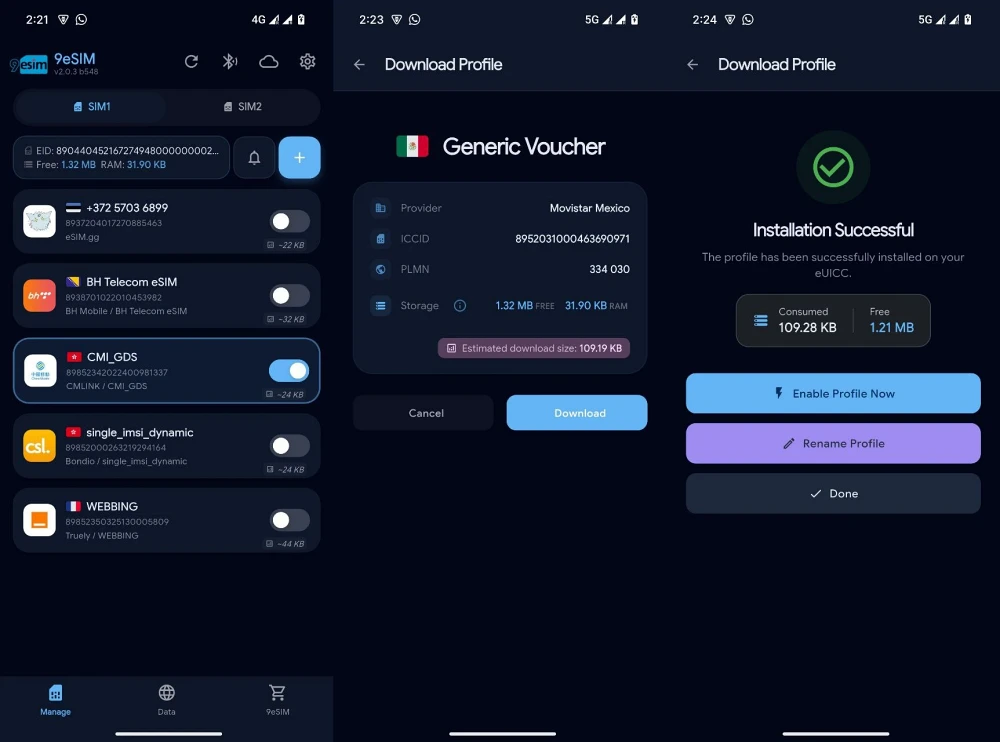
The implementation process for using an eSIM on an "unsupported" Chinese OnePlus or similar device is surprisingly straightforward, though it requires a shift in how users perceive SIM management. The first step involves procuring the physical adapter. Once the card is inserted into the primary SIM slot of the Chinese device, the user must download the manufacturer’s dedicated management app from the Google Play Store or via an APK. This application acts as the Local Profile Assistant (LPA), a role usually handled by the Android system software on natively supported devices.
Through the management app, the user can scan a standard QR code provided by any carrier worldwide. The app then communicates with the chip on the physical adapter to "download" and "install" the carrier’s profile. From the perspective of the smartphone’s operating system, it simply sees a standard physical SIM card from the chosen carrier. The complexity of the eSIM protocol is handled entirely on the adapter itself. This means that even if a device’s firmware has no menu for "Add eSIM," the connectivity is established through the physical SIM interface, bypassing the software restriction entirely.
The advantages of this workaround extend beyond mere compatibility. For users of Chinese devices who frequently travel, these adapters allow for the storage of multiple international roaming profiles on a single piece of plastic. Instead of hunting for local SIM cards at airport kiosks or paying exorbitant roaming fees to a home carrier, a user can purchase a digital travel SIM online, scan the QR code into their adapter’s app, and have local data active before they even deplane. This restores the "flagship experience" that many felt was lost when choosing the more affordable Chinese import.

However, prospective users should be aware of the technical nuances involved in this setup. Because these adapters rely on a companion app to manage profiles, the user’s experience is tethered to the quality of that software. Furthermore, while the connectivity itself is usually seamless, some advanced features like 5G SA (Standalone) or specific VoLTE (Voice over LTE) configurations may still be subject to the limitations of the phone’s modem and regional firmware settings. While the eSIM adapter provides the "key" to the network, the phone’s hardware must still support the frequency bands used by the carrier. Fortunately, most modern Chinese flagships feature "global" bands that cover the majority of international LTE and 5G spectrums.
The rise of these adapters also speaks to a broader movement in the tech community regarding the "right to repair" and the right to modify. As manufacturers move toward more closed ecosystems—removing headphone jacks, expandable storage, and physical SIM slots—consumers are finding creative ways to reclaim lost functionality. The use of a physical eUICC card is a perfect example of the community identifying a regional hardware gap and filling it with a versatile, cross-platform solution.
In conclusion, the decision to purchase a Chinese-variant smartphone like the OnePlus 12 or 13 no longer necessitates the sacrifice of modern eSIM convenience. While the software hurdles such as Widevine downgrades and regional OS quirks remain, the connectivity barrier has been effectively dismantled. By utilizing a physical eSIM adapter, users can enjoy the high-performance hardware and competitive pricing of the Chinese market while maintaining the flexibility of global digital SIM standards. This technical workaround serves as a reminder that in the world of mobile technology, where there is a hardware limitation, the enthusiast community will invariably find a way to innovate around it. Whether for the purpose of saving money or simply the thrill of optimizing a device beyond its intended regional constraints, the path to global connectivity on "unsupported" hardware is now clearer and more accessible than ever before.
