

The landscape of mobile communication on Android has undergone a significant transformation as Google officially integrates real-time location sharing into its flagship Google Messages application. This long-awaited update, which began its global rollout in late March, effectively bridges one of the most glaring functional gaps between the Android ecosystem and its primary competitors, such as Apple’s iMessage and Meta’s WhatsApp. For years, Android users were forced to rely on third-party applications or navigate through the separate Google Maps interface to provide live updates of their whereabouts to contacts. By embedding this capability directly into the conversation thread, Google is not only enhancing the convenience of its messaging platform but also reinforcing its commitment to the Rich Communication Services (RCS) standard, which aims to provide a modern, feature-rich alternative to the aging SMS and MMS protocols.
The introduction of real-time location sharing is more than a mere cosmetic update; it is a fundamental shift in how Google envisions the role of its default messaging app. In the modern era of mobile technology, a messaging app is no longer just a conduit for text and static images; it is a hub for coordination, safety, and logistical planning. Whether a user is navigating through a crowded music festival to find friends, ensuring a family member arrives home safely after a late-night shift, or coordinating a meetup in an unfamiliar city, the ability to transmit a live, moving dot on a map is an invaluable tool. Google’s implementation of this feature emphasizes user control and temporary access, ensuring that while the utility is high, the impact on privacy is strictly managed by the sender.
To access this new functionality, users must ensure their Google Messages application is updated to the latest version. The rollout has been observed across various iterations of the app, including both beta and stable builds. Specifically, the feature was first identified in beta version 20260313_00_RC00.phone.openbeta, but it has since migrated to wider availability. On Google Pixel devices, users have reported the feature appearing in version 20260306_02_RC03.phone_dynamic, while Samsung Galaxy owners have seen it integrated into version 20260310_00_RC00.phone_samsung_dynamic. This cross-device compatibility highlights Google’s effort to maintain a consistent user experience across the fragmented Android hardware landscape, ensuring that the feature works seamlessly regardless of whether the user is on a flagship device or a mid-range handset.
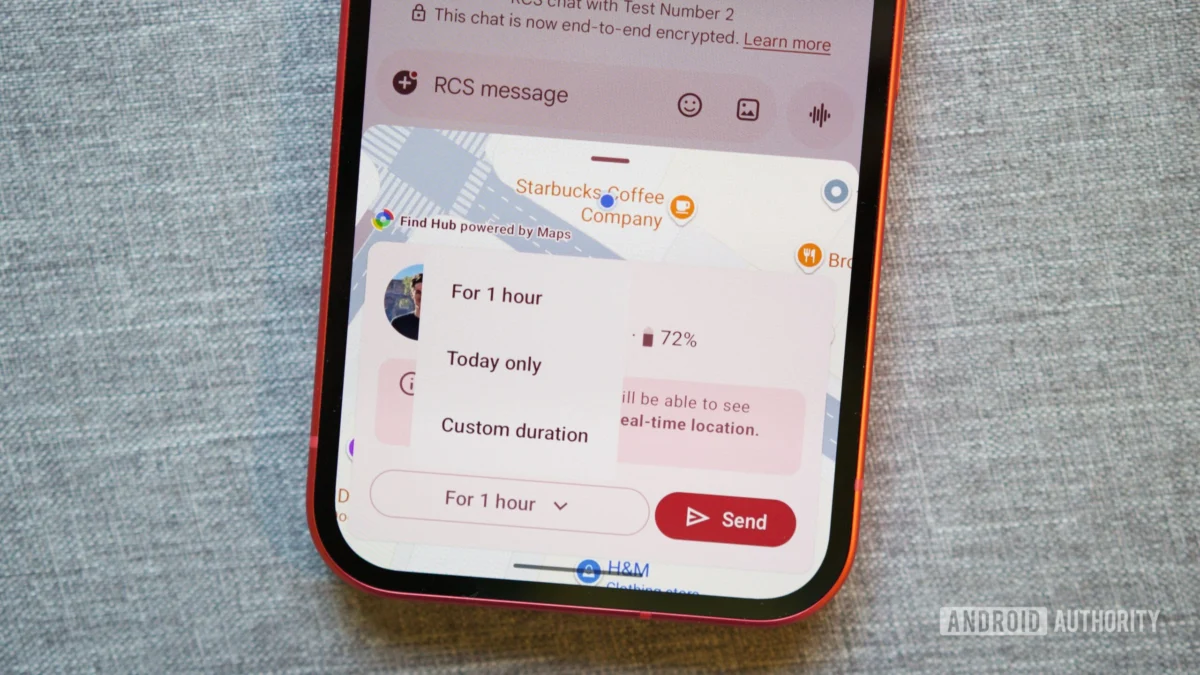
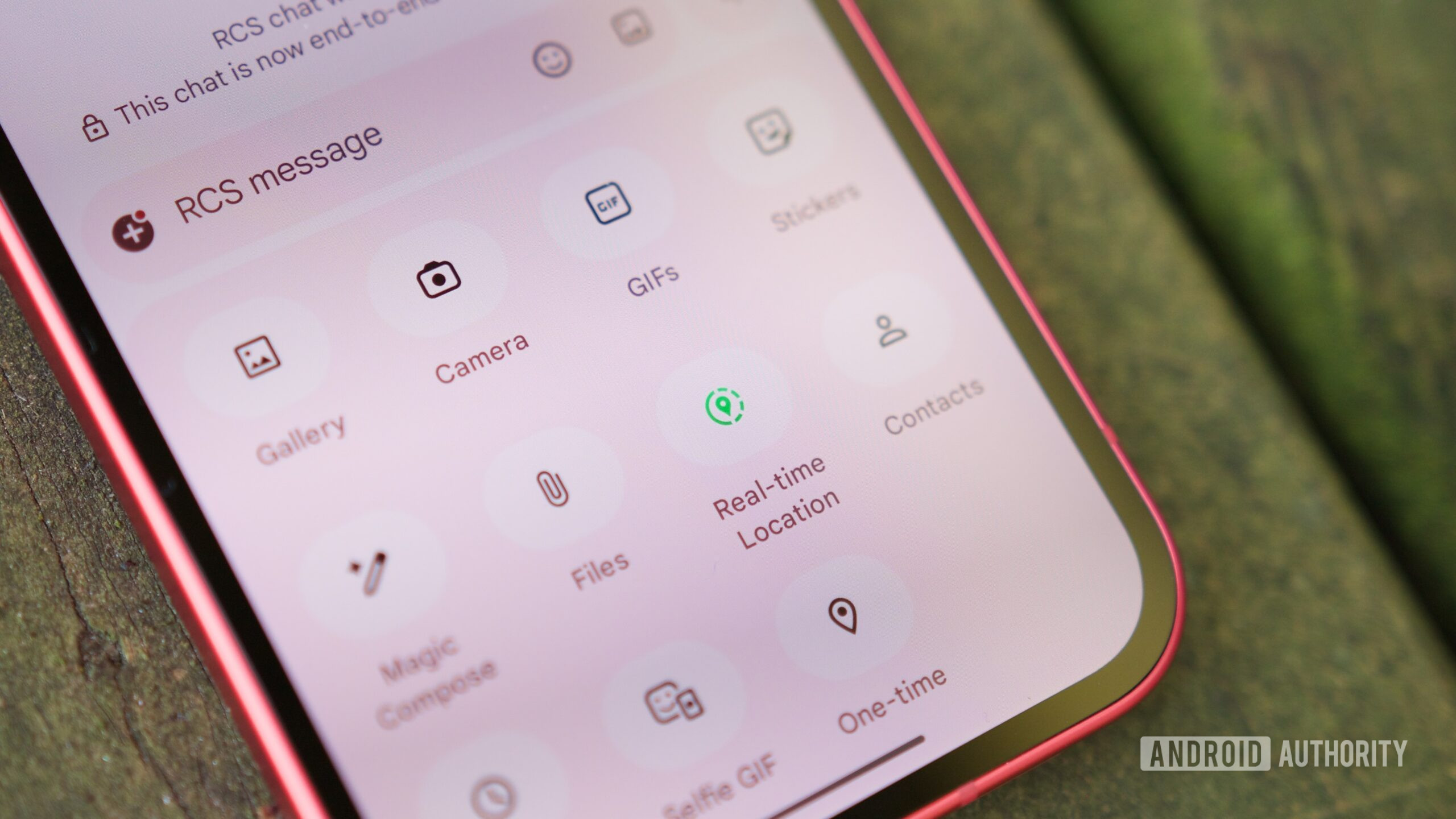
The process of initiating a live location share is designed to be intuitive, requiring only a few taps within the existing messaging interface. Within any individual or group conversation, users can tap the "+" icon located to the left of the text input field. This opens the attachment menu, which now includes a dedicated "Location" icon. Upon selecting this, the app presents two distinct options: the traditional "Send this location," which transmits a static pin of the user’s current coordinates, and the newly added "Share real-time location." By selecting the latter, the user is prompted to choose the duration of the share. Google has intelligently provided several presets, including a one-hour default and a "Today only" option, which typically lasts until the end of the calendar day. For those who require more specific parameters, a custom duration tool allows for precise control over exactly how long the tracking remains active.
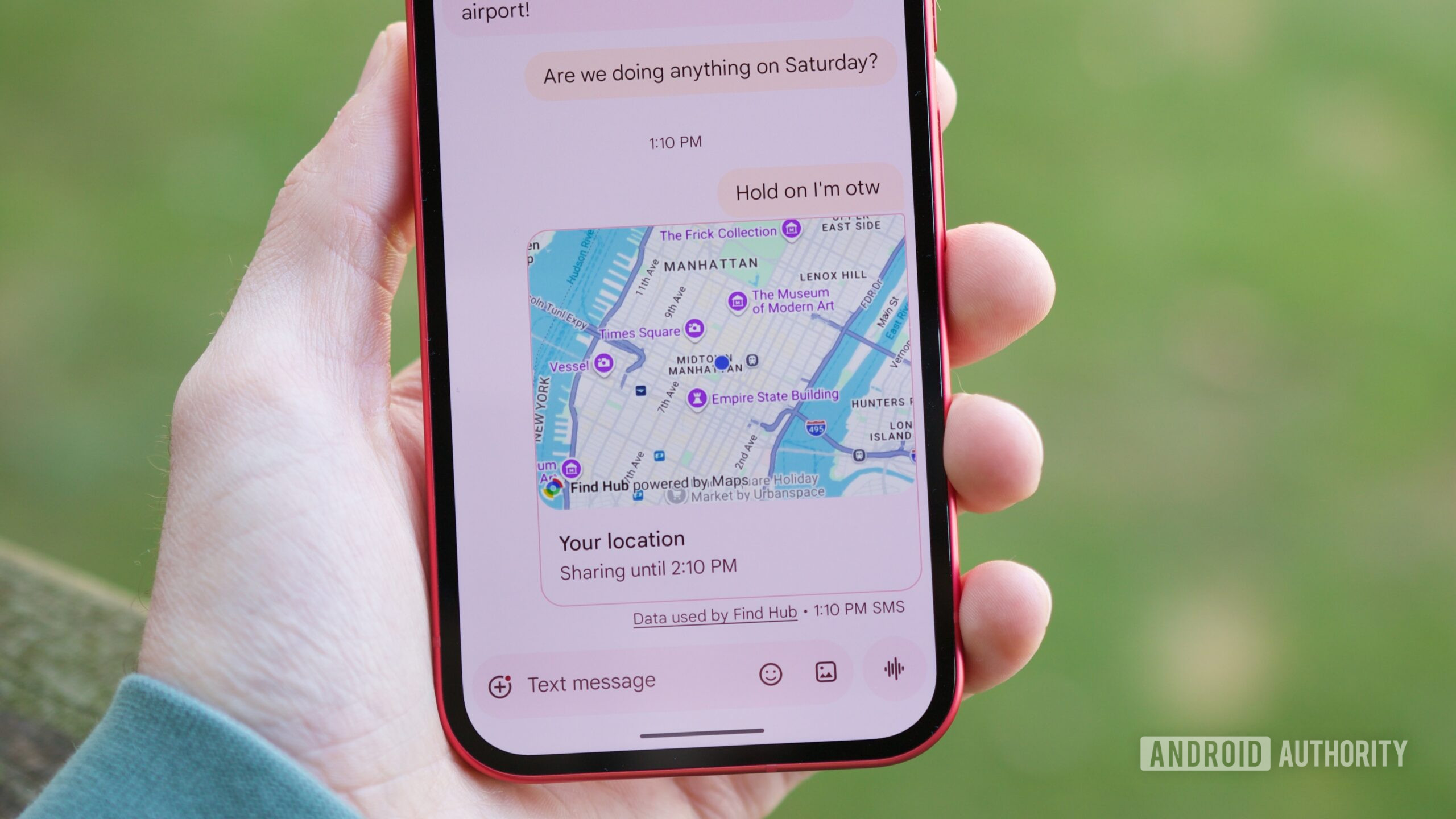
Once the sharing session begins, the recipient sees a dynamic map tile directly within the chat bubble. This preview updates in real-time, showing the sender’s movement as they travel. To further enhance visibility and prevent users from accidentally sharing their location longer than intended, Google has implemented a persistent banner at the top of the conversation window. This banner serves as a constant reminder that live tracking is active and provides a countdown of the remaining time. Tapping on this banner or the map tile itself opens an expanded view, offering a larger map interface and a clear, prominent "Stop" button. This design philosophy prioritizes transparency, ensuring that the user always remains in the driver’s seat regarding their personal data.
From a technical perspective, the integration of real-time location sharing into Google Messages leverages the robust infrastructure of Google Maps. When a user shares their location, the Messages app communicates with the device’s GPS and location services to broadcast coordinates via Google’s secure servers. This data is then rendered as a map overlay within the RCS framework. It is important to note that because this feature relies on the RCS protocol, both the sender and the receiver generally need to have RCS enabled to experience the full interactive map. If the recipient is on an older SMS/MMS connection, they may instead receive a link to view the live location in a web browser or the Google Maps app, though the most seamless experience is reserved for the native Messages-to-Messages environment.
The safety implications of this feature cannot be overstated. In an increasingly mobile society, personal security often depends on the ability to stay connected. Features like this are frequently used as "digital chaperones." For instance, a hiker can share their live progress with a spouse before heading into a trail with spotty reception, or a student can share their walk home across a university campus. By integrating this into the most-used app on the phone—the messenger—Google reduces the friction of staying safe. There is no need to open a separate app, find the contact again, and initiate a secondary stream of data; the conversation and the coordination now exist in the same space.
Furthermore, this update represents a strategic move in the ongoing "messaging wars." For years, Apple’s iMessage has been the gold standard for integrated features in the North American market, often cited as a primary reason for user retention within the iOS ecosystem. By matching iMessage feature-for-feature—including high-quality media sharing, read receipts, typing indicators, and now real-time location sharing—Google is making a compelling case for the parity of the Android experience. This is particularly relevant as Google continues to pressure Apple to adopt RCS, a move that would eventually allow these rich features to work cross-platform between Android and iPhone users without the limitations of traditional SMS.
Privacy advocates will likely scrutinize the feature, as location data is among the most sensitive information a smartphone collects. Google has addressed these concerns by making the feature entirely opt-in and time-bound. Unlike some social media apps that encourage "always-on" location sharing, Google Messages defaults to temporary sessions. Once the timer expires, the location-sharing message in the chat history loses its interactive map and is replaced by a static notification stating, "Location share ended." This ensures that a permanent record of one’s movements is not left indefinitely accessible within a chat thread. Additionally, the ability to manually kill the stream at any second via the "Stop" button provides an immediate exit ramp for the user.
As Google continues to refine the Messages app, the addition of real-time location sharing is likely just one step in a broader roadmap toward a more intelligent, AI-driven communication platform. We can envision a future where Google’s Gemini AI might suggest sharing your location when it detects a message like "Where are you?" or "Are you almost here?" Such integrations would further solidify Google Messages as not just a tool for typing, but a proactive assistant for daily life.
In conclusion, the arrival of real-time location sharing in Google Messages is a landmark update for the Android community. It satisfies a long-standing user demand, enhances personal safety, and simplifies logistical coordination. By delivering a polished, intuitive, and privacy-conscious implementation, Google has successfully modernized its messaging suite, ensuring it remains competitive in a rapidly evolving digital landscape. As the rollout reaches more devices in the coming weeks, the "Where are you?" text message may soon become a relic of the past, replaced by the silent, steady movement of a blue dot on a screen, bringing people together with greater precision than ever before.
