

The rapid evolution of mobile operating systems often presents a double-edged sword for technology enthusiasts. OnePlus, a brand synonymous with high-performance hardware and a dedicated community of early adopters, recently unveiled the seventeenth iteration of its proprietary skin, OxygenOS 17, based on the Android 17 "Cinnamon Bun" architecture. While the promise of cutting-edge features and refined aesthetics initially drew thousands of users to the beta program, the reality of early-stage software has proven challenging for many. As the firmware is currently in its nascent stages of development, a significant number of users are reporting a litany of performance bottlenecks, system instabilities, and critical bugs that hinder daily usability. Consequently, a growing movement within the OnePlus community has emerged, seeking a return to the relative tranquility and optimization of OxygenOS 16, known internally under the Android 16 "Baklava" codename.
The transition from a stable build to an experimental beta is often marketed as an opportunity to glimpse the future of mobile computing. However, for the OnePlus flagship series, the "Cinnamon Bun" update has arrived with a suite of complications typical of early developer previews and public betas. Users have documented a range of grievances, from minor graphical glitches to severe system drains that compromise the longevity of the device’s battery life. In the realm of professional and daily-driver mobile use, these interruptions are more than mere inconveniences; they represent a fundamental break in the reliability users expect from a premium handset. When the novelty of new animations wears off and is replaced by the frustration of app crashes or connectivity drops, the decision to downgrade becomes a logical necessity rather than a regressive step.
Understanding the specific issues inherent in OxygenOS 17 Beta 2 is essential for users weighing the decision to rollback. Reports indicate that the current build suffers from thermal management issues, where the device becomes uncomfortably warm during routine tasks that previously caused no such stress. Furthermore, the integration of new API layers in Android 17 has led to compatibility issues with several high-profile banking and productivity applications, which have yet to be updated by their respective developers to support the "Cinnamon Bun" framework. These software-hardware misalignments create a "bug list" that effectively cancels out any productivity gains promised by the new OS features. For those who find themselves trapped in this cycle of instability, the path back to "Baklava" is the only viable solution to restore the device to its intended peak performance.
The process of downgrading a modern smartphone is significantly more complex than the standard over-the-air (OTA) update procedure. OnePlus has adopted a two-stage methodology for this particular transition, a move that reflects the deep architectural changes between Android 16 and Android 17. This "Classic OnePlus" approach, while thorough, requires a higher level of technical literacy from the end-user. It is not merely a matter of clicking a button; it involves the careful selection of regional firmware packages and the manual execution of installation scripts. Because the internal partition structures of the device are modified during an upgrade to a new Android version, reverting to an older version necessitates a complete wipe of the user’s data. This structural reset ensures that legacy data from the newer OS does not conflict with the older system files, which could otherwise lead to a "boot loop" or a bricked device.
Before embarking on the downgrade journey, the importance of data preservation cannot be overstated. The transition from OxygenOS 17 back to version 16 is a destructive process regarding internal storage. Every photograph, document, application cache, and system setting will be erased to facilitate a clean installation of the "Baklava" firmware. Users are urged to utilize cloud services or physical external storage to secure their personal information. It is also a standard industry caveat that performing manual firmware modifications carries inherent risks. While the procedures are established, external factors such as power failure during the flash or the use of corrupted download files can lead to catastrophic hardware failure. It is expected that users proceeding with these steps do so with the understanding that they are assuming full responsibility for the integrity of their hardware.

The regional fragmentation of OnePlus firmware adds another layer of complexity to the downgrade. The manufacturer maintains distinct software branches for the North American (NA), Indian (IN), European (EU), and Global markets. These versions are tailored to meet specific regulatory requirements, network frequency bands, and localized feature sets. For instance, the Indian version often includes specific service integrations not found in the European builds, while North American variants are frequently optimized for carrier-specific technologies. Using the incorrect regional firmware can result in a loss of cellular connectivity or the permanent disabling of certain hardware sensors. Therefore, the first critical step for any user is to identify their specific model and download the corresponding two-stage rollback packages designed for their region.
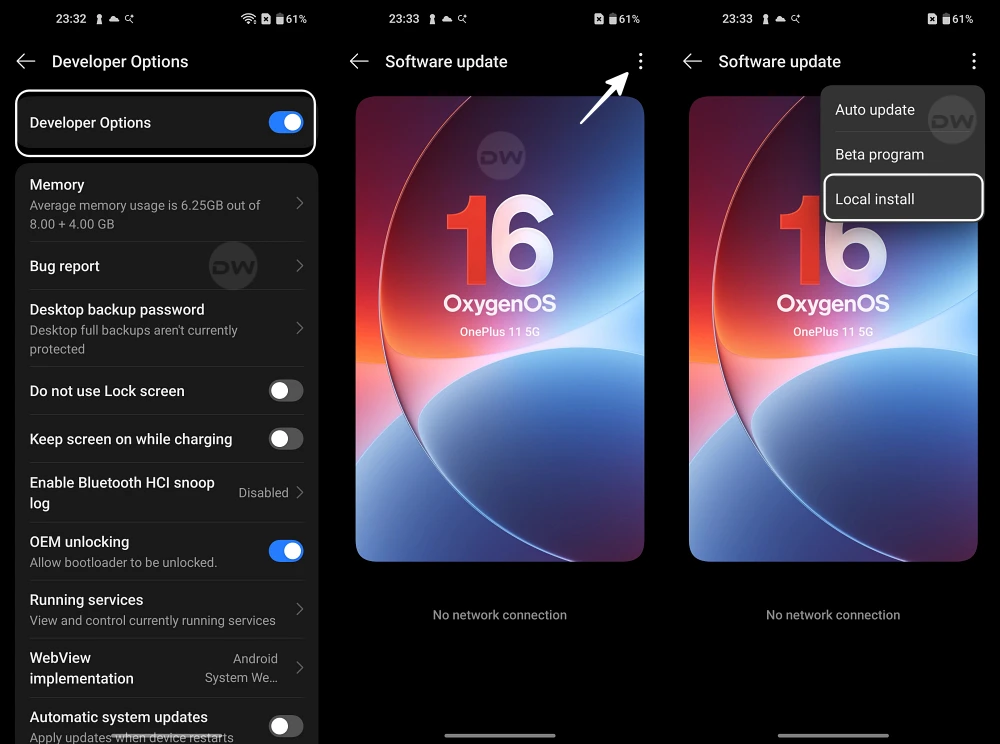
For users in the European and Indian markets, the downgrade is typically facilitated through the "Local Install" feature within the system settings. This method involves placing the downloaded firmware packages—often compressed as .zip files—directly into the root directory of the device’s internal storage. Once the files are positioned, the user must navigate through the system update menu to trigger a manual installation. However, a common hurdle in recent OxygenOS iterations is the disappearance or "greying out" of the Local Install option. This is often a deliberate safety measure implemented by the manufacturer to prevent accidental downgrades. Bypassing this restriction usually requires the activation of Developer Options or the use of a secondary "System Update" APK that restores the manual selection interface.
The procedure for North American users differs significantly, often relying on a specialized APK tool to bridge the gap between OS versions. This variation is largely due to the different security protocols and carrier configurations prevalent in the US and Canadian markets. The APK serves as a dedicated installation environment that bypasses the standard OTA hurdles, allowing the device to accept an older firmware signature. Regardless of the region, the logic remains the same: the device must first accept a transitionary "rollback" build that prepares the system partitions for the older Android 16 environment, followed by the installation of the full OxygenOS 16 stable image.
Once the downgrade is initiated, the device will undergo a series of reboots. During this phase, it is vital that the hardware is not interfered with. The "Baklava" firmware must overwrite the "Cinnamon Bun" files at a foundational level. Upon successful completion, the device will boot into the OxygenOS 16 setup screen, appearing as it did the day it was first unboxed. While this means the user must go through the effort of re-installing applications and restoring backups, the reward is a return to a polished, fluid, and predictable user experience. The battery life issues, app incompatibilities, and system stutters that defined the OxygenOS 17 beta experience are replaced by the stability of a mature operating system.
In conclusion, while the allure of Android 17 is strong, the current state of OxygenOS 17 suggests that it is not yet ready for the average user who prioritizes stability over novelty. The transition back to OxygenOS 16 is a rigorous but necessary process for those whose digital lives have been disrupted by the "Cinnamon Bun" update. By following the regional-specific protocols and ensuring meticulous data backups, OnePlus owners can successfully navigate the complexities of software regression. As the development cycle for OxygenOS 17 continues, there will undoubtedly be a time when the "Cinnamon Bun" reaches the requisite level of refinement for daily use. Until then, the "Baklava" of Android 16 remains the gold standard for OnePlus performance and reliability. Those who encounter difficulties during the rollback are encouraged to seek assistance through community forums, where the collective knowledge of the user base continues to be an invaluable resource in the ever-changing landscape of mobile software.
