

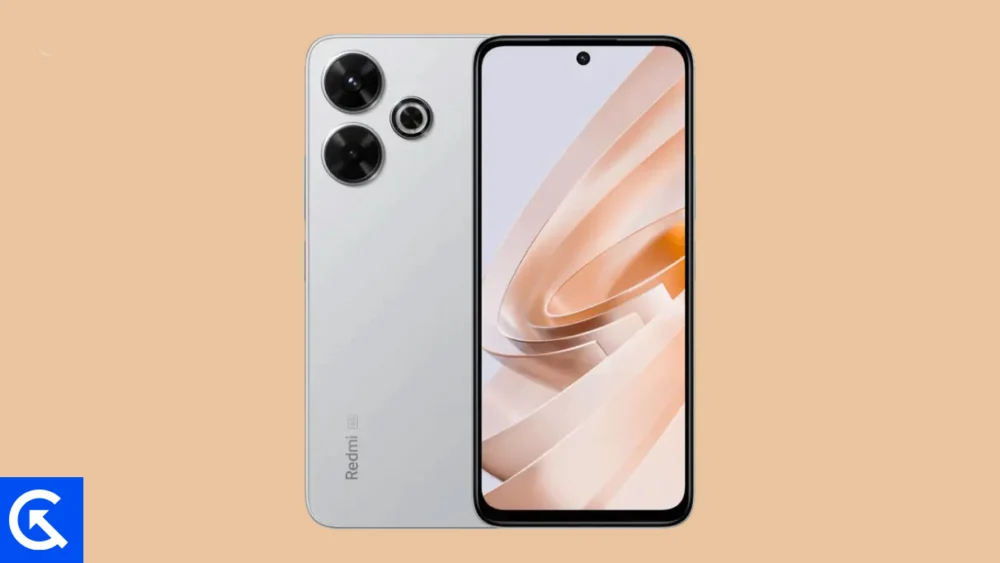
The landscape of mobile operating systems is currently witnessing a significant shift as Google accelerates its development cycle, bringing the much-anticipated Android 16 to the forefront earlier than traditional release windows suggested. While flagship Pixel owners are typically the first to taste the latest software innovations, the vibrant community of independent Android developers has once again demonstrated its prowess. For owners of the Xiaomi Poco M6 Plus 5G and its sibling, the Redmi 13 5G, the arrival of unofficial Android 16-based AOSP (Android Open Source Project) builds represents a unique opportunity to bypass manufacturer-imposed update delays and experience the cutting edge of mobile technology today. This move not only revitalizes the hardware but also introduces a level of software fluidity and aesthetic refinement previously reserved for high-end flagship devices.
![How to Install Android 16 on Xiaomi Poco M6 Plus 5G / Redmi 13 5G [Download Link]](https://www.getdroidtips.com/wp-content/uploads/2024/09/Xiaomi-Poco-M6-Plus-5G.jpg)
To understand the impact of this software transition, one must first look at the hardware foundation provided by Xiaomi. Launched in mid-2024, the Poco M6 Plus 5G and Redmi 13 5G were designed to dominate the budget-to-mid-range segment. These devices boast a substantial 6.79-inch IPS LCD panel, which stands out in its class due to a 120Hz refresh rate that ensures smooth scrolling and an immersive gaming experience. Under the hood, the Qualcomm Snapdragon 4 Gen 2 chipset serves as the engine, utilizing an efficient 4nm process to balance power consumption with performance. With configurations offering up to 8GB of RAM, the hardware is more than capable of handling the sophisticated demands of Android 16. The photography suite, led by a high-resolution 108 MP primary sensor, further elevates the device’s value proposition, making it a prime candidate for a software upgrade that can better optimize image processing and battery management.
Android 16 introduces a philosophy defined by "Material 3 Expressive." This is not merely a cosmetic update but a fundamental reimagining of how users interact with their screens. Building upon the foundation of Material You introduced in earlier versions, Material 3 Expressive focuses on "dynamic fluidity." This includes revamped physics-based animations that respond more naturally to touch, larger and more intuitive hit boxes for buttons, and a bold approach to typography that improves legibility across various lighting conditions. For the Poco M6 Plus 5G, which features a large display, these UI refinements make one-handed navigation significantly more ergonomic. Furthermore, Android 16 brings deep-seated system optimizations aimed at reducing background process overhead, which is particularly beneficial for the Snapdragon 4 Gen 2’s architecture, potentially extending battery life beyond what was possible on the stock HyperOS.
![How to Install Android 16 on Xiaomi Poco M6 Plus 5G / Redmi 13 5G [Download Link]](https://www.getdroidtips.com/wp-content/uploads/2024/09/Xiaomi-Poco-M6-Plus-5G-300x169.jpg)
The transition to a custom Android 16 ROM is a journey that requires careful preparation and a respect for the technical nuances of the Android ecosystem. Before embarking on the installation, users must understand that this process involves modifying the device’s core firmware. The first and most critical step is the preservation of data. Flashing a new operating system necessitates a complete wipe of the internal storage; therefore, a comprehensive backup of photos, documents, and application data to a cloud service or an external drive is non-negotiable. Additionally, maintaining a battery charge of at least 50% is a vital safeguard against power failure during the sensitive flashing process, which could lead to a software "brick" or a corrupted partition.
The technical infrastructure required for this upgrade involves several key components. First, a computer equipped with ADB (Android Debug Bridge) and Fastboot binaries is essential. These tools serve as the bridge between the desktop environment and the mobile device’s bootloader. Secondly, the installation of specific Xiaomi USB drivers ensures that the computer can communicate effectively with the Poco M6 Plus 5G while it is in its low-level maintenance modes. Perhaps the most significant hurdle for many is the unlocking of the bootloader. Xiaomi’s security protocols require users to request permission to unlock the bootloader, a process that often involves a waiting period. Unlocking the bootloader is the "skeleton key" that allows the installation of custom recovery environments like TWRP (Team Win Recovery Project), which in turn enables the flashing of the Android 16 ROM.
![How to Install Android 16 on Xiaomi Poco M6 Plus 5G / Redmi 13 5G [Download Link]](https://www.getdroidtips.com/wp-content/uploads/2020/06/cmd-platform-tools.jpg)
Once the prerequisites are met, the installation process follows a logical, albeit technical, sequence. After booting the device into TWRP recovery, the user must perform a "Factory Reset" and wipe the System, Data, and Cache partitions. This creates a clean slate, ensuring that no residual files from the previous HyperOS installation interfere with the new Android 16 environment. The actual installation involves "flashing" the Android 16 AOSP ZIP file. Because many AOSP builds are "vanilla"—meaning they do not include proprietary Google services to keep the file size small and the system lean—users will also need to flash a GApps (Google Apps) package. This package restores the Google Play Store, YouTube, Gmail, and the underlying frameworks necessary for many modern apps to function. It is imperative to flash the GApps immediately after the ROM and before the first reboot to ensure system stability.
The "first boot" after such a significant upgrade is often a moment of anticipation. It is normal for the initial loading screen to persist for several minutes as the new Android 16 ART (Android Runtime) compiles the system code and initializes the new file structure. Once the setup wizard appears, users are greeted not by the familiar, heavy skin of Xiaomi’s HyperOS, but by the clean, minimalist, and lightning-fast interface of pure Android. This "de-bloated" experience removes the pre-installed promotional apps and heavy background services that often bog down mid-range hardware, allowing the Snapdragon 4 Gen 2 to reach its full potential.
![How to Install Android 16 on Xiaomi Poco M6 Plus 5G / Redmi 13 5G [Download Link]](https://www.getdroidtips.com/wp-content/uploads/2020/08/twrp-custom-rom.jpg)
While the current builds of Android 16 for the Poco M6 Plus 5G and Redmi 13 5G are remarkably stable, they are classified as unofficial ports. In the world of custom development, this means that while core functions—such as 5G connectivity, Wi-Fi, Bluetooth, and the 108MP camera—are operational, minor bugs may exist. Users might encounter occasional glitches in specialized hardware features or specific sensor calibrations. The community-driven nature of these ROMs, however, means that updates are frequent. Developers rely on user feedback and "logcats" (system error logs) to identify and patch issues, creating a collaborative cycle of improvement that often outpaces official corporate software support.
In conclusion, installing Android 16 on the Xiaomi Poco M6 Plus 5G or Redmi 13 5G is more than just a software update; it is a statement of digital sovereignty. It allows users to take full control of their hardware, enjoying the latest security features and design trends months or even years before they might arrive through official channels. By following the rigorous steps of unlocking the bootloader, installing a custom recovery, and flashing the AOSP build, enthusiasts can transform a budget-friendly device into a flagship-rivaling software powerhouse. As Android 16 continues to mature, these devices will stand as a testament to the longevity and flexibility of the Android platform when placed in the hands of a dedicated community. For those willing to navigate the complexities of the installation, the reward is a fresh, modern, and exceptionally fluid mobile experience that truly brings the Poco and Redmi hardware to life.
