

The landscape of generative artificial intelligence is undergoing a significant ideological schism, prompting a growing number of power users and privacy advocates to reevaluate their allegiance to OpenAI. For many, the catalyst for this departure was the recent announcement of OpenAI’s partnership with the United States Department of Defense—a move that stands in stark contrast to the company’s original founding mission of developing safe, beneficial AI for all of humanity. This strategic pivot has sparked concerns regarding the erosion of safety protocols, particularly as competitors like Anthropic have reportedly declined similar military engagements to maintain their rigorous ethical frameworks. As the "safety-first" versus "growth-at-all-costs" debate intensifies, users are looking for a graceful exit strategy from ChatGPT that preserves their personal data and digital history.
Leaving a sophisticated AI ecosystem is more complex than simply closing a browser tab. Over months or years of interaction, these models develop a nuanced understanding of a user’s writing style, professional workflows, and personal preferences. Transitioning to an alternative like Anthropic’s Claude or Google’s Gemini requires a methodical approach to data portability. For those ready to make the switch, a comprehensive five-step protocol ensures that your digital legacy is preserved while your privacy is restored.
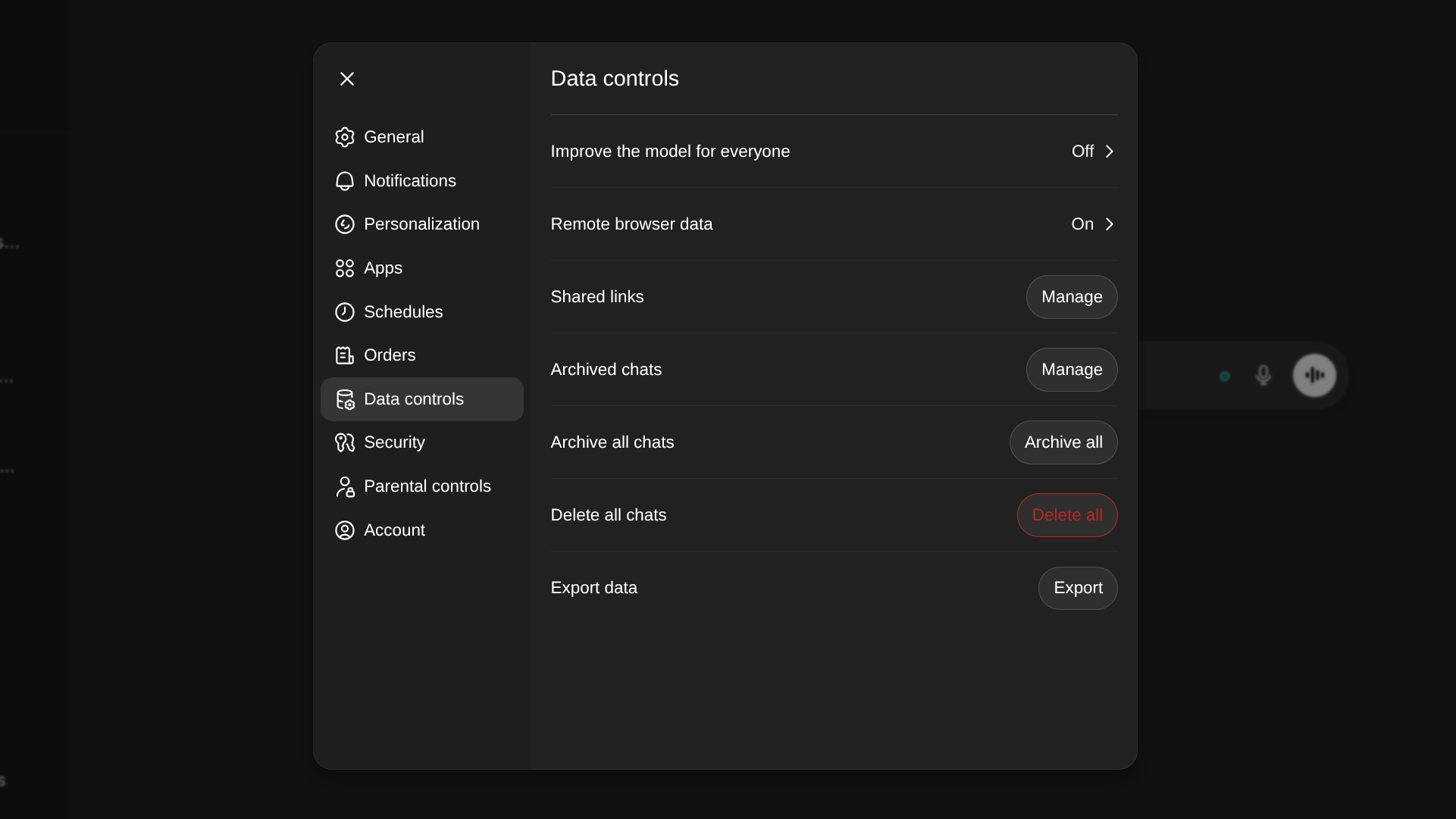
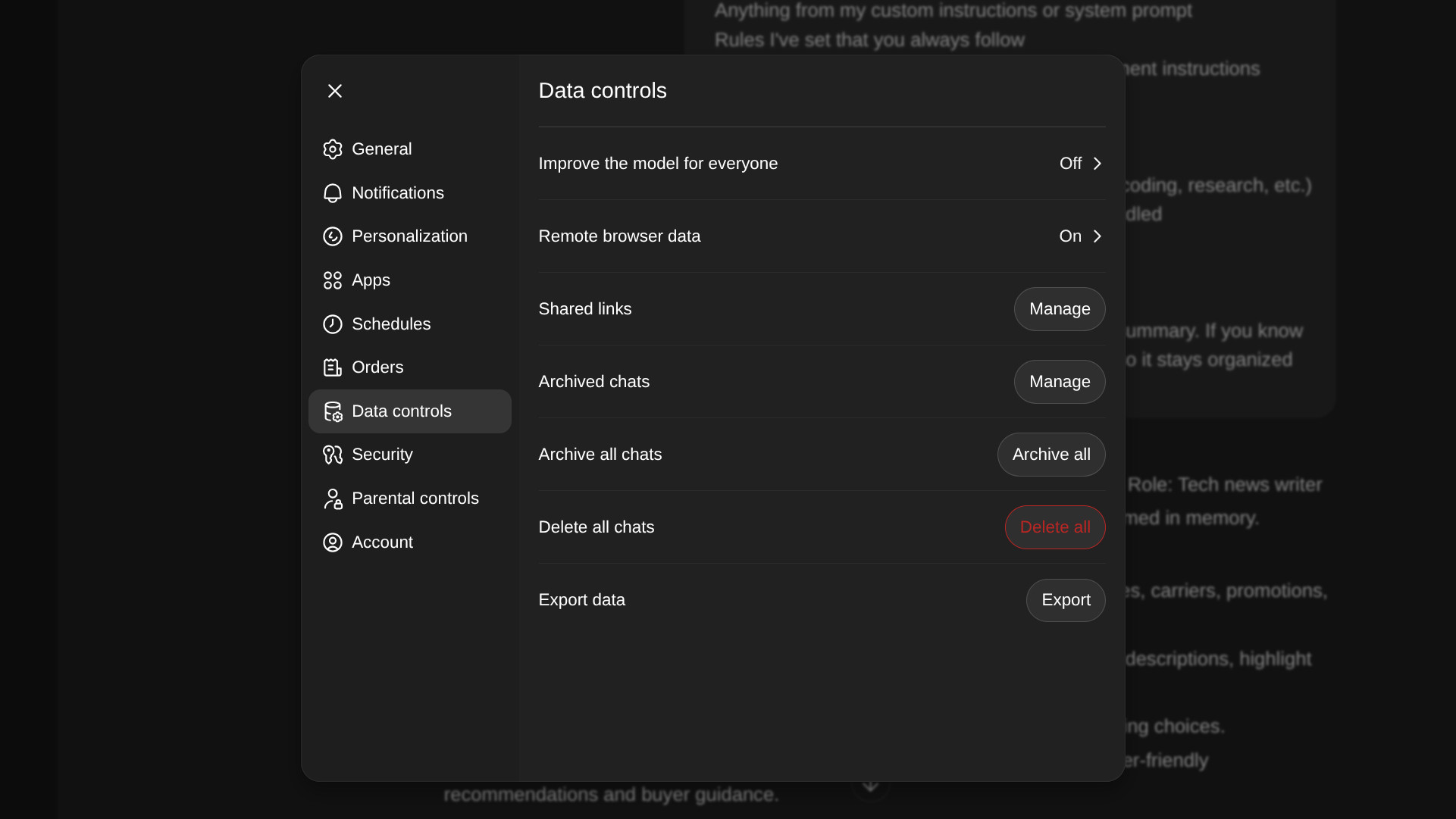
The primary phase of any digital migration is the comprehensive retrieval of existing data. OpenAI provides a native export tool, though its reliability can be inconsistent for long-term users with massive chat histories. To initiate this, one must navigate to the settings menu, access data controls, and request an export. This process is not instantaneous; the system compiles every prompt, response, and uploaded file into a compressed archive, which is then delivered via email. For users with extensive logs, this can take several days. It is critical to note that these exports are frequently prone to corruption. Large datasets often struggle to render in standard browsers like Google Chrome. Technical experts recommend using Firefox or specialized HTML viewers if the initial archive appears as gibberish. Ensuring you have a verified, readable backup is the non-negotiable first step before proceeding to account termination.
Beyond raw chat logs lies the more abstract "memory" of the AI—the repository of custom instructions and learned facts that define the user experience. ChatGPT’s "Memory" and "Custom Instructions" features act as a persistent feedback loop, allowing the model to adapt to a user’s specific context over time. Losing this information means starting from scratch with a "cold" model that knows nothing of your professional jargon or stylistic quirks. To mitigate this, users should perform a manual audit of their personalization settings. By navigating to the personalization management tab, one can find a searchable log of everything the AI has "learned."
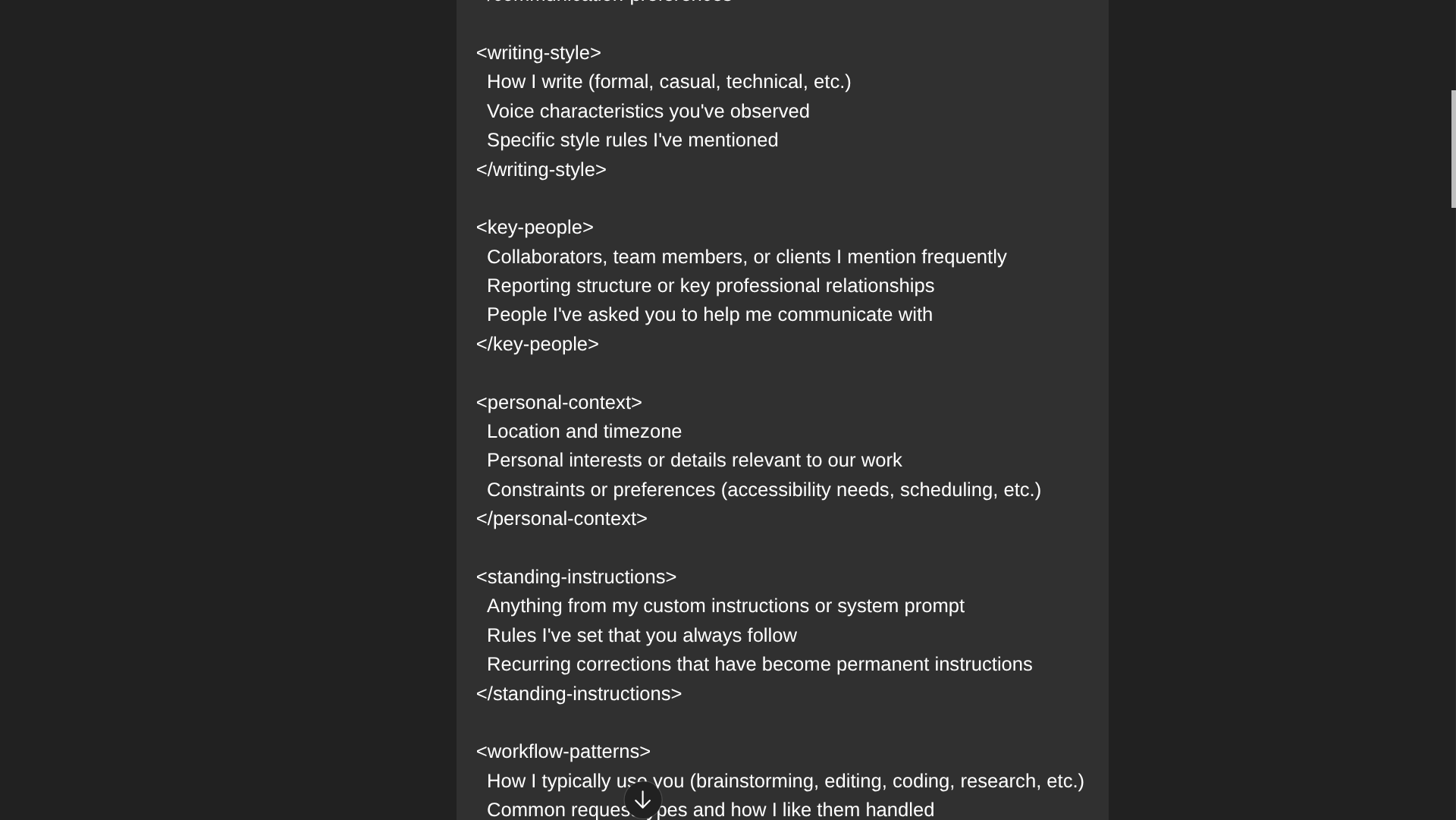
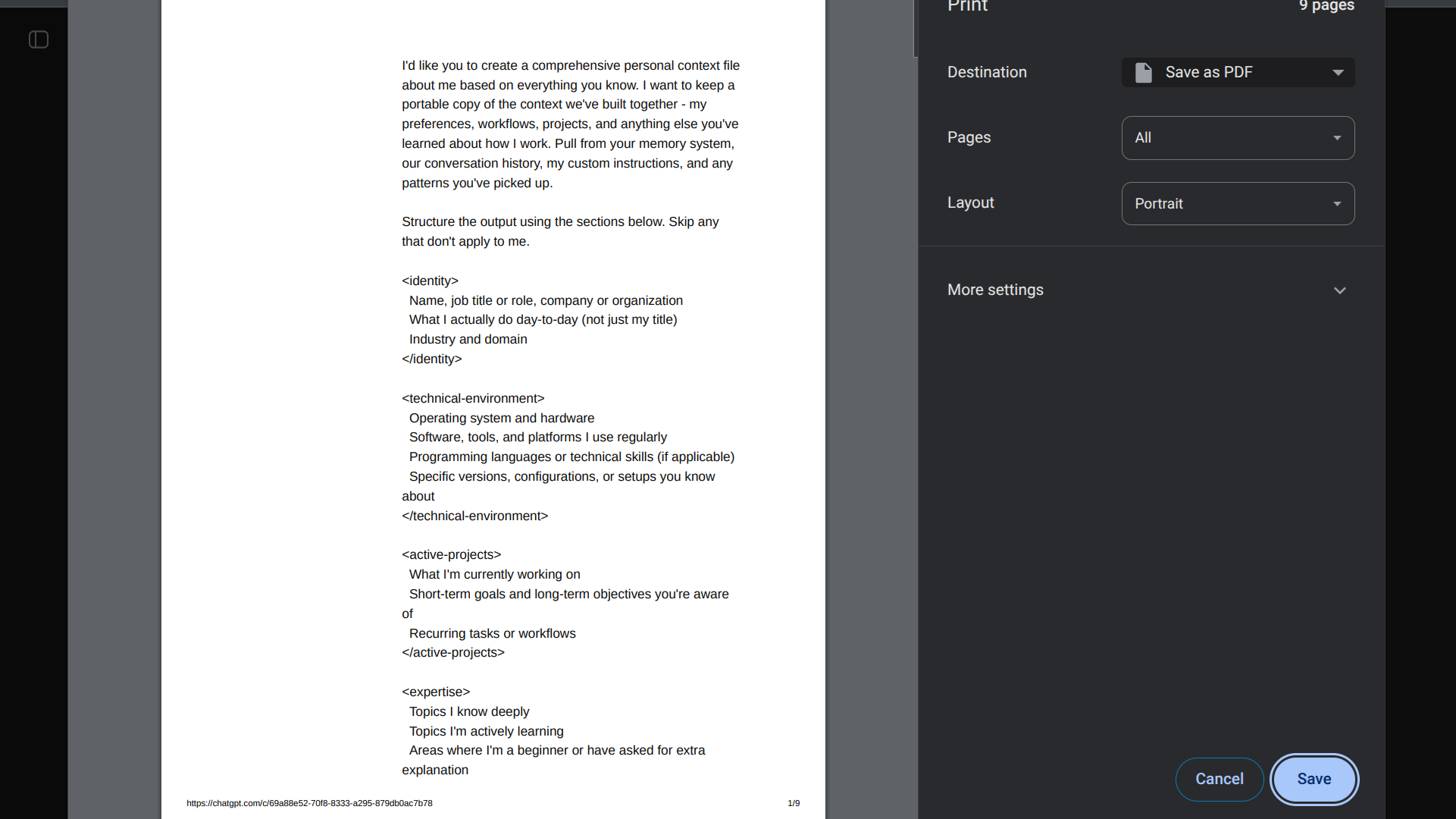
While Anthropic offers a basic migration prompt for new Claude users, many find it insufficient for capturing the depth of their established digital persona. A more robust method involves using a structured extraction prompt. By asking ChatGPT to analyze its own history and summarize its understanding of your writing style, key relationships, workflow patterns, and personal context into distinct categories, you create a "personality profile." This profile can then be refined in a secondary document and fed into a new AI assistant. This ensures that the "soul" of your assistant—its understanding of how you think and work—is successfully transplanted into the new environment. Claude, in particular, has introduced a "Start Import" capability within its settings to facilitate this exact type of data ingestion, making the transition significantly smoother.
While the full data export provides a comprehensive record, its format is often unwieldy for daily reference. The third step involves identifying "core conversations"—high-value threads containing creative projects, complex coding solutions, or deeply researched topics—and saving them in a portable, high-fidelity format like PDF. Using a browser’s print-to-PDF function is often the most efficient way to capture the formatting and structure of a specific conversation. These documents serve two purposes: they act as an easy-access archive for the user and can be uploaded as reference files to a new AI. When starting a project in Claude or Gemini, providing a PDF of previous work allows the new model to pick up exactly where the previous one left off, maintaining continuity in long-term endeavors.
Once the data is secured and the "persona" is successfully migrated, the focus shifts to the "right to be forgotten." Deleting data from an AI company’s servers is a layered process. Within the ChatGPT interface, users can select "Delete All Chats," which initiates a removal process that OpenAI claims takes approximately 30 days to finalize. However, privacy advocates suggest going a step further by visiting the dedicated OpenAI privacy portal. By submitting a formal request to "Delete my ChatGPT account," users trigger a more comprehensive purge backed by international privacy frameworks such as GDPR and CCPA. It is vital to remember that once this process is initiated, it is irreversible. Therefore, a final verification of the integrity of your local backups is essential before pulling the digital trigger. Furthermore, users should be aware that data already de-identified and used for model training may remain within the system’s foundational architecture, though it will no longer be associated with their specific identity.
The final, often overlooked step in the migration process is the revocation of third-party integrations. Modern AI assistants are rarely siloed; they are frequently granted permissions to access Google Drive, Microsoft OneDrive, or various productivity plugins. Even after an account is closed, these authorizations can linger in the settings of the external services. Users should manually audit their "Connected Apps" within their primary cloud storage and email accounts to ensure that OpenAI no longer has a "handshake" agreement with their personal files. This act of digital hygiene is a crucial safeguard against future security vulnerabilities or unintended data scraping.
The decision to migrate from a dominant platform like ChatGPT is often as much about philosophy as it is about features. The rise of Claude as a primary alternative is largely attributed to Anthropic’s "Constitutional AI" approach—a framework that embeds a specific set of ethical principles into the model’s core training, rather than relying solely on post-training filters. This appeals to users who are wary of the "black box" nature of OpenAI’s evolving corporate strategy. Similarly, Google’s Gemini offers a compelling value proposition for those deeply embedded in the Android and Workspace ecosystems, providing a level of cross-app integration that is difficult for independent models to match.
As the AI industry matures, the friction of switching between models will likely decrease, but the responsibility for data stewardship will always remain with the user. The migration process detailed here is not merely a technical checklist; it is an assertion of digital sovereignty. By taking control of their data, personality profiles, and third-party permissions, users can navigate the volatile AI market without becoming locked into a single provider’s ethical or commercial trajectory. Whether moving to Claude for its safety focus or Gemini for its integration, the transition represents a new chapter in the user-AI relationship—one defined by intentionality, privacy, and the freedom to choose an assistant that aligns with one’s own values. Ultimately, leaving ChatGPT is an acknowledgment that while AI is a powerful tool, the data and the human intent behind it are the true assets. In an era where "data is the new oil," the ability to refine, transport, and protect that data is the most important skill a digital citizen can possess.
